|
|
|
|
|
|
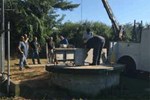
| Webinar: Rethinking the Role of the Water Meter: A Columbia Water Field Story | For utilities with aging infrastructure, modernizing metering is a field-driven challenge. In this webinar, Dan Zeamer of Columbia Water Company shares how a small Pennsylvania utility reimagined metering around faster installation, actionable data, and real-world leak detection. Joined by Kamstrup’s Jake Piccioni, the session shows how modern AMI delivers daily visibility, operational confidence, and customer conversations. Click here to learn more. |
|
|
SOURCE & DRINKING WATER TREATMENT |
|
|
|
By Aqua-Aerobic Systems, Inc. | Microfiltration and ultrafiltration have become mainstays in the water treatment arena. Membrane filters are constructed with a variety of materials with various pore sizes. The challenge is determining which best suits the application with regard to performance, cost, and ease of operation. | |
|
|
What To Know About Water Quality Analysis For Reverse Osmosis | By Myron L Company | Reverse osmosis (RO) has become a widely utilized treatment process for diverse applications such as medical and laboratory research, desalination, and treatment of industrial wastewater and municipal water/wastewater. Because of its widespread use and technically advanced nature, a variety of quality parameters should be monitored by those treatment operators who utilize it. |
|
|
|
PFAS Removal By AEC 3-Cell Unit | By BioLargo Inc | BioLargo’s Aqueous Electrostatic Concentrator (AEC) was used to treat well water provided by a major water district in Southern California. |
|
|
DISTRIBUTION & COLLECTION SYSTEMS |
|
|
|
By Xylem Wastewater Solutions | The Suffolk County Department of Public Works Stony Brook Pump Station was facing on-going interruptions to pumping operations as a result of “ragging”—a common challenge in wastewater pumping where a build-up of fibrous materials leads to frequent pump blockages. | |
|
|
Lift Station And Pump Level Control | By Endress+Hauser, Inc. | In wastewater collection systems, raw sewage flows through gravity sewers to lift stations, which transfer the waste from lower elevation to higher elevations and eventually to a treatment plant. |
|
|
|
|
|
|
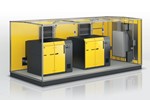
By Kaeser Compressors, Inc. | Upgrading the aeration system in a wastewater operation is typically burdensome because of the design work, permits, construction, and commissioning required for a structure before a new blower system can be installed. | |
|
|
How To Boost Industrial Plant Capacity By Retrofitting Aeration Tanks | By KLa Systems | As industries expand, they typically need to increase the capacity of their wastewater treatment facilities. Increasingly stringent regulatory requirements, such as lower nitrogen limits, may also signal the need to boost treatment capacity. Installing additional tanks and larger equipment not only adds capital costs but increases operating costs as well. |
|
|
Revitalizing A Hog Waste Lagoon | By Jim Dartez, RELIANT Water Technologies | A North Carolina hog grower with a brood barn of 200 full-grown sows contacted Reliant Water Technologies seeking assistance with one of his waste lagoons. The plan was to locate an aerator on one end of the lagoon and allow for the forward flow of water from a coarse bubble airlift to ‘push’ the water forward. |
|
|
|
|
|
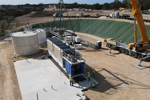
By Integrated Water Services, Inc. | Learn how to design wastewater infrastructure that grows with demand. Modular systems allow phased capacity additions that match actual flow, avoiding the high cost of oversizing and eliminating the need for disruptive, repeated construction. | |
|
|
|
|
|
|
|
|
|
|
|
|
|
|
|
| Connect With Water Online: |
|
|
|