WASTEWATER REGULATIONS AND LEGISLATION RESOURCES

  • Increase productivity and expand service offerings by utilizing advanced reinstatement technology. These high-performance tools allow for precise work in small-diameter lines, enabling the successful completion of complex trenchless projects that traditional methods cannot handle.

  • Real-time nutrient monitoring allows wastewater facilities to detect industrial spikes and prevent permit violations. By utilizing automated, hourly sampling and dual-stream analysis, operators can optimize chemical dosing and maintain consistent effluent quality.

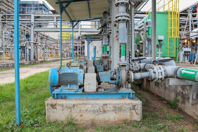
  • Return activated sludge pumps are critical to wastewater treatment, maintaining biological balance, ensuring efficiency, and supporting resilient infrastructure amid aging systems and emerging contaminants.

  • Pump oversizing drives hidden costs through energy waste, reduced reliability, and increased wear, making proper sizing and modern controls critical for long-term efficiency and performance.

  • A next-gen submersible pump eliminated clogging at a high-demand lift station, reducing maintenance, cutting costs, and delivering reliable, clog-free wastewater performance for over a year.

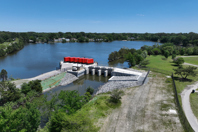
  • Jersey City in New Jersey is undergoing a period of development and growth which has seen its population increase by more than 50,000 people in the last 13 years. To cater for this growth, the Jersey City Municipal Utilities Authority is tasked with maintaining its aging water infrastructure and improving its critical water supply to ensure it can meet the needs of its customers both now and into the future.

  • Modernize solids handling with automated aerobic digestion to manage rapid community growth. This high-rate process increases capacity, ensures Class A compliance, and significantly reduces disposal costs while providing odor-free operations through advanced nutrient and off-gas management.

  • Upgrade wastewater operations with automated aerobic digestion. This advanced process increases capacity and ensures stable temperature control for Class A compliance, producing odor-free biosolids and efficient nitrogen removal to meet strict environmental standards and community expectations.

  • Emerging state water reuse regulations are driving adoption of ozone and advanced oxidation, requiring flexible, high-performance systems to meet pathogen, trace organic, and DBP control objectives.

  • Ozone system performance hinges on reactor design, not generator size. Efficient mass transfer, hydraulic integrity, and contact time ensure consistent oxidation, reduced energy use, and reliable treatment results.

WASTEWATER SOLUTIONS

  • Model 4180 All Vacuum Chemical Feeder

    The JCS Industries Model 4180 All Vacuum Chemical Feeder is for operations that require high efficiency, accuracy, control and safety. The Model 4180 will feed chlorine dioxide solution used in municipal and industrial water treatment systems.

  • Stratum PTC Purge And Trap Concentrator

    In 1974, Tekmar developed an idea that revolutionized the way laboratories performed Volatile Organic Compound (VOC) testing. Since then, Tekmar has continued to build on the foundation of the initial Purge and Trap technique one innovative layer at a time. The Stratum PTC builds on eight previous generations, making us the industry’s cornerstone of technique and support.

  • Grease And Oil Aeration Tank: G.O.A.T.

    Our Grease Oil Aeration Tanks were designed for the permanent removal and oxidation of F.O.G. (Fats, Oils, & Grease) and H2S in commercial and residential grease traps and grease interceptors. The G.O.A.T. is a compact stainless steel tank located in close proximity to a sink or dishwasher for the treatment of “Gray Water” effluent. The G.O.A.T. incorporates hybrid ozone with hydroxyl radicals (A.O.P) for the permanent removal of F.O.G. and H2S on contact. DO2E’s G.O.A.T. achieves the maximum oxygen transfer required for the total breakdown of all F.O.G. particulates. F.O.G. is converted on contact into suspended micro-fine inert particulates.

  • Trickling Filters

    At Brentwood, trickling filters are often referred to as the “biological treatment workhorse.” By optimizing surface area in a given volume and maintaining the structural integrity required for deep towers, Brentwood media provides an ideal environment for microorganism growth.

  • Signet 2250 Hydrostatic Level Sensor

    The Signet 2250 Hydrostatic Level Sensor for level and depth control has a one-piece injection molded PVDF body and ceramic diaphragm for superior compatibility in corrosive liquids

WASTEWATER VIDEOS

Explore ozone technology and advanced oxidation processes (AOPs), with expert insights on real-world applications, water safety, and innovations shaping municipal and industrial treatment systems.