
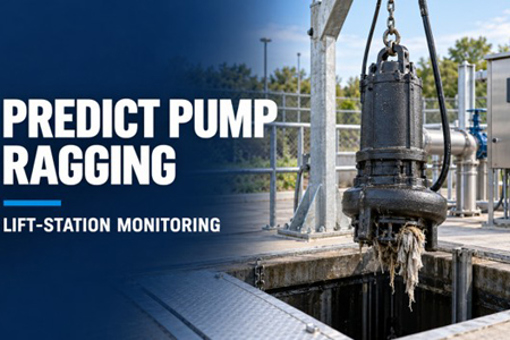
Rags and wipes don’t seize a pump overnight they load it gradually, and the sensors already in the station can see it coming days ahead. The stations that avoid overflows aren’t the ones with the most instruments; they’re the ones that read the right signals together.
- Greater Johnstown Water Authority: Machine Learning Targets Non-Revenue Water
- Tackling Lake Erie's Algal Blooms Requires Targeted Conservation Strategies
- Unlocking Membrane ROI: Strategies For Performance, Longevity, And Bid Decisions
- Illinois Water Treatment Plant Found Plenty Of Reasons To Switch Actuators
- El Niño Intensifies: Collection Systems Should Prepare Now
- Grinding Vs. Screening: How To Select The Best Process For Your Application
- What Does Calibration Actually Mean For Your Water Quality Instrument?
- Finding Leaks On Large Water Mains In Singapore Using Advanced Algorithms
LATEST HEADLINES
- Thermax Showcases Advanced Desalination And Water Recovery Technologies To Strengthen UAE's Industrial Water Security At WETEX 2026
- ZwitterCo Announces Strategic Investment From Ecolab To Drive Water Circularity
- Europe Under Water Pressure: Brunata Launches Joint European Water Solution At Enlit
- Advancements In Security And Industrial Automation Presented At ODVA's 24th Annual Meeting of Members
- Rice Researchers Modify Nobel-Prize Winning Material To Recover Valuable Rare Earth Elements From Industrial Wastewater
FEATURED SOLUTIONS
-
 Unlocking Membrane ROI: Strategies For Performance, Longevity, And Bid Decisions
Membrane lifecycle cost hinges on module quality, cleaning discipline, and how bid criteria are written. Long-running municipal plants show where upfront price and total cost of ownership diverge.
-
 Illinois Water Treatment Plant Found Plenty Of Reasons To Switch Actuators
Lowest-bid actuators can turn a new filtration plant into a maintenance burden. One Illinois facility's repeated failures show why purchase price is only one part of critical valve equipment cost.
-
 El Niño Intensifies: Collection Systems Should Prepare Now
A strengthening El Niño raises the stakes for sewer and stormwater networks, making monitoring of rainfall, level, and flow before the first major storm a matter of readiness rather than reaction.
-
 Can Your Supplier Keep Up? 7 Questions About Processes That Cannot Stop
Purification suppliers now face a harder test than lab performance: delivering identical outcomes in every plant, every quarter. Seven factors separate a product vendor from a partner when processes cannot stop.
-
 Grinding Vs. Screening: How To Select The Best Process For Your Application
Choosing between grinding and screening requires evaluating site constraints, wastewater composition, and downstream treatment needs to balance solids removal, equipment protection, maintenance, and cost.
-
 What Does Calibration Actually Mean For Your Water Quality Instrument?
Calibration is not one process. Its meaning shifts across colorimetric, electrochemical, and amperometric instruments, and applying the wrong expectation to the wrong one can cost time, compliance standing, and accuracy.





WATER ONLINE FEATURED VIDEOS
Compliance data often stalls between the field and the regulator. Mobile capture built for field workers, with shared views for regulators and utilities, points toward more proactive quality management.
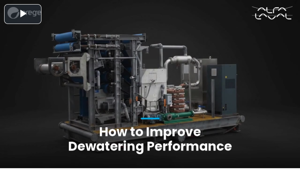
A compact hybrid dewatering design swaps the gravity belt for a drum, cutting footprint and eliminating continuous wash water while targeting up to 20% better dewatering performance.
In this session, Andrew Strassner, President of Sentinel Water Solutions, walks through the practical operations and maintenance realities utilities face as they prepare for the EPA’s 4 ppt MCL.
Learn how our ductile iron pipe, made from over 90% recycled material and built to last more than a century, can help your community invest in resilient, sustainable water infrastructure.

EDITORIAL COLLECTIONS KNOWLEDGE CENTER

Whether you're evaluating new treatment technologies, addressing regulatory pressures, or improving operational performance, our Editorial Collections feature expert perspectives and practical guidance designed to help you make more informed decisions.
SUPPLIER OF THE MONTH
Cyclopure is a leading PFAS treatment company built around one breakthrough: DEXSORB®, the first-ever fully regenerable, PFAS-selective adsorbent engineered specifically for engineered water systems.
Learn more here.
SPECIAL FEATURES
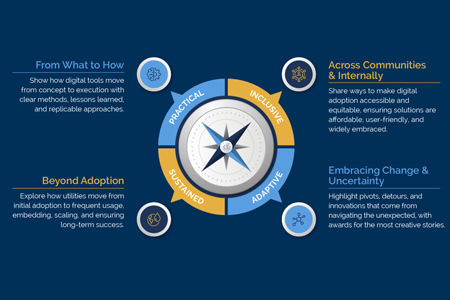
Join SWAN for the 16th Annual SWAN Conference in Tampa, Florida (June 2-4, 2026), focusing on the theme, “Adapting Your Digital Journey.” Digital transformation in the water sector isn’t a straight road. It evolves over time requiring pivots and continuous learning. This Conference aims to meet utilities where they are at, highlighting how to build and sustain success across people, processes, and technology.
Learn more here.
ON-DEMAND WEBINARS
- Lessons Learned From Deployment Of UV Advanced Oxidation Processes In The US
- Smarter Sewer Systems: Using Continuous Monitoring To Improve Operations And Planning
- Practical Ion Exchange Strategies For PFAS Treatment
- DR4900 Product Showcase: Effortless Accuracy For Today's Lab
- Managing by Measurement: 8 Years of Proven Utility Performance
- AI-Enhanced Multi-Method Pipeline Monitoring