
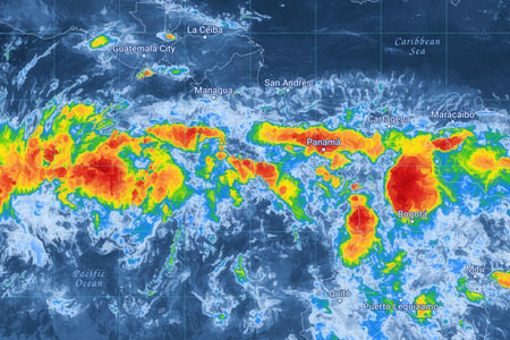
In July, smoke from Canadian wildfires spread across the upper Midwest and Northeast. Now a strengthening El Niño is set to influence the coming winter. Both events matter to lake and reservoir managers because their effects on water quality will continue to emerge long after the skies clear or the El Niño passes.
- The Time To Start LCRI Compliance Is Now
- The Knowledge Is Retiring: What UI/UX Can Bring To Water Treatment
- Safeguarding Reliable Water Service In The Face Of Uncertainty
- Modernizing Pump Stations Without Compromising Cybersecurity
- Why Produced Water Treatment Is Becoming Critical For Sustainable Oil & Gas Operations
- Why Temperature Matters In Photometric Water Testing
- How Incremental Digitalization Empowers Wastewater Teams
- Stop Guessing, Start Predicting Pump Failures
LATEST HEADLINES
- New ABC Report Finds More Opportunities To Put Wastewater Plants To Work
- Emerson's New Flow Measurement Solution Improves Data Center Reliability, Efficiency And Uptime
- TwinThread Launches Anomaly Action Center, An AI-Powered Solution To Prioritize And Resolve Anomalies At Enterprise Scale
- 120Water Partners With TeamSolve To Better Connect Field Data And Water Compliance
- Celebrating The Global Best In Water Project Innovation- Results Of The 2026 International Water Association Project Innovation Awards
FEATURED SOLUTIONS
-
 Why UV-AOP Is Becoming A Cornerstone For Potable Reuse
UV-AOP can provide a critical treatment barrier for potable reuse, while demonstration skids help utilities validate performance under site-specific conditions before committing to full-scale systems.
-
 Modernizing Pump Stations Without Compromising Cybersecurity
Incremental digitalization can help wastewater teams reduce field workloads, improve system visibility, respond to disruptions, and modernize legacy infrastructure without a wholesale technology overhaul.
-
 Water Reuse Is Saving Food Plants Thousands Per Day
Real-time sensing for organic load, conductivity, turbidity, and microbial activity lets food and dairy plants recover condensate and process water once diverted out of caution.
-
 Why Temperature Matters In Photometric Water Testing
Temperature shifts during colorimetric testing can bias photometric results, with ammonia methods showing double-digit deviations outside the 20°C reference condition used for calibration.
-
 How Incremental Digitalization Empowers Wastewater Teams
Incremental digitalization can help wastewater teams reduce field workloads, improve system visibility, respond to disruptions, and modernize legacy infrastructure without a wholesale technology overhaul.
-
 Stop Guessing, Start Predicting Pump Failures
Connected PMAs help wastewater utilities predict pump failures, optimize maintenance, reduce emergency repairs, and improve long-term asset performance through data-driven analytics and expert oversight.





WATER ONLINE FEATURED VIDEOS

Learn why unknown service lines can increase future replacement obligations under the LCRI and why reducing them before November 2027 can help utilities manage compliance.

Utilities may be overlooking substantial SRF funding opportunities, including principal forgiveness. Learn why acting early can help secure available federal infrastructure funding before programs become less accessible.

Learn why LCRI compliance extends beyond inventories and replacements, requiring utilities to manage data, reporting, communications, sampling, coordination, and administrative demands across the program effectively.

Jacqueline Mutter, National One Water Planning Lead for HDR, reflects on how potable reuse has evolved over the past decade from a long-range planning scenario into a critical water supply strategy.

CLOSING THE GAP: A MODERN PLAYBOOK FOR NON-REVENUE WATER
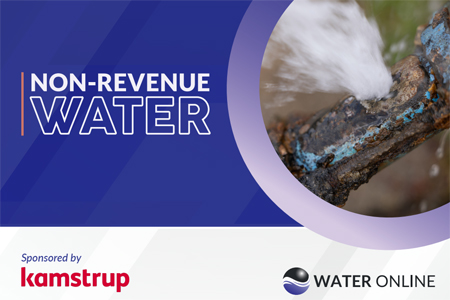
Reducing non-revenue water (NRW) is no longer just an operational goal; it’s a strategic imperative that directly affects asset life, service reliability, affordability, and public trust. This e-book on NRW is intended as a practical guide for utilities ready to take the next step — from managing water loss to controlling it.
SUPPLIER OF THE MONTH
Cyclopure is a leading PFAS treatment company built around one breakthrough: DEXSORB®, the first-ever fully regenerable, PFAS-selective adsorbent engineered specifically for engineered water systems.
Learn more here.
SPECIAL FEATURES
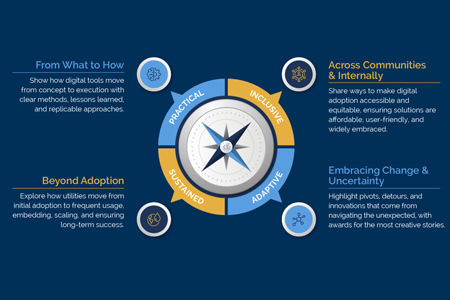
Join SWAN for the 16th Annual SWAN Conference in Tampa, Florida (June 2-4, 2026), focusing on the theme, “Adapting Your Digital Journey.” Digital transformation in the water sector isn’t a straight road. It evolves over time requiring pivots and continuous learning. This Conference aims to meet utilities where they are at, highlighting how to build and sustain success across people, processes, and technology.
Learn more here.
ON-DEMAND WEBINARS
- Smarter Sewer Systems: Using Continuous Monitoring To Improve Operations And Planning
- Practical Ion Exchange Strategies For PFAS Treatment
- DR4900 Product Showcase: Effortless Accuracy For Today's Lab
- Managing by Measurement: 8 Years of Proven Utility Performance
- AI-Enhanced Multi-Method Pipeline Monitoring
- Data-Driven Pumping: Improving Energy Efficiency And Smarter Asset Management