ABOUT TRINNEX
Trinnex helps infrastructure leaders advance their digital journey through proven processes, software tools, and consulting partnership. Our team has decades of domain knowledge, data-science expertise, and a commitment to technical software excellence.
We positively impact public health by removing lead in drinking water, limiting sewerage pollution, providing streamlined water quality compliance, and simplifying utility operations.
Our products and services include: leadCAST, the industry’s most comprehensive Lead and Copper Rule Compliance software tool, waterCAST, an AI-enabled digital water platform that includes multiple point-applications to solve pressing water and wastewater utility challenges, and Trinnex Data Science-as-a-Service (DSaaS), a consulting service that connects you to world-class data scientists to build models that improve your operations.
FEATURED PRODUCTS
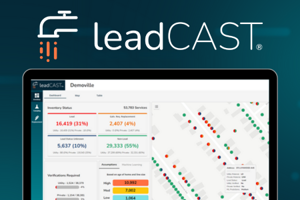
A management system for Lead & Copper Rule programs built by water engineers. With leadCAST, you’ll have everything related to your lead service line replacement program in one place. Access and share at your desk, on the go, and with the community.
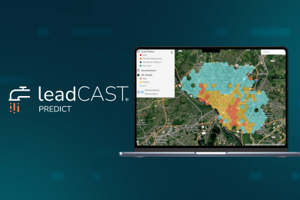
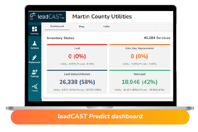
leadCAST Predict is an additional feature of the leadCAST LCRR compliance-management solution that uses a machine-learning model coupled with your inventory data to generate predictions of service line material.
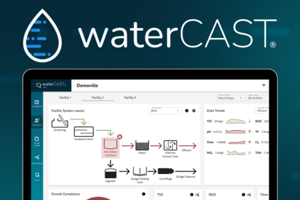
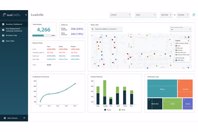
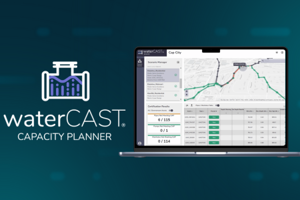
waterCAST® is an AI-enabled digital water platform that transforms how utility leaders manage their water and wastewater systems.
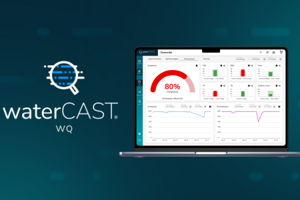
Keeping your community safe in the face of water quality concerns is a complicated task. With the help of waterCAST WQ, you can track your water quality compliance and make informed decisions to safeguard your community.
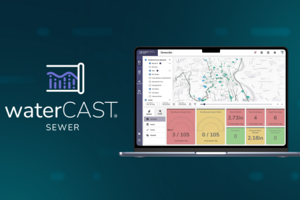
waterCAST Sewer gives you unprecedented insight into the performance of your collection system. Want to achieve near-psychic powers to prevent floods and overflows? It takes less than an hour to find out how this digital twin makes it possible.
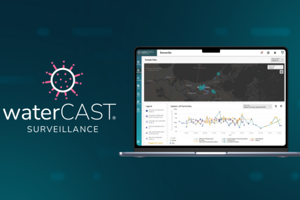
Meet Raini – the rapid AI network intelligence layer built specifically by domain experts for the water workforce. Get instant answers from SOPs, build real-time data charts, and assign critical tasks using simple natural language.
FEATURED ARTICLES
-

Transitioning from reactive SCADA alarms to predictive water quality frameworks improves operational resilience. By unifying data and automating reporting, utilities can identify emerging risks early, ensuring continuous compliance and more efficient resource management across complex treatment processes.
-

Modern infrastructure management requires moving from reactive repairs to data-driven capital planning. By quantifying risk and predictive failure patterns, utilities can justify essential funding and maximize the impact of every dollar spent on system-wide resilience.
-

The use of lead pipes was banned in the 1980s, yet over 9.2 million American households still connect to water through lead pipes and lead service lines. These decades-old lead pipes pose an ever-present risk to the health and wellbeing of Americans.
-

In this article, Steve Drangsholt, Trinnex Sales representative, and Travis Wagner, VP of Digital Consulting, discuss creating digital master plans, their benefits, and changing the narrative.
-

At its core, AI refers to the capability of a machine to mimic human intelligence. Read this article to better understand the difference between AI and Artificially Intelligent systems.



CONTACT INFORMATION
Trinnex
75 State Street Suite 701
Boston, MA 02109
UNITED STATES
Phone: 971-895-2629
Contact: Jay Nelson
CASE STUDIES
-

Pipe replacement planning gets harder when risk scores must become buildable projects. Multi-objective optimization weighs risk reduction and can surface candidates that planners had not prioritized.
-

Rapidly shifting LCRI guidance and a large pool of unknown private-side service lines raise the question of how to resolve unknowns defensibly without widespread excavation, and what regulators will accept.
-

Legacy records and buried infrastructure make service line materials hard to confirm. Centralized data paired with predictive modeling can sharpen targeting and reduce unknowns as deadlines approach.
-

With the LCRR deadline fast approaching and over 59% of its service lines unverified, Martin County recognized the significant work ahead in preparing to meet the LCRR requirements. The county needed to establish a clear strategy for its compliance program, and to support this effort, it needed an engineering consulting partner with extensive expertise in LCRR.
-

Learn about how helping Newark digitize their lead pipe replacement program served as the foundation for leadCAST, a cloud-based management system for Lead & Copper Rule program management.
-

Discover how the use of new smart technologies helps the Clean Water Project team better protect neighborhoods and local waterways through real-time monitoring of sewer system overflows, further driving digital transformation in one of America’s most historic cities.



WHITE PAPERS
-

Water and wastewater utilities need a governance baseline before adopting AI. The central questions are where human accountability, operational technology protection, and data limits belong, and where a starter framework stops.
-

Digital transformation permeates almost every aspect of infrastructure management. Learn how technological advancements like Geographic Information Systems (GIS) and SCADA automation help infrastructure organizations stay resilient.

VIDEOS
-

Modern “find and fix” strategies rely on more than visual inspections. CDM Smith's Christine Ballard explains how AMI pressure sensing and passive acoustic monitoring can detect leaks early, track pipeline health over time, and help utilities act before failures escalate.
-

Before jumping into technology or construction, utilities need clarity on their goals. Christine Ballard, Vice President at CDM Smith, breaks pipeline programs into four clear objective “buckets” — from emergency leak response to long‑term renewal — helping utilities define success before the first dollar is spent.
-

Pipeline replacement projects leave little room for error. From the construction perspective, Andrew Beck, Regional Operations Manager at Garney, explains why detailed pre‑planning, clear shutdown strategies, and rigorous safety protocols are essential to delivering successful projects with minimal service disruption.
-

Which pipes fail most often — and where should utilities focus first? Drawing on data from more than 800 utilities, Greg Baird, Principal Consultant for Utility Financial Management at Black & Veatch, explains how pipe material, diameter, and age drive risk, and why smaller-diameter legacy pipes represent the biggest vulnerability.
-

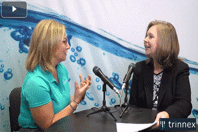
In this episode of Water Talk, we sit down with Amy Corriveau to discuss how Trinnex is advancing digital transformation for utilities.
-

Watch in 90 seconds how leadCAST helps you check off the long list of LCRR requirements so your team can spend time on other priorities.
-

Trinnex is a newly launched wholly-owned subsidiary of CDM Smith. It represents the magic that happens at the intersection of trust, innovation, and experience by fusing bold innovation with deep experience in digital strategies and software solutions.

BROCHURES
-

Digital maturity assessments for water utilities start with existing data systems, IT/OT environments, and stakeholder priorities, then rank initiatives by impact, complexity, cost, and readiness.
-

Water quality compliance can move from alarm-driven firefighting to proactive foresight when LIMS and SCADA data sit in one system and trend analysis flags emerging risk early.
-

Utilities must commit capital before they can see their own assets clearly. Tying near-term spending to life cycle costs and asset condition data is where better-grounded planning starts.
-

Cooperative purchasing contracts can satisfy competitive bidding requirements for water utilities, shortening the path to software, data science, cybersecurity, and more.
-

Discover an AI agent built by water domain experts that brings SOPs, SCADA, GIS, and IoT data into one chat interface, turning plant data into answers, charts, and assigned tasks.
-

Pipe failure forecasting, survival analysis, and optimization move utilities from reacting to breaks toward multi-year capital plans built on asset and break data that can withstand scrutiny.
-

Water and wastewater utilities are dizzy with data. Let Trinnex be your guide in assessing, organizing, and extracting valuable insights from your IT investments. Their team of experienced data scientists are here to help you unlock the power of your data, providing customized solutions to meet your unique needs.
-
Learn about the additional feature of the leadCAST LCRR compliance management solution that uses a machine learning model coupled with your inventory data to generate predictions of service line material.
-

Perhaps you already have some digital elements in place such as a CMMS or IoT sensors on your most important assets. The tools and digital strategies you implement should leave you feeling fully confident in your most critical infrastructure decisions.
-

Built by water engineers and seasoned software professionals, leadCAST, a cloud-based technology platform, manages compliance with the new Lead and Copper Rule Revisions (LCRR).