 Eddie Johnson CEO, Orege North America |
For more than twelve years, we've operated across the United States, working alongside municipal and industrial clients to rethink how sludge management gets done. That experience shaped a positioning that sets us apart. Our approach pairs high end technology with deep operational expertise, and it's built around service. We don't drop off a piece of equipment and walk away. We work next to our clients' teams to maximize their production capacity, optimize their costs, and turn better sludge conditioning into real savings on polymers, hauling, and the day to day running of their plants. That's who we are: a partner focused on making our clients' operations simpler, stronger, and more profitable. |
VOICES FROM THE FIELD
Sludge handling was one of the highest operational costs at Middle Branch, Easley's largest plant at 2.1-2.2 MGD. Orege responded with a working pilot on site: a thickening system powered by SLG-F® technology. "They set up a pilot for us, and it just worked," said Superintendent Scott Barnes.

After its incinerator shutdown in 2017, Gloucester County Utilities Authority was forced to landfill undigested sludge at rising cost. Orege installed its SLG® conditioning technology alongside the plant's existing belt filter presses, without replacing any equipment.
When Columbus Water Works shut down its dewatering and thickening systems for a major upgrade, sludge kept accumulating daily. Orege delivered a preconfigured mobile rental system: two belt filter presses and two rotary drum thickeners, all equipped with SLG® technology.
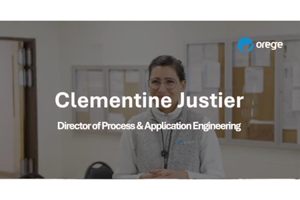
Clémentine Justier, a water science engineer, explains the SLG® process: injecting air into sludge, holding air and sludge together under pressure, then releasing that pressure to disrupt floc structure and improve polymer efficiency.
WHY IT WORKS
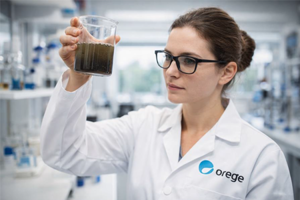
Industrial wastewater treatment is never a static task. Fluctuating pH levels, production shifts, and variable organic loads mean that no two effluents behave identically, demanding continuous monitoring and active process discipline to maintain discharge compliance.
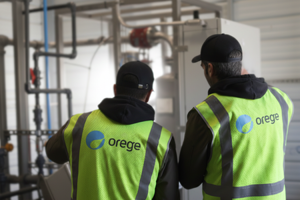
Enhance industrial wastewater dewatering efficiency without replacing infrastructure. Discover how optimizing upstream sludge conditioning and polymer dosing strategies successfully raised average cake dryness to 14.5% while reducing chemical consumption by 15%.