
ABOUT INTEGRATED WATER SERVICES, INC. (IWS)
Integrated Water Services Inc. (IWS) is the pioneer in modular water and wastewater treatment and reuse systems. Our expertise covers emergency response, specialty engineering, construction management, installation, retrofitting, and aftermarket support.
Clean water is vital to human health and prosperity. Water treatment provides clean water to nurture life and power economies. At IWS, we provide a new generation of water treatment systems that are compact, simple, fast, and economic. Our water and wastewater solutions are available on demand and ready to deploy with capital flexibility. With our commitment to sustainability and efficiency, we exist to make clean water easy.
IWS employs a diverse range of technologies to tailor our solutions precisely to our client’s unique needs. Our project portfolio spans a wide spectrum, ranging in size from $500,000 to $25 million, catering to the requirements of residential, industrial, commercial, and municipal clients. We actively engage in both public and private sector projects and actively seek out strategic business partnerships to best service our client’s needs.
FEATURED ARTICLES
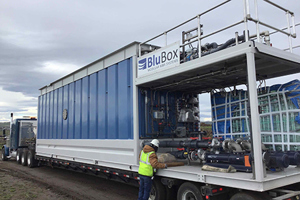
When community growth and strict regulations demand wastewater plant expansions, traditional infrastructure often requires too much space and time. Discover how modular membrane bioreactors shrink footprints by up to 75%, accelerate deployment, and lower operational costs.
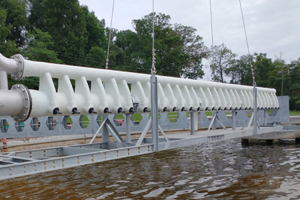
Skid-mounted slot injector systems help wastewater plants boost aeration capacity quickly, avoiding costly shutdowns while improving compliance, efficiency, and operational flexibility.
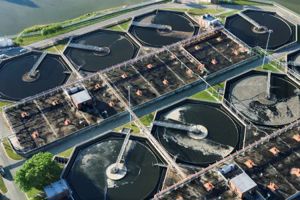
Successful wastewater infrastructure requires aligning engineering decisions with long-term capital improvement cycles. By prioritizing phased adaptability and modular design, utilities can manage staged funding effectively while ensuring systems remain scalable for future regulatory and growth demands.
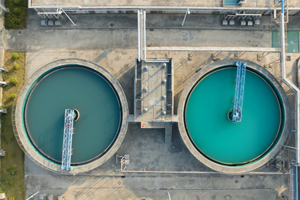
Traditional wastewater plant design often relies on outdated flow assumptions, leading to oversized, inefficient systems. Prioritizing actual usage data and modular scalability ensures operational stability and fiscal responsibility, protecting small communities from the long-term burdens of overbuilt infrastructure.

Digital connectivity in decentralized water systems creates new vulnerabilities for private utilities. Protecting critical infrastructure requires proactive "cyber hygiene," including network segmentation and rigorous access controls, to ensure operational uptime and prevent unauthorized system interference.

Jet aeration delivers decades-long service life with corrosion-resistant materials, clog-resistant design, and simplified maintenance—eliminating basin outages and reducing lifecycle costs compared to fine-bubble diffusers.

Integrating aeration and mixing through jet aeration enhances oxygen transfer, improves process control, and significantly lowers power consumption—especially when upgraded with advanced Slot Injector technology.
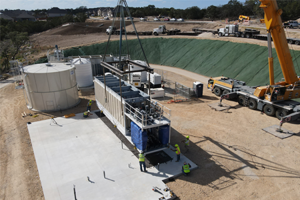
Learn how to design wastewater infrastructure that grows with demand. Modular systems allow phased capacity additions that match actual flow, avoiding the high cost of oversizing and eliminating the need for disruptive, repeated construction.
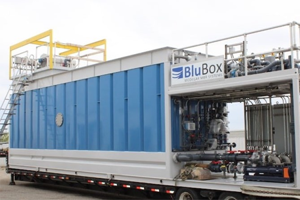
Whether it’s a hurricane, flood, fire, or extended power outage, the systems that sustain communities are often the first to be tested. And among all treatment technologies available, membrane bioreactors (MBRs) have proven uniquely resilient.
Maintain strict permit compliance even when hydraulic shocks or seasonal loads hit your system. Membrane filtration ensures dependable removal of solids and organic load, providing a critical process stability buffer against unexpected compliance risks.

Diverse wastewater flows from mixed-use projects strain conventional systems. Learn how advanced biological treatment stabilizes unpredictable loads, ensures compliance, and delivers high-quality water suitable for reuse.

Wastewater flows in seasonal resorts are highly volatile. Learn how to stabilize biological treatment against sudden peak demands and low-flow off-seasons, ensuring continuous compliance and securing a high-quality water source for reuse.
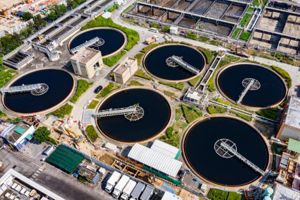
For private utility owners and operators, legacy infrastructure isn’t a sunk cost. It’s an opportunity. And with the right retrofit strategy, that aging wastewater treatment facility can become a stable, revenue-generating asset.
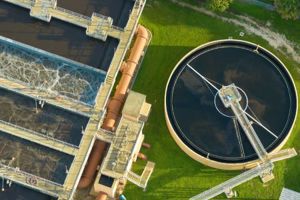
For private utilities, discharging wastewater isn’t a one-size-fits-all process. If your facility serves a resort, a golf course, a residential community, or a mixed-use development, you’re likely discharging into smaller, localized water bodies (creeks, ponds, wetlands), not large rivers or oceans. And while these ecosystems are beautiful they’re also incredibly vulnerable to nutrient loading and eutrophication.

For years, conventional activated sludge (CAS) has been the default in wastewater treatment. But the industry is changing.
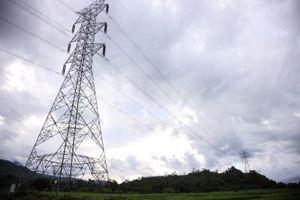
MBRs offer long-term cost savings by reducing sludge, chemicals, and labor — even with higher energy use — making them a future-proof, total-efficiency upgrade over traditional wastewater treatment systems.
Sludge management costs aren’t going away, so your team needs to find a solution. Land application bans, PFAS regulations, and rising disposal costs are making sludge an even bigger financial liability.

This article isn’t about the theoretical benefits of MBR technology. It’s about what actually impacts day-to-day MBR operation—and what makes an MBR plant feel intuitive, stable, and predictable… or frustratingly complex.

Reclaimed water systems, powered by MBR technology, offer developers a sustainable, cost-saving solution that meets rising water demands, eases permitting, and aligns projects with future environmental expectations.

Power outages aren’t just a headache for wastewater treatment plants—they’re a direct threat to operations, compliance, and public health.
CONTACT INFORMATION
Integrated Water Services, Inc.
115 Wild Basin Road S., Suite 107
Austin, TX 78746
UNITED STATES
Contact: Jamie English


