
Your Chlorine Sensor Is Lying to You — Here's 65 Days Of Proof
The operators at Compton Durville Water Treatment Works thought their chlorine dosing was under control. Their membrane-based chlorine sensor showed residuals right at setpoint. The PID loop was doing its job. On paper, everything looked fine.
It wasn’t.
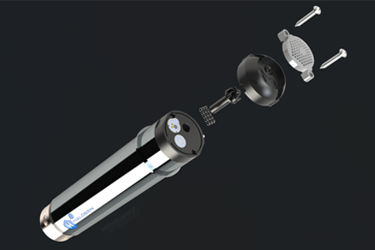
When Wessex Water installed a Halogen Systems MP5 chlorine residual monitor alongside the existing membrane sensor in October 2025, the independent readings told a very different story. The MP5 — a self-cleaning, bare-electrode amperometric sensor requiring no membranes, no reagents, and no routine calibration — was deployed purely as a verification instrument. It wasn’t controlling anything. It was just watching.
And what it saw over 65 days and 73 operational cycles was unmistakable: the actual chlorine residual in the treated water was rising steadily throughout every operating period — climbing roughly 10% from the start of each cycle to the end. The membrane sensor, fouled by iron deposits from the site’s high-Fe borehole water, was progressively under-reading. The control system responded exactly as designed — by dosing more chlorine to chase an apparent shortfall that didn’t exist.
This is the hidden cost of membrane sensor fouling: not a dramatic failure, but a slow, invisible drift that compounds with every hour of operation. By mid-cycle, the plant was routinely overdosing by 5–6%, leading to unnecessary chemical spend, elevated disinfection byproduct risk, and a daily calibration routine that could never quite keep pace with the fouling rate.
The data revealed another telling pattern. On weekdays, when operators performed morning calibrations, the system partially corrected itself — only to drift again by the next cycle. On weekends, without that manual reset, fouling accumulated 20% faster. The legacy sensor wasn’t broken. It was doing what membrane sensors do in challenging water: slowly losing accuracy as deposits build on the sensing surface.
Meanwhile, the MP5 required zero intervention for the entire five-month evaluation period. No calibration. No cleaning. No membrane changes. When technicians finally inspected the sensor at the end of the trial, the flow cell was stained from the iron-rich water, but the electrodes underneath the self-cleaning cap were spotless. A quick wipe of the exterior housing confirmed readings within 0.03 ppm of the control sensor average — without any of the maintenance burden.
This white paper presents the complete field analysis: the data, the fouling mechanism, the day-of-week patterns, the cost quantification, and the implications for any plant running membrane-based chlorine sensors in high-iron or high-manganese water. If your site has a history of monitoring difficulties — or if you’ve ever wondered whether your chlorine readings are truly accurate — the evidence from Compton Durville should give you pause.
Get unlimited access to:




Enter your credentials below to log in. Not yet a member of Water Online? Subscribe today.