
ABOUT HALOGEN SYSTEMS
Halogen Systems, Inc., headquartered in Reno, Nevada, is a leading innovator in water quality management solutions, with over 30 years of expertise in developing advanced sensor technologies. Founded to enhance water safety and efficiency, the company specializes in maintenance-free amperometric chlorine and monochloramine sensors designed for diverse applications, including drinking water distribution networks, shipboard ballast water treatment systems, and domestic hot water systems.
For water treatment operators, Halogen's multiparameter sensors offer robust, in-pipe monitoring that simplifies operations by eliminating routine maintenance and calibration needs, ensuring compliance with regulatory standards while Its “no waste stream design” reduces operational costs and non-revenue water loss. These sensors provide accurate, real-time measurements of chlorine levels, pH, conductivity, and other parameters, enabling proactive management of water quality to prevent contamination and optimize treatment processes. Ideal for municipal utilities, industrial facilities, and maritime applications, Halogen's products integrate seamlessly into existing systems, delivering reliability and innovation that empower operators to maintain safe, efficient water supplies. Visit www.halogensys.com for detailed specifications and case studies.
FEATURED ARTICLES

Relying on sparse monitoring points forces utilities to infer water quality across broad networks. Continuous, multi-point data collection delivers real-time visibility, allowing operators to detect trends early, optimize maintenance, and transition to proactive distribution management.

Premise plumbing and hot-water systems are vulnerable to rapid residual decay and biological growth. Continuous, flow-independent monitoring delivers minute-by-minute tracking in stagnant, high-risk zones, helping operators verify disinfection and maintain safety before issues arise.
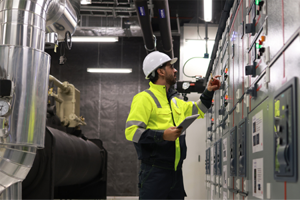
Crowded control panels with separate single-parameter instruments increase maintenance demands, potential leak points, and calibration schedules. Consolidating multi-parameter tracking simplifies system architecture, lowers upkeep costs, and frees up operator time for core tasks.

Excessive drive time eats away at operator productivity without improving water quality. Automated telemetry delivers continuous field data straight to technicians, eliminating unnecessary travel and empowering lean teams to maintain total system oversight.

Routine sensor maintenance silently drains utility workforce capacity through constant recalibration, reagent refills, and travel time. Transitioning to low-maintenance monitoring technology reclaims thousands of operator hours, allowing short-handed crews to focus on vital system infrastructure priorities.

Rapid industrial expansion and data center growth strain municipal water supplies. Eliminating continuous analyzer sample waste and targeting line flushing recovers treated water, strengthening local supply security and demonstrating responsible resource management.
Relying on customer complaints to flag water quality issues leaves utilities playing catch-up. Continuous, distributed monitoring acts as an early tripwire, catching residual loss and biological changes early to contain upsets before they spread.

Dead ends and stagnant mains accelerate disinfectant decay, but conventional sensors require steady flow to read accurately. Flow-independent monitoring restores continuous visibility in low-flow zones, enabling targeted flushing before water quality issues trigger customer complaints.

Drought conditions force utilities to seek new water sources, yet reducing non-revenue water offers an immediate supply boost. Eliminating sample waste and targeting line flushing recovers fully treated water without expensive capital projects.

Continuous sample-to-waste streams can dump roughly 70,000 gallons of treated water per monitoring location. Eliminating flow-dependent sampling preserves finished water, reduces non-revenue losses, and recovers embedded energy and chemical treatment expenses across distribution networks.
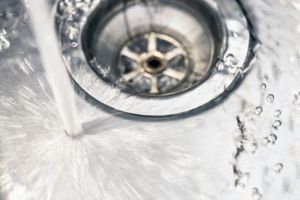
Diverting continuous sample streams to waste drains billions of gallons of fully treated water annually. Adopting in-line, waste-free measurement methods preserves finished supply, lowers embedded production costs, and eliminates unnecessary non-revenue water loss across distribution networks.

A growing infrastructure funding gap requires utilities to maximize every capital dollar. Relying on continuous, trustworthy monitoring data allows systems to shift away from age-based asset replacement and target maintenance precisely where water quality degrades.
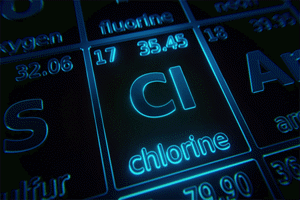
Inaccurate residual readings force water treatment facilities to overdose expensive chemicals or risk regulatory non-compliance. Maintaining measurement accuracy across fluctuating water conditions eliminates costly safety margins and lowers daily chemical expenses.

Small, recurring orders for chemical reagents, buffer solutions, and replacement membranes create an overlooked drain on utility operational budgets. Tallying these hidden expenses across an entire monitoring fleet reveals significant opportunities to eliminate unnecessary ongoing costs.

Focusing solely on initial purchase costs masks the ongoing expenses of monitoring equipment. Accounting for recurring reagents, calibration labor, and maintenance reveals the true ten-year financial impact, guiding smarter long-term budgeting decisions for water utilities.
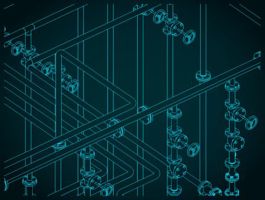
Conventional distribution monitoring relies on sparse plant-level data, forcing utilities to infer water quality across wide piping networks. Dense, multi-point sensing delivers real-time visibility, allowing operators to target flushing, isolate contamination, and optimize distribution operations.

Frequent calibration schedules are often just a workaround for unstable instrumentation prone to measurement drift. By preventing organic fouling at the electrode level, monitoring systems maintain accuracy longer, cutting routine field labor and driving down operational costs.
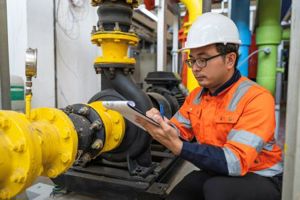
Routine maintenance and travel consume valuable technical capacity. Eliminating low-judgment upkeep tasks frees skilled operators to focus on high-value priorities, turning time savings into a workforce multiplier that strengthens long-term system reliability.

Widespread industry retirements and staffing shortages threaten operational continuity. Adopting low-maintenance, self-calibrating monitoring technology reduces reliance on specialized manual upkeep while establishing automated digital historical records that protect critical operational knowledge through workforce transitions.

Drainage constraints often prevent continuous water quality monitoring at remote tanks, dead-end mains, and critical distribution junctions. Adopting waste-free sensing technology removes plumbing barriers, enabling utilities to close coverage gaps and protect water quality across isolated network sites.
CONTACT INFORMATION
Halogen Systems
8985 Double Diamond Parkway Unit 10
Reno, NV 89521
UNITED STATES
Phone: 775-832-0495