
Why Has Ion Exchange Become The PFAS Treatment Of Choice?
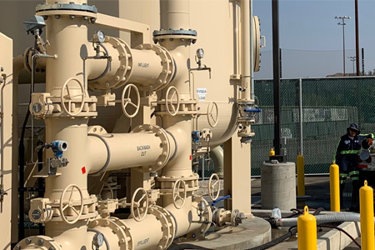
As PFAS regulations tighten globally, water utilities face the daunting task of moving from monitoring to long-term operational compliance. Ion exchange (IX) technology has emerged as a frontrunner for municipal treatment due to its superior kinetics and high selectivity for both long- and short-chain "forever chemicals." Unlike broader filtration methods, PFAS-selective resins utilize electrostatic attraction to "trade" counter-ions for PFAS molecules, effectively securing contaminants within polymer beads.
This high affinity allows for smaller equipment footprints and significantly longer bed life—often measured in years—compared to alternatives. For systems currently utilizing granular activated carbon, transitioning to IX often requires only minor hydraulic adjustments and distributor upgrades to unlock higher flow rates and lower lifecycle costs. Whether implementing single-use resins for simplicity or regenerable systems for high-concentration streams, understanding these chemical interactions is vital for sustainable water management.
Get unlimited access to:




Enter your credentials below to log in. Not yet a member of Water Online? Subscribe today.