
Water Industry Pioneer Dr. James L. Barnard Passes Away At 90
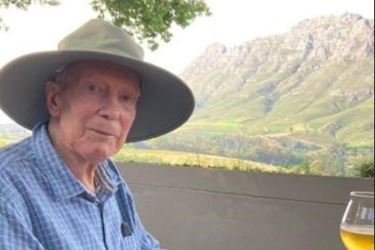
The global water sector is mourning the loss of Dr. James Laing Barnard, a pioneering environmental engineer whose work fundamentally reshaped modern wastewater treatment. Dr. Barnard, widely recognized as the father of biological nutrient removal (BNR), passed away peacefully on January 27, 2026, at his home in Leawood, Kansas. He was 90.
Over a career spanning more than six decades, Dr. Barnard’s innovations transformed how nitrogen and phosphorus are removed from wastewater, enabling sustainable, biological solutions that are now standard practice worldwide. His work helped protect rivers, lakes, and coastal waters from eutrophication while improving treatment efficiency for utilities across the globe.
Architect Of Biological Nutrient Removal
Born in Cape Town, South Africa, on June 6, 1935, Barnard studied civil engineering at Stellenbosch University before continuing his education in the United States. He completed graduate studies at the University of Texas at Austin and earned his Ph.D. from Vanderbilt University under the mentorship of renowned environmental engineer Professor Wesley Eckenfelder.
Dr. Barnard became internationally recognized for developing biological processes capable of removing nitrogen and phosphorus without chemical addition — a breakthrough that marked a turning point in wastewater treatment design and operation. His research and practical engineering expertise bridged theory and full‑scale application, helping move BNR from concept to global implementation.
Among the most influential processes he developed or helped refine are:
- BARDENPHO (Barnard Denitrification and Phosphorus Removal)
- Phoredox / A‑O and A²O processes
- Modified Ludzack‑Ettinger (MLE)
- Westbank Process
These configurations became foundational models for nutrient removal systems worldwide and remain integral to wastewater engineering education and practice.
Global Design And Implementation Impact
Beyond research, Dr. Barnard was deeply involved in applied engineering. He contributed to the design of more than 100 nutrient removal treatment facilities across North America, Asia, Africa, Europe, and other regions, helping utilities meet increasingly stringent nutrient limits.
He played a key role in introducing BNR technology to North America, including early applications at facilities such as Palmetto, Florida, and Kelowna, British Columbia. These projects demonstrated the reliability and effectiveness of biological nutrient removal at full scale, influencing regulatory compliance strategies across the U.S. and Canada.
Dr. Barnard authored or co‑authored more than 60 international technical publications and remained professionally active until the age of 89, continuing to advise projects, mentor engineers, and contribute to the advancement of the field.
Industry Recognition And Honors
Dr. Barnard’s impact earned him many of the water industry’s highest honors, including:
- Lee Kuan Yew Water Prize (2011), awarded at Singapore International Water Week
- Camp Medal, Water Environment Federation (WEF)
- Imhoff/Koch Award, International Water Association (IWA)
- Clarke Prize, National Water Research Institute
- Distinguished Member, American Society of Civil Engineers
- Fellow, Water Environment Federation
- Gold Medal, South African Academy of Science and Arts
- Election to the U.S. National Academy of Engineering (2021) for his development and implementation of biological nutrient removal
He also received honorary doctorates from the University of Johannesburg, Stellenbosch University, and Iowa State University, and was a member of the International Water Association’s Distinguished Group of Professionals.
Mentor And Colleague
Despite his stature, colleagues consistently described Dr. Barnard as approachable, modest, and generous with his time. He served as an adjunct professor and external examiner for doctoral candidates worldwide and was particularly known for mentoring younger engineers, many of whom credit him with shaping their careers.
A Lasting Legacy
Dr. Barnard is survived by his wife Maryna; his daughter Yvette Wilsenach; his son‑in‑law Wynand Wilsenach; his grandsons Gregory and James; his great‑grandson Ilias James; and his brother Sarel Barnard of Cape Town.
A celebration of life will be held on Tuesday, February 10, from 3:00 to 5:00 p.m., at Johnson County Funeral Chapel and Memorial Gardens in Overland Park, Kansas, with remarks beginning at approximately 4:00 p.m.
Dr. James L. Barnard’s legacy is embedded in wastewater treatment plants worldwide. His work established biological nutrient removal as a cornerstone of modern treatment, leaving a lasting impact on water quality, environmental protection, and the global engineering community.