
Reviving The Nashville Wharf: Transforming 1,500 Pile As A US South Coast Port
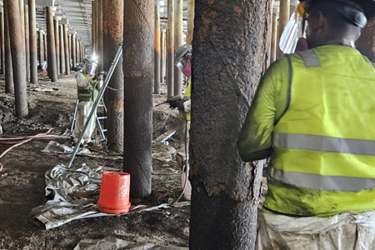
A wharf constructed in 1961 and 1962 faced significant structural deterioration after decades of exposure to a demanding waterfront environment. Inspections revealed corrosion extending more than 13 feet along supporting piles, pitting up to a quarter inch deep, and steel loss severe enough to expose the underlying concrete fill. Previous repairs using alternative fiber-reinforced polymer (FRP) jacket systems had also failed, creating an urgent need for a more durable rehabilitation strategy. At the same time, the facility needed to remain operational, limiting the time available for construction.
This case study examines a rehabilitation project valued at approximately $13.5 million, involving around 1,500 piles in a tidal river environment. Much of the corrosion was located underwater or below the mudline, adding complexity to inspection, surface preparation, and installation. The project account explores the material selections and engineering considerations behind the FRP strengthening approach, as well as the site conditions and construction methods used to maintain progress in a challenging setting. It also examines the production requirements involved in completing one of North America's largest waterfront FRP strengthening efforts and includes perspectives from the project's construction manager. Explore the case study to learn how the team addressed extensive pile deterioration, managed underwater installation challenges, and advanced the rehabilitation while accommodating the facility's operational requirements.
Get unlimited access to:


Enter your credentials below to log in. Not yet a member of Water Online? Subscribe today.