
Renting Or Buying Aeration Equipment: A Decision Framework

Funding sources for wastewater treatment projects can be difficult to justify and secure. In the municipal sector, the surge in money from the Bipartisan Infrastructure Law has been sunsetting, leaving wastewater utilities with fewer options for capital infusions. Meanwhile, industrial businesses tend to see wastewater treatment as a cost center, rather than an area for investment. But when new aeration equipment is needed –– whether to address a temporary need or support permanent infrastructure –– the question is less about whether the money should be spent than about how to spend it. Specifically, should blowers be rented or purchased?
The answer is more complicated than it seems. Wastewater treatment managers must balance capital expenditure (CapEx) against operational expenditure (OpEx) to resolve infrastructure gaps. Determining the right path will ultimately be based on three key criteria: project duration, budget structure, and operational risk tolerance.
The Argument For Blower Rental
The main function of aeration equipment is to provide oxygen for biological treatment. When conditions change or blowers age, the capacity of the existing aeration system may be insufficient, causing the plant to fail to meet its nutrient targets. This, in turn, risks permit violations and subsequent fines.
Blower rental, therefore, can be the ideal solution during temporary events, such as seasonal loads or production peaks (Figure 1). For example, summer heat places extra stress on equipment and increases biological oxygen demands (BOD). Similarly, municipalities that face regular tourist seasons can rent equipment, rather than make expensive purchases that then sit idle most of the year. The same is true of uncommon scenarios, such as World Cup tourism or catastrophic equipment breakdowns.
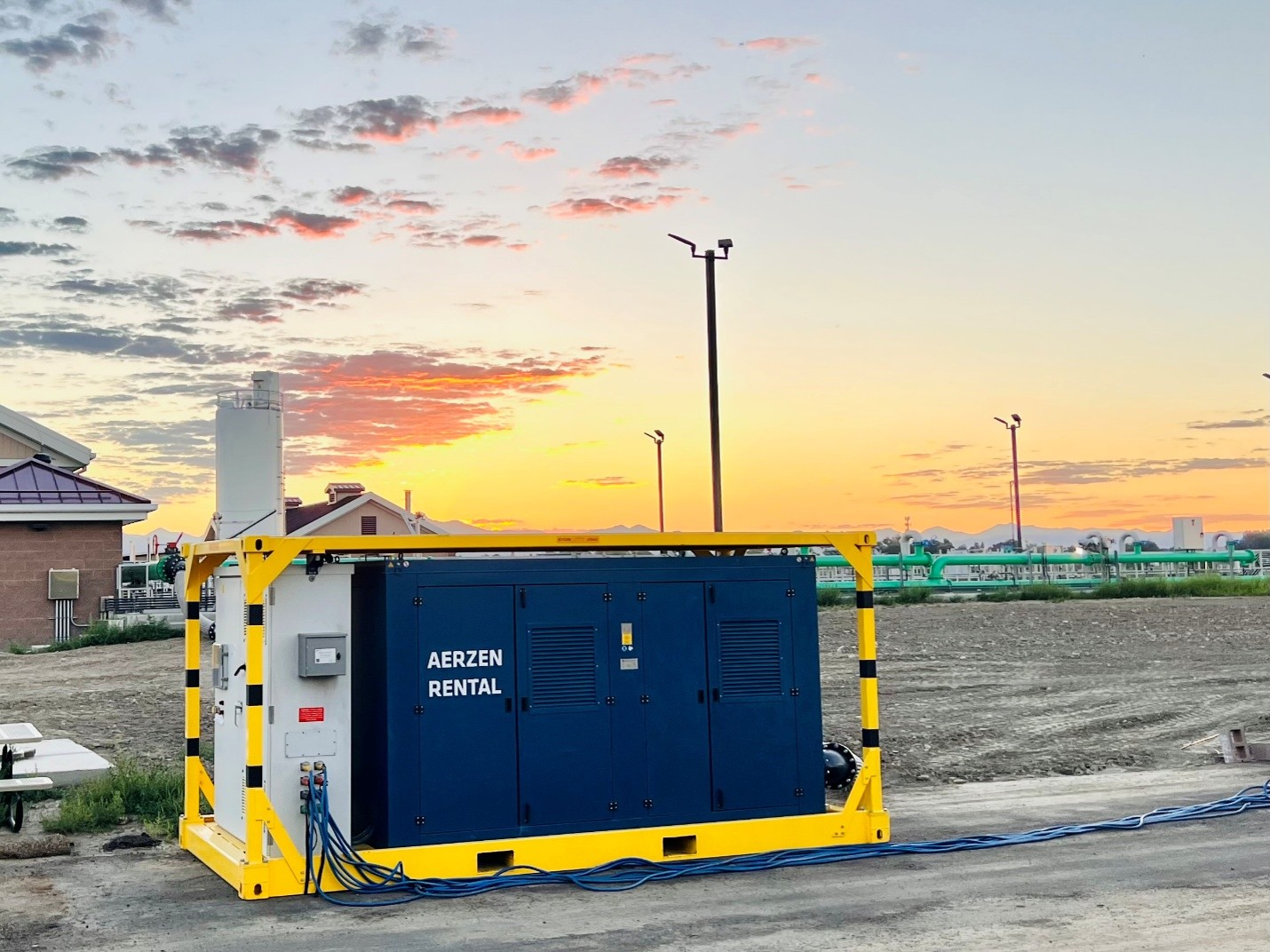
Sometimes, however, rental is not an alternative to, but rather a precursor to a purchase. One such scenario is for pilot testing new processes or equipment. Renting during a pilot phase minimizes the risk of investing CapEx in the wrong size or technology type. When renting directly from manufacturers, such as Aerzen, blowers can often be supplied with a variety of key features, such as variable frequency drives (VFDs), which can be used to fine-tune airflow to pinpoint ideal operational levels. Similarly, control systems and sensors help collect data that can be used to analyze pilot test results.
Sometimes, a rental is used as a bridge until CapEx becomes available. Funding approval can take time, sometimes as much as 24 months, before it can be used to secure a purchase. But when demand comes before the money, renting can fill the gap, ensuring treatment targets are not missed in the meantime.
The Argument For Blower Purchase
Renting does not work for every scenario, of course. Purchasing is the ideal route when the blower is intended to serve as a permanent fixture in the plant’s infrastructure. If the facility has a predictable, steady baseline demand and is looking for a long-term solution, buying a blower is the most logical path. Of course, this presumes that the operation has access to sufficient capital.
Another reason a plant may choose to purchase is the need for more advanced technical capabilities. While many rental units offer robust features, they are generally designed for reliable straightforward deployment. For applications requiring deep SCADA integration, complex data processing, detailed control systems, or specialized physical configurations, a permanent installation may be more suitable. The same is true when the operation demands specialized physical customizations, such as weather-resistant housing and application-specific components that are not standard on prepackaged rental units.
Breaking Down The Decision
When choosing between renting or buying an aeration blower, decision makers must evaluate three important factors:
1. Project duration. The additional capacity may be needed for as little as one week, several months, or even two to three years. Regardless of length, if there is a finite end date or extended periods when the system will be idle, renting may make more sense. For more consistent demand, a purchase is usually ideal.
2. Budget structure. A purchase can only happen when CapEx is available or accessible. If a facility cannot secure CapEx approval or wishes to avoid using limited capital assets, then renting provides an alternative path. Leaning on OpEx makes it easier to authorize spending during emergencies or temporary seasonal demand changes.
3. Operational risk tolerance. Facilities must weigh the hazards of running older equipment against the financial and technical risks of a bad equipment purchase. Buying a blower means the plant assumes responsibility for maintenance, spare parts, and labor. Renting shifts this burden onto the vendor, who handles filter replacements, stocks spare parts, and dispatches technicians if the equipment breaks down.
Ultimately, choosing between renting or purchasing aeration blowers depends on balancing project duration, capital availability, and risk tolerance. While purchasing fits permanent, customized installations with available CapEx, renting provides a flexible OpEx solution for temporary demands, budget delays, and reduced maintenance responsibility.