
Overcoming The High-Maintenance Headache Of Septage Receiving
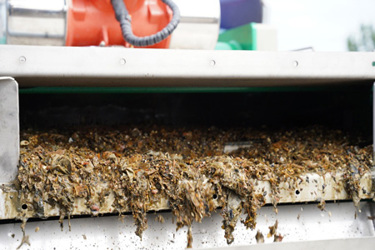
Septage receiving stations must handle highly variable loads containing difficult materials such as fats, oils and grease (FOG), grit, rags, clothing, and debris. Traditional mechanical screening systems can struggle with these materials, resulting in screen blinding, tangled debris, frequent manual cleanouts, and increased operator intervention. Controlled vibration offers an alternative approach to separating solids from incoming septage. The SmartWave Septage Receiving Screen uses continuous vibratory motion to convey debris across perforated screening panels without mechanical scrapers, brushes, or rotating drums. The design is intended to reduce FOG smearing and blinding, continuously convey rags and clothing, and eliminate the need for a separate rock trap and associated manual cleanouts. A dynamic head box helps absorb the impact of incoming loads and distribute flow across the screening surface. With 5 mm openings, the system is designed to capture fine debris while processing 1,200 to 1,600 gallons per minute. Testing cited in the draft indicates truck offload times of 5 to 10 minutes, compared with 20 to 30 minutes for traditional receiving systems. A compact footprint and fewer mechanical components can further simplify installation and maintenance while increasing receiving capacity.
Get unlimited access to:




Enter your credentials below to log in. Not yet a member of Water Online? Subscribe today.