
Managing Turbidity Spikes In Surface Water Sources: Design Considerations For Resilient Treatment Plants
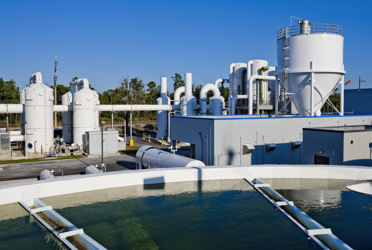
Turbidity has always been a core design parameter in surface water treatment, but the conditions shaping it are changing. Intensifying rainfall, land use disruption, and watershed degradation are driving larger and more frequent turbidity spikes—often exceeding the design limits of existing infrastructure.
For many utilities, this creates a growing mismatch between historical design assumptions and current operating reality. Treatment plants built to handle predictable turbidity ranges are now being pushed into conditions where coagulation efficiency drops, sedimentation is overloaded, and filtration systems struggle to maintain performance. The operational consequences—shorter filter runs, higher chemical demand, and potential compliance risks—are becoming more frequent.
Designing for this new reality requires expanding the operational envelope of treatment systems. That starts upstream, with intake and pre-treatment strategies such as off-stream storage or selective withdrawal to reduce peak loads. Within the plant, flexibility is key: coagulation systems must handle wider dosing ranges, sedimentation processes must accommodate higher solids loading—often through compact, high-rate solutions like lamella settlers—and filtration systems must be sized for sustained performance during extreme events.
Critically, these decisions involve trade-offs between capital cost and operational resilience. Designing for higher peak turbidity increases upfront investment but reduces the risk of performance failure under extreme conditions.
Digital, multi-scenario design tools are making these trade-offs more transparent. By evaluating multiple configurations against a range of turbidity scenarios, they enable utilities to identify solutions that balance cost, flexibility, and long-term reliability—ensuring treatment systems remain effective as source water variability continues to intensify.
Get unlimited access to:




Enter your credentials below to log in. Not yet a member of Water Online? Subscribe today.