
Is Monitoring Of Total Or Free Chlorine A Better Option For Dechlorination Control?
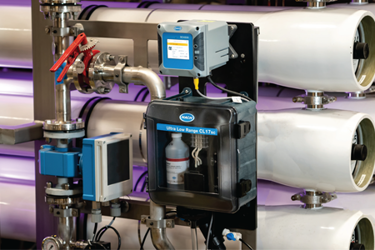
Protecting reverse osmosis (RO) membranes from oxidative damage is a critical balance in water treatment. While free chlorine is often the primary focus of warranty requirements due to its aggressive nature, it is rarely the only oxidant present that can compromise membrane integrity. Relying solely on free chlorine monitoring can lead to misleading data, as common interferences like manganese or chloramines often cause overestimations that mask the true state of the water chemistry.
Total chlorine monitoring offers a more comprehensive safeguard by measuring the Total Residual Oxidant (TRO) level. This approach ensures that all potentially harmful species—not just free chlorine—are accounted for, providing the accuracy needed at ultra-low parts-per-billion concentrations. Furthermore, the increased stability of total chlorine reagents supports the intermittent operation cycles typical of RO skids, maintaining precision over longer periods. Transitioning to a total chlorine strategy provides the reliable oversight necessary to extend equipment life and maintain water quality standards.
Get unlimited access to:




Enter your credentials below to log in. Not yet a member of Water Online? Subscribe today.