
How An Advanced Pretreatment Technology Can Optimize Sludge Management
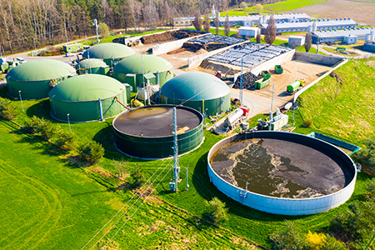
Recent pilot-scale testing of advanced pretreatment and anaerobic digestion (APAD) technology suggests potential for wastewater treatment plants (WWTPs) to significantly enhance methane production while reducing the burden of biosolids disposal. A report on the testing, published in the Chemical Engineering Journal, claims this process could double renewable natural gas production while halving disposal costs.
Overcoming Sludge Barriers
For many municipal WWTPs, conventional anaerobic digestion (AD) remains a standard practice. Despite this, the process often suffers from a low carbon conversion efficiency (CCE) of 40% or less, resulting in large volumes of residual biosolids that face increasing disposal costs and stricter environmental regulations, particularly with regard to PFAS and greenhouse gas emissions.
This low efficiency is due primarily to sewage sludge’s inherent resistance to biological degradation. Bacterial cell walls, as well as polymers such as cellulose, lignin, lipids, and proteins, create a biological shield that prevents microbes from accessing and breaking down organic matter.
The APAD system addresses this by utilizing advanced wet oxidation and steam explosion (AWOEx). In this thermochemical process, post-digested sludge is treated at temperatures between 175°C and 190°C under high pressure. Rapid depressurization causes what the report calls a “steam explosion” that physically ruptures the sludge matrix, converting difficult solids into a highly digestible material. The pilot results indicate that AWOEx pretreatment alone can achieve a CCE of 62% for residual sludge, marking a 68% improvement over conventional AD.
Biogas Upgrades
Standard biogas typically contains 35% to 40% CO2. Given the high cost of purification for the natural gas grid, this leads many WWTPs to conduct routine flaring. The APAD process integrates a biogas upgrading stage to convert this waste gas into fuel.
By utilizing a high-activity, thermophilic methanogen, Methanothermobacter wolfeii BSEL, in a trickling bed reactor, the system combines CO2 from the biogas with hydrogen to produce additional methane. This process results in a final product with less than 3% CO2 content, meeting the quality standards for grid injections as renewable natural gas (RNG).
Economic Impact
An economic analysis shows that implementing these advanced methods can drastically alter the financial landscape of sludge treatment. A benchmark for standard AD treatment is approximately $494 per dry ton of solids, with two-thirds of that cost tied to dewatering and disposal. By comparison, the implementation of AWOEx pretreatment alone can reduce the levelized cost of treatment to $253 per dry ton.
While the full APAD process currently carries a higher operating cost ($530 per ton) due to the price of industrial hydrogen, the pilot test showed a 200% increase in RNG output compared to conventional treatment. As the availability of lower-cost renewable hydrogen increases, this technology offers a viable pathway for facilities to move toward carbon-neutral waste management and enhanced energy recovery.