
GeoTree - Water Conveyance Tunnel Rehabilitated With GeoSpray Geopolymer
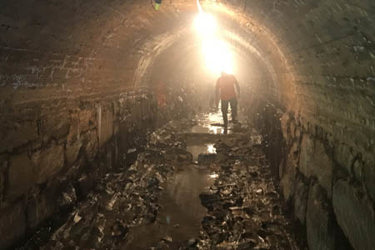
Restoring historic water conveyance tunnels constructed from brick and granite presents unique engineering hurdles, particularly when traditional relining methods like slip-lining or CIPP are ruled out due to irregular shapes and hydraulic constraints. In these aging structures, decades of service often leave significant gaps in the original mortar, leading to severe groundwater infiltration that can undermine the surrounding soil stability.
The rehabilitation of such complex assets now favors high-performance geopolymer mortar systems. This trenchless approach allows for a structural lining that conforms exactly to the existing arched geometry without significantly reducing the flow area. Before application, active leaks are neutralized using injection grouting, followed by the installation of a smooth, level floor to optimize hydraulics. The geopolymer is then hand-sprayed or centrifugally applied to the required design thickness, creating a monolithic, structurally independent pipe-within-a-pipe. This method not only stabilizes the historic structure but also provides a permanent barrier against future corrosion and infiltration. Read the full case study to see how geopolymer technology extends the life of mission-critical water tunnels.
Get unlimited access to:




Enter your credentials below to log in. Not yet a member of Water Online? Subscribe today.