|
|
|
|
|
|
|
|
|
|
|
|
| Webinar: Why Surface Water Treatment Is Still So Hard — And What Needs To Change | Surface water treatment planning faces rising regulatory pressure, aging infrastructure, and growing complexity — yet early design methods remain outdated. This moderated panel explores where traditional planning breaks down, how early assumptions lock in cost and risk, and why challenges are intensifying. Through real-world examples, learn how rethinking early design can reduce downstream rework, delays, and uncertainty. Click here to learn more. |
|
|
|
Smart Antenna Technology For AMI | By Master Meter, Inc. | When several years of drought subsided and water restrictions were lifted for the City of Round Rock, TX, residents quickly returned to their pre-drought usage patterns — and as they watered their lawns, filled their pools, and used water the way they had before the drought, their monthly bills began to rise. |
|
|
|
The Laser Advantage | By Lovibond | High-resolution laser technology detects microscopic particles and subtle filtration breaches that traditional systems miss. By monitoring signal fluctuations and utilizing concentrated light sources, operators can achieve superior effluent accuracy and optimize filter run performance. |
|
|
Electrocoagulation Unlocked | By Avivid Global Water | Despite electrocoagulation's demonstrated effectiveness, developing a reliable, low-maintenance reactor with sufficient water processing volume has proven to be a significant engineering challenge. |
|
|
|
Retrofitting Existing Headworks — Getting It Right | By Huber Technology, Inc. | When a new wastewater facility is being designed and built, the engineers, contractors, and plant operators look for the most effective and cutting-edge solution available at the time of the install. But while many circumstances can be foreseen and planned for, changing regulations and treatment environments can usurp plant designs, quickly make them obsolete. |
|
|
|
2nd Generation ATAD Provides Superior Treatment | By Thermal Process Systems | In a bold move to modernize its wastewater treatment, Bowling Green, OH, installed the state’s first second-generation Autothermal Thermophilic Aerobic Digestion (ATAD) system — ThermAer — in 2004. The upgrade expanded the plant’s capacity from 6 to 10 MGD and replaced an inefficient, odor-prone coarse-bubble aeration system. |
|
|
|
Empowering Water Utilities Through Meter Data | By Siemens | Modernizing water infrastructure requires robust digital systems to manage high-volume metering data. Centralizing this information enables precise leak detection, accurate water balancing, and proactive customer engagement, ultimately driving operational efficiency and long-term sustainability goals. |
|
|
|
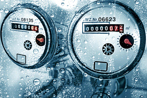
| Smart Water Meter Market Soaring Toward $15B By 2033 | According to Growth Market Reports, the global smart water meter market was $6.3 billion in 2024 and will reach $14.9 billion by 2033, driven by the increasing demand for efficient water management solutions and growing urbanization. |
|
|
|
|
|
|
|
|
|
Lmic | The Lmic is an easy-to-use, low-cost electronic listening stick combined with a ground microphone. It is ideal for general leak-sounding operations and can be fitted with either a tripod foot (for use as a ground microphone) or probe rods (for sounding at fittings or in the soft ground). | • Request Information | Fluid Conservation Systems Inc. | |
|
|
|
|
|
|
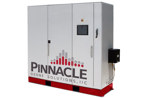
ZENITH 20/30X Ozone Generator | The Zenith Series packaged ozone systems have been designed for municipal and commercial users requiring the ozone be delivered in a specific manner with no deviation or shutdown. | • Request Information | Pinnacle Ozone Solutions | |
|
|
|
|
| Design Generator Platform Advantages | Design Generator (“DG”) is a web-based, online water facility design engineering platform that enables engineering professionals to rapidly generate preliminary engineering designs for CAS facilities as well as MBR, MBBR, and others. |
|
|
|
|
|
|
By Manny Teodoro, Chad Seidel, and Joe Cotruvo | When it comes to drinking water, sound public policy requires sound scientific research. Publication in a prestigious, peer-reviewed journal helps establish legitimacy for scientific claims in public discourse. But science is a social process, scientific standards of evidence vary across disciplines, and peer review does not guarantee validity. For readers who stop at the abstract, these distinctions can be easy to miss. | |
|
|
|
By Terri Lewis and Ankit Dhorajiya | Many utilities still default to time-based maintenance, servicing equipment by the calendar or hours of operation of the equipment. It’s simple, but it often creates two expensive outcomes: over-maintenance and surprise failures. A smarter path is condition-based maintenance. | |
|
|
|
|
|
|
|
| Connect With Water Online: |
|
|
|