|
|
|
|
|
| Unlock the power of AI for water utilities | Discover how leading utilities are using generative AI to optimize operations, enhance customer service, and build resilience in the face of aging infrastructure, workforce transitions, and regulatory complexity. This new white paper from Bluefield Research and Xylem outlines real-world applications and a strategic roadmap for AI adoption in water management. Download the white paper now and explore how AI can become your next strategic utility asset. |
|
|
SOURCE & DRINKING WATER TREATMENT |
|
|
|
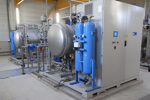
By Steve Martin, De Nora | Using ozone and UV advanced oxidation processes (AOPs) can help industrial facilities achieve compliance, but what's the right process for your application? | |
|
|
Addressing PFAS Contamination In Cape Fear's Source Water | By Calgon Carbon Corporation | The Cape Fear Public Utility Authority (CFPUA) provides drinking water to more than 200,000 residents in the Wilmington, NC, area. In 2017, the community learned that PFAS were contaminating CFPUA’s drinking water source. |
|
|
|
|
DISTRIBUTION & COLLECTION SYSTEMS |
|
|
|
By Mueller Water Products | Discover how the selection of the right valve can help to effectively prevent surge during pump start or water hammer during pump stop. | |
|
|
|
|
|
|
|
By World Water Works, Inc. | To help you select the best wastewater treatment strategy for your dairy processing application, this white paper provides a helpful overview of some of the challenges you will encounter including biochemical oxygen demand (BOD), total suspended solids (TSS), and nitrogen and phosphorus removal. | |
|
|
Solving America's Wastewater Woes | By United Rentals | Like so much of America’s infrastructure, our wastewater infrastructure is aging and inadequate. Like our highways and bridges, our wastewater infrastructure needs improvement. How do we solve this problem? |
|
|
Distillery Wastewater Byproducts Fuel Sustainability | By KLa Systems | For distilleries, high levels of biochemical oxygen demand (BOD), nitrogen, total dissolved solids (TDS), and total suspended solids (TSS) put extra pressure on optimal biological treatment requirements. Here are some techniques that can help distillers put a little extra money in the bank while meeting the challenges of environmental discharge requirements. |
|
|
Overcoming Obstacles To Increase Wastewater Capacity | By Aerzen | It’s a scenario that is becoming more common at food and beverage facilities. The introduction of a new product to market, or a boom in sales of an existing product, prompts management to increase production capacity. While there is plenty of space for production equipment, the corresponding need for additional wastewater treatment capacity may not be readily accommodated. |
|
|
|
|
By Xylem | From droughts to floods to leaking pipes, water utilities are under more pressure than ever. Traditional infrastructure wasn’t designed for today’s demands, but digital technology is helping close the gap. Read about three utilities that are using intelligent solutions to provide cleaner, more reliable water supply for the communities they serve. | |
|
|
Superpowers For Water Systems | By Tom Walski, PhD, Bentley Systems | Discover how your digital twin can give your team members who operate your water distribution systems powers they don’t have today. |
|
|
Why Operator Experience Comes Down To Design, Not Membranes | By Integrated Water Services, Inc. | This article isn’t about the theoretical benefits of MBR technology. It’s about what actually impacts day-to-day MBR operation — and what makes an MBR plant feel intuitive, stable, and predictable… or frustratingly complex. |
|
|
How Small Utilities Can Afford To Reap The Benefits Of Large District Metering Solutions | By McCrometer, Inc. | Water scarcity issues and increased production costs are putting more pressure than ever on small water utilities, which tend to rely on relatively few personnel to deliver a quality, affordable product to consumers. The good news is that proper flow metering technology and resulting data can help ensure that water quality and service in smaller communities remain on par with larger systems. |
|
|
|
|
|
|
|
|
|
|
|
|
| Connect With Water Online: |
|
|
|