
A Playbook For Reliable Reverse Osmosis Operations
By Matthew Flannigan
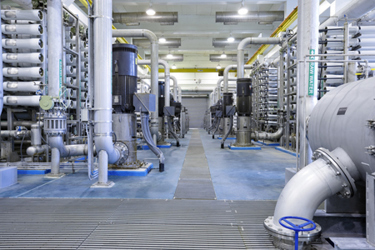
Water treatment operators face more challenges than ever. While regulatory requirements are changing rapidly, infrastructures are aging and making it difficult to comply with new laws — and keep up with demand. There’s also the issue of retiring talent. Attracting, training, and retaining skilled workers is increasingly difficult. Amid these challenges, reuse and sustainability expectations are escalating. All of this is creating tension for workers and a bevy of seemingly unavoidable trade-offs.
Deploying new reverse osmosis (RO) technologies can help alleviate some of these pressures and contribute to better outcomes. But it doesn’t address skill or staffing gaps. Depending on the technology employed, it may even increase the level of skill needed to understand, operate, and maintain these systems. An integrated RO program offers water treatment operators a more complete solution.
Driving Higher Recovery Rates Without Compromise
Managing reliability in view of increased recovery rates often leads to problems with water quality, cost, control, and membrane health. Efficiency and recovery are easy metrics to track and report. And when water conservation sits high on the priority list, it feels like a smart lever to pull.
But increasing recovery rates requires the right pretreatment chemistry, dosing strategy, and robust operational visibility to do it sustainably. Without a program designed to support optimization efforts, pretreatment gaps and poor visibility can become the culprits of significant RO issues. Inconsistent or ineffective dosing puts excessive pressure on membranes, shortening their lifespans. Paradoxically, visibility issues can compound as modern RO technology advances because more automated systems decrease operator touchpoints. This often means early warning signs go undetected until the system is in crisis.
The problems this can cause are all too common. Feedwater debris slowly soils membranes and hampers filtration. Mineral solids accumulate, undermining throughput and elevating pressures. These challenges require faster and more frequent intervention with clean-in-place (CIP) procedures, which accelerate degradation over time and reduce long-term membrane efficacy in ways that can't be fixed by cleaning alone.
Clearly, the solution isn’t simply technology deployment. With the right guiding principles, water operators can get out of this cycle and into a rhythm that supports stable, lasting performance.
The Principles Behind A High-Performing RO Program
The best programs are guided by a defined set of operating principles that provides operators with clear performance standards and a consistent framework for decisions.
Consistency: The strongest RO programs place a premium on delivering reliable, repeatable water quality. Most importantly, they produce the quantity and quality of water required for downstream processes when water is ‘requested,’ monitoring performance for trends that may interrupt this reliability.
Efficiency: Optimal efficiency is achieved when performance, cost, and sustainability goals are pursued collectively. Digital visibility to membrane health that cuts through the noise of changing feedwater conditions and gives operators the ability to detect fouling or scaling early, so they can adjust before costly crises arise.
Longevity: Membranes live or die by the choices operators and managers make on a daily basis. The best programs balance efficiency and output while also calibrating pretreatment and cleaning proactively, before performance declines past the point of no return. This allows operators to minimize premature replacements and avoid unplanned downtime caused by pushing membranes too hard for too long.
The Three Pillars That Make It Operational
Principles define what your RO program can achieve. The pillars are how it gets there.
1. Data: The key to staying a step ahead of your system
Temperature and conductivity shifts in the feedwater affect every reading an RO system produces. Without properly accounting for them, it’s difficult to distinguish a change in membrane health from normal fluctuation.
Normalized data accounts for those variables and provides operators with a reliable comparison to the new membrane performance for monitoring system health. That comparison surfaces fouling and scaling early and shifts cleaning from a fixed schedule to a condition-based one. Acting on those signals before they escalate extends membrane life and ensures uninterrupted production. It also presents the opportunity to decrease chemistry use, downtime, and added stress to the membranes with frequent cleanings, depending on current practices and impacts.
2. Chemistry: Protect membranes from what they can't control
Feedwater conditions can shift constantly — between dissolved mineral content, particulate, and microbiological loading. Pretreatment calibrated around average conditions will eventually come up short. Understanding and then designing RO chemistry programs for worst-case conditions and, if necessary, adjusting over time is how programs stay ahead of that variability.
When seeking optimized percentage recovery, scaling is typically the first sign that conditions have outpaced chemistry. Once it forms, output drops and cleaning intervals shorten. Targeted scale control keeps it in check, stabilizing recovery and protecting long-term efficiency.
Also, if you still use fixed cleaning schedules, your RO system is likely missing what it needs most — data that matches chemistry to the right problem at the right time.
3. Expertise: Good management, consistent regardless of who's running the system
Most facilities run with lean teams. This can lead to uneven knowledge across shifts, which means the same system can be managed very differently depending on the operator. Digital monitoring tools help close that gap, making the right response less dependent on any one operator's experience. Paired with regular training and site-specific support, they keep small problems from compounding and the program from drifting back into reactive mode.
Maximizing The Value Of Your Current RO System
Most RO programs already have the infrastructure they need to perform reliably. What separates the ones that do is disciplined management — pretreatment aligned with real conditions, normalized performance monitoring, and membrane care guided by the right data rather than old habits. Operators who put those pieces together gain a stronger grip on costs, uptime, and long-term asset life. These principles and pillars are where that kind of management begins, no matter where you work in water.
Matthew Flannigan is an Industry Technical Consultant at Ecolab, where he has spent over 11 years optimizing water treatment and membrane systems for food & beverage manufacturing customers across North America. He holds a B.S.E. in Civil Engineering and a M.S. in Environmental Engineering from the University of Iowa.