
Why Produced Water Treatment Is Becoming Critical For Sustainable Oil & Gas Operations
By Pragati Pathrotkar
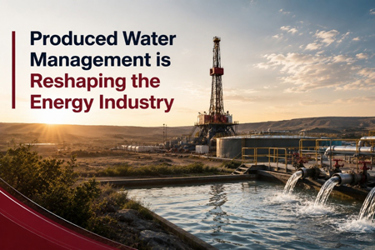
The Growing Challenge Of Produced Water Management
For every barrel of oil extracted globally, operators often generate multiple barrels of wastewater known as produced water. In mature oilfields, water production can significantly exceed hydrocarbon output, creating mounting operational challenges related to storage, transportation, disposal, and treatment.
Produced water is far from ordinary wastewater. It typically contains high concentrations of dissolved salts, residual hydrocarbons, suspended solids, heavy metals, chemical additives, and naturally occurring contaminants. Without proper treatment, managing these complex waste streams becomes both environmentally risky and financially burdensome.
As oilfields continue to age across regions such as North America, the Middle East, and Latin America, water-to-oil ratios are rising, creating long-term opportunities in the global produced water management market.
Rising Regulatory Pressure On Water Disposal
Environmental regulations surrounding water discharge and disposal are becoming increasingly stringent across global oil-producing regions. Regulators are moving beyond basic wastewater disposal requirements and pushing operators toward safer treatment practices, stricter discharge thresholds, and improved reporting transparency.
Offshore operators face tighter oil-in-water discharge limits, while inland drilling regions are seeing growing restrictions on deep well injection and untreated wastewater disposal due to groundwater contamination concerns.
In many markets, non-compliance now carries significant financial and reputational consequences through penalties, permit restrictions, and operational delays. As a result, treatment infrastructure is increasingly viewed as a compliance necessity.
Water Scarcity Is Changing Reuse Priorities
Freshwater scarcity is rapidly changing how oil and gas companies view produced water. In water-stressed regions, operators are under growing pressure to reduce dependence on freshwater resources used for drilling, hydraulic fracturing, and industrial operations.
Instead of treating produced water as waste, many companies are exploring reuse models where treated water is reintegrated into operational processes. Reusing treated water for drilling activities can significantly reduce freshwater withdrawals while improving long-term water security.
As climate change intensifies drought conditions and growing populations place additional pressure on freshwater resources, water reuse is becoming a strategic necessity.
The Business Case For Recycling Produced Water
Produced water treatment is no longer driven solely by compliance — it is increasingly becoming a financial decision.
Recycling treated water helps operators reduce transportation expenses, disposal costs, freshwater procurement expenses, and infrastructure strain. In regions where wastewater must be transported long distances for disposal, treatment can significantly lower operational expenditures.
Additionally, better water management reduces equipment scaling, corrosion risks, and operational disruptions, helping extend infrastructure life and improve production efficiency.
For many operators, the economics of reuse are becoming increasingly attractive as treatment technologies become more cost-efficient.
Treatment Technologies Are Advancing Rapidly
Rapid innovation is improving the efficiency and scalability of produced water treatment systems.
Traditional separation methods such as gravity separators and hydrocyclones remain important for removing oil and solids. However, newer technologies including membrane filtration, dissolved air flotation, advanced oxidation, UV disinfection, and electrocoagulation are helping operators achieve higher treatment standards.
Modular treatment systems are also gaining traction in remote oilfields where large infrastructure investments may not be practical.
Additionally, AI-powered monitoring systems are improving operational efficiency by predicting contamination fluctuations and optimizing treatment performance in real time.
ESG And Environmental Expectations Are Rising
Produced water treatment plays an increasingly important role in corporate sustainability strategies.
Reducing wastewater disposal lowers contamination risks for surrounding ecosystems, minimizes groundwater stress, and decreases emissions associated with water transportation.
Investors, regulators, and stakeholders are placing greater emphasis on water stewardship as part of broader ESG commitments. Companies that demonstrate responsible water management are increasingly viewed as better positioned for long-term sustainability goals.
As environmental expectations continue to rise, poor water management practices may create long-term reputational risks for energy companies.
The Future Of Produced Water Reuse
The industry is gradually shifting from a “dispose and replace” model toward a more circular water strategy.
In the coming years, treated produced water may increasingly be reused not only within oil and gas operations but also in industrial applications where regulatory frameworks allow safe reuse.
While challenges such as capital costs and infrastructure limitations remain, technological advancements, supportive policies, and rising investment activity are expected to support growth in the produced water management market.
Produced water treatment is no longer just a waste management issue — it is becoming central to the future of sustainable energy production.