
When Growth Outpaces Infrastructure: How The City Of Conroe Built A Future-Forward Software-Defined Water System Ready For What's Next
By Sielen Namdar
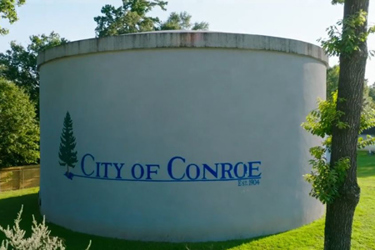
Across the U.S., water utilities are navigating a challenging reality: population growth is accelerating faster than infrastructure investment, while expectations for reliability, transparency, and security continue to rise. Many systems were built decades ago, long before today’s demands for real-time data, remote operations, or rapid scalability.
For fast-growing cities, the challenge is no longer whether modernization is needed, but how to do it without increasing risk or complexity. The City of Conroe, Texas offers a clear example of what it looks like to modernize with intent, by addressing not just equipment, but the underlying architecture of water operations.
A Utility Strained By Rapid Growth
Over the past 20 years, Conroe’s population has more than tripled, from roughly 30,000 to more than 115,000 residents. As demand surged, the city’s water operations struggled to keep pace. Operators spent up to five hours a day manually collecting and reporting data. Issues were often identified only after customers called to complain. And as new facilities were added, engineering and commissioning timelines became longer and more complex. Incremental upgrades were no longer enough.
Conroe’s leadership recognized that continuing to bolt modern tools onto legacy systems would not solve the problem. What the city needed was a more flexible foundation, one that could scale with growth, improve visibility across operations, and reduce day‑to‑day operational burden.
Moving Beyond Traditional Automation
To address these challenges, Conroe partnered with Schneider Electric to adopt EcoStruxure™ Automation Expert, an open, software‑defined automation platform. The decision marked a shift away from traditional, hardware‑dependent control systems toward a more modular, standardized approach.
By separating software from hardware, the city was able to standardize operations across water and wastewater facilities while retaining the flexibility to evolve over time. Today, the platform is deployed across 19 water and wastewater sites, supporting Conroe’s broader $50 million infrastructure modernization program. Rather than adding layers of technology, Conroe simplified operations, creating a system designed to scale. The impact was immediate and practical:
- Automated data collection and reporting replaced manual reporting, resulting in enhanced regulatory compliance.
- Real‑time alerts enabled proactive response before customer service interruptions
- Remote monitoring improved operator visibility and efficiency.
- Reduced water loss and optimized operations, contributed to lower operational costs.
- Built‑in cybersecurity and disaster recovery strengthened security and resilience in a hurricane‑prone region.
- Modular, software-defined architecture significantly reduced the time and complexity of bringing new plants online.
- Standardized controllers reduced engineering complexity and sped commissioning.
Measurable Results, Day‑To‑Day Impact
Conroe’s transformation delivered tangible operational outcomes. Daily data collection dropped from hours to minutes. Recovery time after system faults improved by 80%. Engineering efficiency increased by 70%. And as the city expanded from four facilities to nineteen, it maintained reliable, 24/7 service for a rapidly growing customer base leveraging standardized operations.
Daniel Roberts, Water Superintendent for the City of Conroe, describes how these changes reshaped daily operations in this short video.
Why Conroe’s Experience Matters
Conroe’s story reflects a broader shift underway across the water sector. Many utilities are recognizing that legacy, proprietary automation systems can limit flexibility, slow innovation, and increase lifecycle costs. As workforce constraints grow and capital remains tight, systems that require heavy customization and long commissioning cycles become difficult to sustain.
Open, software‑defined automation offers an alternative and future-forward path. By enabling standardization and remote operations, utilities can simplify maintenance, reduce risk, and adapt more easily to future needs — whether that means adding new capacity, integrating analytics, or strengthening cybersecurity.
Importantly, this approach does not require ripping and replacing existing assets. It allows utilities to modernize their systems incrementally while creating a more resilient foundation for long‑term growth.
Designing For The Future, Not Just The Present
What distinguishes Conroe’s experience is not the technology itself, but the clarity of purpose behind it. The city focused on outcomes — faster recovery, improved visibility, reduced operational burden, and reliable service for residents — rather than chasing modernization for its own sake.
As communities across the U.S. confront similar growth and infrastructure challenges, Conroe offers a valuable lesson: future‑ready water systems are built by simplifying, standardizing, and designing for change. When utilities invest in architectures that can evolve with their communities, they position themselves not just to meet today’s demands, but to adapt confidently to whatever comes next.
Sielen Namdar is an industry executive with more than two decades of experience leading high-impact strategy for digital transformation of industries. She is currently the U.S. head of the water and environment segment for Schneider Electric and leads the strategy to drive long-term growth for municipal and industrial water segments. Prior to this role, Namdar was Cisco’s global head of sustainability for industries, and before that she was Jacobs’ global senior director of strategic sales and co-founder of Smart Cities Initiative.