
What Utilities Don't Know About GAC Reuse For PFAS
By Jasmina Markovski
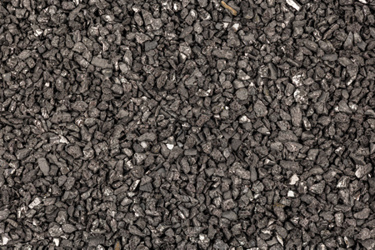
Thermal reactivation of spent granular activated carbon (GAC) uses high temperatures to volatilize and destroy PFAS and restore the carbon’s adsorption capacity for reuse. For utilities building PFAS treatment systems, thermal reactivation may sound like the obvious answer. Send the carbon back to a reactivation facility, pay less than you would for virgin media, get it ready to use again, up to 50% savings over a one-time media use and disposal approach. This technology is also mature, with a Technology Readiness Level (TRL) of 9, which shows that it has been proven, tested, and successfully deployed in full-scale operational and commercial applications.
However, service provider availability and location, specific media acceptance criteria including quantity thresholds, restrictions on GAC type and condition, and regulatory uncertainty can all determine whether reuse is a viable option. In some cases, utilities do not become aware of these constraints until the design phase is well underway, or even after construction is complete, when changing direction, both can be difficult and costly.
When you are asking, “Should we pursue GAC reuse?” in place, you should ask, “Do we qualify for GAC reactivation, and when do we need to know?” Consor helps utilities answer these questions by evaluating media reuse options early in the design process as part of a full lifecycle cost analysis, before key treatment decisions are locked in.
Reuse Potential Can’t Be Assumed
A groundwater utility in Arizona illustrates the complexity of choosing thermal reactivation as a treatment strategy. The system draws from five wells at approximately 1,500 gpm, with combined PFOS and PFOA concentrations of approximately 70 ppt. The treatment facility, currently in design for approximately 2 MGD, includes treatment trains consisting of manganese dioxide filtration for iron and manganese removal, bag filtration for particulate removal, and lead/lag GAC pressure vessels for PFAS adsorption removal treatment.
Pilot testing established that the lead vessels, using bituminous carbon, exhaust in approximately 50,000 bed volumes, or about one year. This results in approximately 80,000 pounds of spent, PFAS-laden GAC requiring management annually.
The potential savings makes reuse worth pursuing. At 80,000 lbs/year, virgin-media-plus-disposal cost is approximately $240,000 per replacement cycle versus approximately $120,000 for thermal reactivation.
However, one significant challenge remains: the presence of certain water constituents may limit the potential for spent GAC reactivation.
What To Consider
#1
Distance from qualified providers and reactivation facilities can undercut the cost benefit. The number of qualified providers is limited, particularly for drinking water applications where reactivated media must meet applicable certification requirements, including NSF/ANSI/CAN 61.
Currently, there are four providers in US, with fewer than a dozen facilities that are not uniformly distributed geographically. Transportation costs, freight logistics, and turnaround times all increase with distance. Before incorporating reactivation into an O&M budget, utilities should confirm the location of the nearest qualified facility and obtain realistic transportation costs. Reactivation facilities usually provide $/lb pricing for reactivated media that includes media loading, unloading, and transportation.
#2
GAC source and manufacturer can determine whether reactivation is an option at all. Thermal reactivation facilities generally prefer bituminous carbon and may limit their services to media they themselves manufacture or routinely handle. If a utility selects a carbon from a manufacturer that does not provide reactivation services, that media may be ineligible for thermal reactivation. Utilities should not buy before they know where it can be reactivated.
#3
Minimum GAC quantities can also exclude smaller systems from reactivation. Custom thermal reactivation for drinking water applications typically requires a minimum batch of approximately 20,000 pounds, as dictated by kiln capacity. This corresponds to a treatment flow of approximately 375 gpm.
Systems below that threshold may be able to send spent carbon for mixed-batch reactivation as a disposal pathway but generally will not receive reactivated carbon back. Another option is to store spent media and accumulate it over several cycles before shipment. This approach makes the most economic sense when PFAS concentrations are high and media has a relatively short service life.
#4
Reactivation process duration requires additional storage. Speaking of storage, reactivation turnaround typically takes four weeks, which means utilities need replacement media during the reactivation cycle as well as storage capacity for reactivated carbon upon return. In the Arizona example, 80,000 pounds of carbon requires approximately 2,500 cubic feet of storage, roughly the footprint of a two-car garage at a five-foot media depth. Unless third-party storage services are being used, the required storage space must be appropriately sited, permitted, and funded as part of the project, rather than being treated as an afterthought.
#5
Spent GAC condition may make it ineligible for reactivation. A carbon's end-of-life condition is a result of the entire water matrix, not simply PFAS loading. Not all accumulated contaminants can be destroyed through thermal reactivation, so not all spent GAC can be reactivated.
Reactivation facilities typically screen incoming carbon for inorganic constituents, radiological characteristics, physical and bulk material properties, and hazardous-material criteria. Inorganic thresholds vary by facility and state and may change over time. Mercury limits, for example, can be very low and vary significantly among facilities. This challenge is currently being encountered by a utility in Arizona, where mercury concentrations in the raw water are near the analytical detection limit, yet the spent GAC reaches the facility acceptance threshold of 0.1 mg/L.
Radionuclides may be subject to limits relative to background levels. Physical characteristics such as mesh size and media integrity can also be affected by operating conditions, including backwash frequency and hydraulic loading rate. Verification requires analytical testing of actual spent media. Therefore, eligibility must be confirmed during system operation or at least during pilot testing when representative spent media has been generated. Earlier assessments can be based on raw water quality, and while these estimates are approximate, they can provide valuable indications and help inform piloting decisions.
#6
Regulatory acceptance remains uncertain and can vary by jurisdiction. There is currently no federal rule specifically governing the reuse of PFAS-laden GAC in drinking water applications. EPA guidance has been supportive of thermal reactivation, and the agency has participated in studies evaluating the practice, but formal approval pathways remain largely State and case-specific.
Utilities should determine whether the proposed reactivated media has NSF/ANSI/CAN 61 certification. This consideration can influence media selection and facilitate regulatory acceptance. State regulatory programs vary in how they approach reuse applications, and the review process can add time and uncertainty that should be incorporated into the project schedule.
How To Evaluate Thermal Reactivation For Your System
A full GAC project timeline (from initial sampling through pilot testing, detailed design, and construction) can span up to six years. Reuse eligibility should be evaluated within the first two years during raw-water characterization, pilot testing, and conceptual feasibility and not during detailed design, bidding, or construction.
By procurement, the media type has been selected, treatment systems have been designed around specific operating conditions, and O&M assumptions may already be incorporated into rate models. Discovering at that stage that the selected media is ineligible for reactivation, can require a disruptive and expensive change.
The evaluation should proceed in four steps:
Step 1: Assess source-water quality early. Review raw water quality data against reactivation acceptance criteria before the pilot is scoped.
Parameters of particular concern include mercury, radionuclides, iron, manganese, and other co-contaminants that may accumulate in the carbon. This screening is relatively inexpensive and can identify whether thermal reactivation is a viable pathway. Work with the laboratory to select sufficiently low detection limits for evaluating contaminant accumulation.
Step 2: Build media analysis into the pilot study. Conduct pilot testing using GAC with thermal reactivation options. Once the pilot generates spent media, collect a representative sample (approximately three to four pounds) and submit it for analysis.
At pilot stage, reactivation facilities mainly evaluate only physical characteristics such as particle size and media integrity. Chemical analysis for mercury, radionuclides, and other threshold contaminants is usually performed by a third-party laboratory. A full chemical screening may cost approximately $3,000, a modest investment compared with the O&M uncertainty it can resolve. A pilot focused only on PFAS breakthrough and treatment performance, while ignoring spent-media characterization, can miss a critical opportunity to establish a residual management plan.
Step 3: Evaluate lifecycle costs during the feasibility study. Compare treatment alternatives based on total lifecycle cost, including media replacement and end-of-life management, rather than media cost and expected run length alone.
Evaluating these factors during the feasibility stage helps avoid selecting an option that appears economical initially but results in higher long-term costs. For thermal reactivation, costs may include reactivation, transportation, interim storage, replacement inventory, loading and unloading, analytical testing, residual management, and regulatory or administrative requirements. For virgin GAC replacement, costs may include virgin carbon procurement, transportation, loading and unloading, spent media handling, disposal, and any required testing.
Step 4: Integrate reuse into the basis of design. Incorporate pretreatment, storage, replacement inventory, facility proximity, transportation, and reactivation logistics into the design from the beginning.
Treatment sequencing and operating conditions including hydraulic loading rate and backwash frequency can affect media condition and, ultimately, reactivation acceptance at end of life. Reuse rarely can be retrofitted into a system designed without it in mind.
What Utilities Should Take Away
GAC reuse is worth pursuing. The potential savings are real, the technologies are available, and keeping carbon out of landfills supports the water industry’s broader sustainability goals. But these benefits are conditional on eligibility, and eligibility should never be assumed. Even a successful GAC treatment process does not automatically produce reusable GAC.
Thermal reactivation comes with media-type and condition constraints, minimum quantity, logistics, and regulatory uncertainty but offers significant benefits. Evaluate source-water chemistry early, include spent-media characterization in pilot studies, and treat residuals management as a design input rather than an O&M footnote. Understanding the nuances of thermal reactivation benefits and limitations can save utilities both money and a huge headache.
 Jasmina Markovski is a Principal Technologist and subject matter expert in drinking water treatment at Consor, based in Arizona. Her work focuses on technical and regulatory expertise, advancing water treatment technologies, and driving R&D innovation. With more than 15 years of experience spanning consulting, regulatory, research, and academia, she currently leads drinking water treatment process design and provides technical leadership. Her previous experience includes guiding the implementation of federal regulations at the state level, leading permitting for conventional and innovative treatment technologies, authoring guidance documents for a state agency, and training a wide range of water professionals.