
What Can You Report From One Outfall Visit?
By Nathaniel Wood
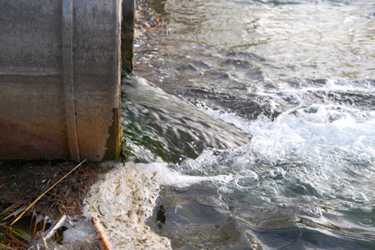
“Tuesday, 9:10 a.m., Outfall 14. A thin stream was visible at the pipe after overnight rain. Photo 1 faces upstream.”
That fictional note has reached a colleague preparing an annual stormwater report. There is a photograph, an asset number, and an unfinished screening form. The inspector did visit the outfall. What does the record support saying about the visit?
The answer starts with the reporting question. A visit, a completed screening and a confirmed illicit discharge are different events. A photograph can support an observation without establishing the water's source. A completed task can mean that someone uploaded a record, while a question about the discharge remains open.
This exercise follows that distinction through a second visit and an office review. All people, assets, and observations in the example are fictional. Use the applicable permit, reporting instructions, and local procedures for actual decisions; this example does not establish a universal screening method or reporting category.
Reconstruct The First Visit
Imagine handing the record to an inspector who has never been to Outfall 14. Can that person find the same pipe? The asset identifier needs a connection to a usable location: a map reference, coordinates, an access description, or another reliable locator. A close-up photograph may show the water clearly while leaving the pipe's surroundings uncertain.
Next, connect each photograph to the observation it supports. The file should be identifiable from the field note, and the note should explain the view. Check when the photograph was taken, rather than assuming its upload date is the visit date. If the location, date, or asset association needs correction, retain the original record and identify the correction.
Read the observation without adding an explanation the inspector did not record. “Flow observed after overnight rain” describes a condition. It does not, by itself, establish a source, pollutant, or violation. In this example, there is no sample result and no source investigation. Those gaps should remain visible.
The U.S. EPA's IDDE guidance describes an outfall reconnaissance inventory that connects location information, photographs, and field observations, with additional investigation as appropriate. The practical lesson for this handoff is simple: another person needs enough context to distinguish the evidence from an assumption about it.
Give The Return Visit One Clear Purpose
“Follow up” leaves the next inspector to reconstruct the assignment. A useful task names the person responsible, the question to answer, and the conditions for doing the work.
For this fictional record, the supervisor assigns Alex to determine whether flow is present during a return visit that meets the program's applicable screening conditions. Alex receives the original note, photo reference, asset location, and local procedure. The task includes a target date and instructions to document a delay if weather or access prevents the planned visit. Any required sampling or escalation follows that procedure.
Suppose Alex returns and records that no flow was visible at the pipe at that time. The new record includes the visit time, relevant weather information, viewing position, and a photograph of the same outlet. It links back to Tuesday's observation.
The two visits now answer a narrower question: flow was observed on the first visit and was not observed during the second. The second visit does not erase the first or establish that intermittent flow never occurs. The supervisor still has to decide whether the available evidence satisfies the assigned question and whether further work is warranted.
Keep both visits available. If the follow-up task is closed, record why it is closed and distinguish that task decision from any unresolved investigation. The phrase “no flow observed during return visit” tells a future reviewer much more than an unexplained “complete.”
Make The Reporting Decision Visible
Place the records beside the actual reporting question. Does it ask for visits, unique outfalls screened, investigations, confirmed discharges, or another measure? Check its definitions, reporting period, and required supporting information before counting anything.
For example, two visits to one outfall do not automatically become two unique outfalls screened. Nor does a saved form necessarily establish that the program's screening requirements were completed. The reviewer needs to confirm what work occurred and what the particular reporting category includes.
Add a short decision note connecting the selected entry to its evidence. Identify the records reviewed, the category used, the reason for including or excluding the item, and any question still open. If the category cannot yet be supported, preserve that uncertainty and assign the missing review. Do not manufacture a conclusion to make a total easier to finish.
This is also a useful point to separate maintenance activity from investigation results. Ordering equipment, uploading a photograph, or completing a return visit may move the work forward. Each accomplishment should be described accurately, without silently standing in for a different outcome.
Try A Five-Minute Handoff
Choose one fictional or appropriately de-identified record and give it to a colleague. Ask them to identify the asset, find the evidence for one observation, describe the next action, and explain which conclusion remains unsupported. Then have them locate the reporting question the record might inform.
Keep track of the places where they need to call the original inspector. Those interruptions point to specific improvements: a clearer locator, a photo caption, a named task owner, or an explanation of a status change.
Run the exercise with paper, a spreadsheet, or the system the team already uses. The useful result is a record that allows the next person to explain what happened, what remains unknown, and what should happen next.
References
Center for Watershed Protection and Robert Pitt. Illicit Discharge Detection and Elimination: A Guidance Manual for Program Development and Technical Assessments (2004), Chapter 11 and Appendix D. Published on EPA's website: https://www.epa.gov/sites/default/files/2015-11/documents/idde_manualwithappendices.pdf
U.S. Environmental Protection Agency. Stormwater Phase II Rule, Fact Sheet 2.5: Illicit Discharge Detection and Elimination Minimum Control Measure (August 2023). https://www.epa.gov/system/files/documents/2023-09/EPA-Stormwater-Phase-II-Final-Rule-Factsheet-2.5-IDDE.pdf
Nathaniel Wood is co-founder of NPDESTracker and has experience in municipal stormwater inspections, program coordination, and GIS. He holds a BS in Environmental Science and a GIS certificate from the University of Washington Tacoma. His work focuses on connecting field observations with usable follow-up and reporting records.