
Water Reuse In Agriculture Market Projected To Hit USD 10.8 Billion By 2033
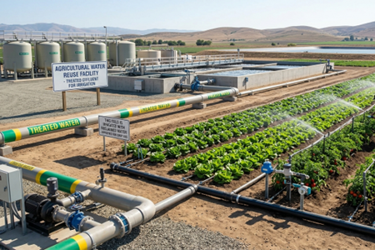
According to Growth Market Reports, the global water reuse in agriculture market size reached USD 4.8 billion in 2024, reflecting a robust demand for sustainable water management solutions in the agricultural sector. The market is projected to grow at a CAGR of 9.2% from 2025 to 2033, reaching a forecasted value of USD 10.8 billion by 2033. This growth is primarily driven by escalating water scarcity, stringent environmental regulations, and the urgent need to enhance agricultural productivity while conserving natural resources. As per the latest research, increasing investments in advanced water treatment technologies and the growing adoption of circular water management practices are expected to further accelerate market expansion over the coming decade.
The water reuse in agriculture market is gaining momentum as governments, farmers, water utilities, and technology providers recognize the value of treated wastewater, recycled water, and reclaimed water in irrigation and crop production. Modern treatment technologies ensure that reused water meets quality standards suitable for various agricultural applications, enabling farmers to conserve freshwater supplies without compromising crop yields. As investments in water recycling infrastructure increase, the market continues to evolve into a critical component of sustainable agricultural development.
Major Market Drivers
Increasing Water Scarcity Across Agricultural Regions
One of the strongest factors driving market expansion is the growing shortage of freshwater resources. Many agricultural regions are experiencing groundwater depletion due to excessive extraction combined with limited natural recharge.
Water reuse offers a dependable alternative that reduces pressure on natural water bodies while ensuring continuous irrigation throughout the growing season.
Climate Change and Drought Resilience
Climate change has increased the frequency and severity of droughts across numerous farming regions. Rain-fed agriculture has become increasingly vulnerable to changing weather patterns.
Recycled water provides a consistent and climate-independent irrigation source, allowing farmers to maintain productivity despite fluctuating rainfall.
Government Support for Circular Water Management
Governments worldwide are implementing policies encouraging wastewater recycling and sustainable water management. Regulatory frameworks, financial incentives, infrastructure investments, and water conservation targets continue to accelerate adoption.
Public agencies increasingly recognize agricultural water reuse as a practical strategy to improve national water security.
Growing Demand for Food Production
Global food demand continues rising due to population growth and changing dietary preferences. Expanding agricultural production without increasing freshwater consumption has become a major priority.
Water reuse enables irrigation expansion while supporting sustainable intensification of farming practices.
Market Challenges
High Initial Infrastructure Costs
Although operational savings are significant over time, establishing water reuse systems requires considerable investment.
Treatment plants, storage reservoirs, distribution pipelines, pumping stations, monitoring equipment, and irrigation upgrades contribute to substantial upfront expenditures.
Small-scale farmers may require financial assistance or cooperative infrastructure models to overcome these barriers.
Public Perception and Acceptance
Despite scientific evidence supporting safe water reuse, public concerns regarding treated wastewater continue to influence adoption.
Education campaigns, transparent water quality reporting, and strong regulatory oversight remain essential for improving public confidence.
Regulatory Complexity
Water reuse regulations vary considerably between countries and even among local jurisdictions.
Different standards regarding microbial limits, crop restrictions, irrigation methods, and monitoring requirements create compliance challenges for project developers and agricultural producers.
Greater international harmonization may facilitate broader market expansion.
Technological Advancements
Artificial Intelligence in Water Management
Artificial intelligence is enabling predictive control of treatment facilities, optimizing chemical dosing, detecting equipment anomalies, and forecasting irrigation demand.
Machine learning algorithms continuously improve operational efficiency while reducing maintenance costs.
Membrane Innovation
Next-generation membranes offer higher filtration efficiency, longer operational life, and lower energy consumption.
These improvements reduce treatment costs while expanding the range of agricultural applications suitable for reclaimed water.
Real-Time Water Quality Analytics
Continuous monitoring sensors now provide instant measurements of microbial content, salinity, turbidity, nutrient concentration, and other critical parameters.
Real-time analytics enhance operational safety while ensuring regulatory compliance.
Renewable Energy Integration
Many treatment plants are integrating solar energy, biogas recovery, and other renewable power sources to reduce operational costs and carbon emissions.
Energy-efficient recycling systems contribute to broader sustainability objectives while improving project economics.
Future Outlook
The future of the water reuse in agriculture market appears highly promising as water scarcity, climate uncertainty, and food security challenges continue to reshape global agriculture. Governments are expected to strengthen policies encouraging water recycling, while technological innovation will further improve treatment efficiency, affordability, and public confidence.
Artificial intelligence, digital water networks, precision irrigation, decentralized recycling facilities, and advanced membrane technologies are likely to become standard components of modern agricultural water management. Increased collaboration among municipalities, farmers, technology providers, and environmental agencies will further accelerate market development.
Competitive Landscape
Prominent companies operating in the market are:
- Veolia Water Technologies
- SUEZ Water Technologies & Solutions
- Xylem Inc.
- Aqua-Aerobic Systems, Inc.
- Dow Water & Process Solutions
- Pentair plc
- Kurita Water Industries Ltd.
- Evoqua Water Technologies
- IDE Technologies
- Aquatech International LLC
- DuPont Water Solutions
- BioMicrobics Inc.
- Miya Water
Reference: https://growthmarketreports.com/report/water-reuse-in-agriculture-market
Source: Growth Market Reports