
How Water Quality Monitoring Systems Help Utilities Deliver Safe Water
By Ashish Kolte
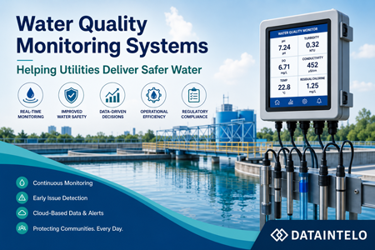
Safe drinking water has long been water utilities' core purpose. Today, however, that job is infinitely more complex. Climate change, infrastructure aging, industrial pollution, emerging contaminants, and more regulatory pressures require utilities to reassess every point at which they measure water quality in their treatment and distribution systems.
Until now, water utilities depended heavily on programmed laboratory sampling at predetermined times to ensure quality. Lab work continues to be the optimum testing method for numerous components but it simply can’t detect sudden and rapid changes in water condition. Given evolving distribution networks and the unpredictability of environmental threats to the water supply, there has been a clear demand for faster access to definitive, real-time water quality data.
The answer lies in continuous monitoring of water quality, allowing operation managers to be informed instantaneously of the conditions and act in a timely and appropriate manner, while optimizing the efficiency of daily processes. This ensures better operational, environmental and compliance performance. Supported by market reports available to the public — such as the DataIntelo Global Water Quality Monitoring Market report — on a worldwide market estimated at USD 6.2 billion in 2025 and expected to exceed USD 11.35 billion by 2034 with a 6.8% CAGR. Digital Water investments are increasing due to environmental regulation, coupled with growing adoption of innovative water monitoring technologies globally.
Why Continuous Monitoring Has Become Essential
An extremely high rainfall rate, a burst pipeline, failure in treatment process, contamination or a spill could degrade the water quality in minutes. The results in laboratotry may take many hours even days to be available for many treatments in such an interval water operator will not be able to do anything. The solution Online monitoring closes this window between contamination and action, giving operators near real-time knowledge of important parameters in the treatment stream and distribution system.
Online monitoring isn’t a replacement for the lab — instead, it works in conjunction with the traditional approach as a form of pre-emption.
Focus on the Right Parameters
An effective monitoring strategy begins with selecting parameters that provide meaningful operational insight rather than simply collecting more data.
Most utilities continuously monitor:
- pH
- Turbidity
- Conductivity
- Temperature
- Dissolved oxygen
- Residual chlorine
- Oxidation-reduction potential (ORP)
- Total organic carbon (TOC)
- Ammonia and nitrate
- Flow and pressure
Monitoring these parameters in combination offer a better view of system operational performance, system health, and performance. For example, an unusual jump in turbidity coupled with a decrease in chlorine residual might be a warning sign of problems that requires attention to prevent further water quality impairment.
Move Beyond Data Collection
Installations alone don’t make clean water possible. Thousands, even millions, of readings can flow from installed sensors every year — yet they only deliver real value if an operator can trust the information immediately. Utilities that get the process right will use these readings and set definitive operational limits, alert thresholds and response protocols.
Instead of bombarding operators with every minor event that’s reported, your monitoring solution should send them alarms on those specific readings which demand operational action. Finally, the configuration of alarm limits should be reviewed periodically to limit the volume of false alarms while not letting critical alarms slip through.
Integrate Monitoring Across Operations
Currently, several utilities maintain separate treatment systems, lab information, and distribution monitoring, as well as asset management. Integrating them together offers substantial operational savings. Online sensors reporting directly to the SCADA/Asset Management System give operators clear insight into overall network performance.
For instance, increasing pressure changes along with decreasing levels of disinfectant residuals could indicate a leak or intrusion of a pipeline, allowing operators to address the issue sooner and minimizing service disruption. This type of monitoring also helps utilities prevent failure and enables Predictive maintenance of equipment that shows gradual performance declines over time.
Strengthen Response Through Predictive Analytics
AI and machine learning are emerging as assets to water utilities — and not because they substitute for operators with decades of experience in making troubleshooting or treatment decisions. They
allow operators to focus attention where it is most needed. Utilities can use these systems to:
- Detect abnormal water quality trends
- Forecast equipment failures
- Optimize chemical dosing
- Identify potential contamination events
- Predict seasonal treatment adjustments
These abilities facilitate moving from reacting to problems to actually managing systems dynamically. Utilities should still ensure predictive models are verified against their past operating history and keep humans involved in decision making on important issues.
Improve Chemical Optimization
One of the most significant operational costs incurred by most utilities is chemical treatment chemicals. Fixed chemical application based on actual raw water quality results in many cases in both chemical costs savings and improved treatment efficiency. Ongoing water quality monitoring can be used to regulate the coagulant application, pH chemicals, and the disinfectant as needed, which may lead to reduced consumption of chemicals, a reduction in sludge formation, and can even contribute to energy cost reductions.
Sustainable water treatment initiatives are even fostered through optimized chemical use, as valuable resources are used as effectively as possible.
Prepare For Emerging Contaminants
Public perception of PFAS, drugs, plastics and algae blooms has set higher expectations of what monitoring will reveal. All except microplastics and drugs are still not considered to be an ‘identified contaminator’ and require subsequent laboratory confirmation of contaminate concentrations but as water quality monitoring continues it will indicate that underlying the sources of raw water may be changing and a follow up sampling programme is required. Water suppliers need to reassess source water conditions on a regular basis and then refresh their monitoring plans as technology advances.
Creating flexible strategies now will enable utilities to meet regulatory challenges that may lie ahead.
Build Workforce Capability Alongside Technology
Investments in technology can only be successful if the people know how to use the new technology. Utilities have to think about operator training just as much as about implementing new systems.
Staff should understand:
- Sensor calibration requirements
- Data interpretation
- Alarm response procedures
- Cybersecurity practices
- Routine maintenance schedules
The combined operations laboratory and the engineering support and information technology departments serve to strengthen overall robustness, as well as decrease individual reliance on skill specialization.
Recommendations For Utilities
The utilities should concentrate on the practicality of implementation rather than the technology itself. Key best practices include:
- Begin with the highest-risk treatment and distribution locations.
- Select monitoring parameters that support operational decisions.
- Define definite alarm thresholds and response procedures.
- Unify your SCADA, IT, OT, and asset management tools with an integrated monitoring solution.
- Maintain routine calibration and preventive maintenance schedules.
- Validate sensor performance using laboratory testing.
- Invest in workforce training as part of every technology deployment.
- Regularly evaluate monitoring data to identify long-term operational improvements.
The greatest value comes from those utilities that integrate technology with process rigor-instruments with a disciplined operating company.
Looking Ahead
Water system operations are experiencing transformation thanks to digital advancements. New technologies in sensors, cloud computing, AI, and predictive analytics are pushing utilities to progress beyond passive regulatory compliance, shifting focus to continuous operational improvement. Investments in water quality monitoring technologies are expected to increase over the next 10 years, according to published market research as utilities work to modernize their infrastructure and adapt to environmental changes.
And in fact, these investments offer even greater opportunities for utilities to increase system resilience, build trust with the public, and drive greater long-term sustainability. Smart continuous monitoring needn’t be just another cost. Used effectively, it is an operational intelligence advantage, providing quicker decision-making, improved operational performance, and risk reduction-while helping your utility assure you continuously deliver safe, dependable drinking water.
Source: DataIntelo