
Water In 2026: The Nexus Of Policy, Technology, And Resilience
By Dr. Thomas Krom
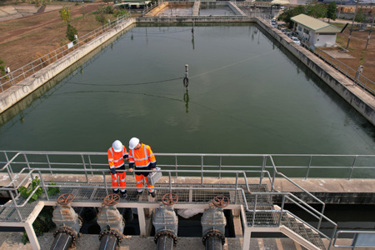
In 2026, the global water sector is accelerating its pivot from a linear model of consumption to a circular and digitized framework. This shift is no longer just an aspiration but a structural change, driven by a confluence of compounding climate pressures, new European Union directives, continuing urbanization and the immense thirst of the digital economy. This year is defined by the practical implementation of a recover, reuse, and repeat ethos, and the urgent need for new models of collaboration to ensure water security for all. As water systems become more circular and complex, understanding and managing the subsurface — the hidden half of the water cycle — is becoming a critical enabler of resilience.
This article explores the key trends shaping this new reality, from tackling “forever chemicals” to the water strategies redefining heavy industry.
EU Policy Drives A Digital And Reused Water Future
The European Union is taking a firm legislative hand in shaping a more resilient water future. The EU's Water Reuse Regulation is now in full effect, establishing harmonized quality standards to make reclaimed urban wastewater a safe and reliable resource for agriculture. This is a cornerstone of the EU's circular-economy strategy, designed to reduce pressure on stressed water sources.
Simultaneously, the EU is championing the digitalization of the water sector as essential for the green transition. With Europe's digital water market forecast to double by 2033, digital technologies — from smart sensors for leakage detection to AI for demand prediction — are seen as critical tools to improve efficiency, monitor quality, and bolster the resilience of aging infrastructure. However, efficiency gains alone are no longer sufficient. The next phase of digital water is not about seeing what is happening, but understanding what could happen — before decisions are locked in. As regulation and digital tools evolve, new sources of demand are reshaping the water landscape just as rapidly.
The Data Center Dilemma: A Challenge To Growth And Resilience
The rapid growth of the digital economy, particularly the explosion in AI, has introduced a formidable new challenge to water resource management. The massive data centers that power our digital lives require significant volumes of water for cooling, creating a new, concentrated demand that can strain local water supplies.
This tension represents a critical new frontier. With global water withdrawal for AI expected to reach up to 6.6 billion cubic meters annually by 2027, proactive collaboration is essential. The path forward requires early engagement between data center operators and utilities, joint investment in infrastructure for reclaimed water, and integrated resource planning that treats data centers as a critical piece of the urban metabolism. Without a clear understanding of local hydrogeology and long-term recharge dynamics, data centers risk becoming stranded assets in water-stressed regions.
The PFAS Challenge: A Multifaceted Problem Meets Breakthrough Science
One of the most complex and pressing issues of 2026 remains the fight against per- and polyfluoroalkyl substances (PFAS). These “forever chemicals” present a multifaceted problem, contaminating groundwater sources worldwide and posing significant risks to human health and ecosystems. The new EU-wide limits on PFAS, now in effect, are intensifying the search for effective and scalable solutions.
The challenge is threefold: detecting the extent of contamination, removing the substances from water, and safely destroying them.
Late 2025 brought a landmark development on this front from researchers at Rice University. They announced a new, eco-friendly material that can capture and destroy PFAS with unprecedented speed and efficiency. This breakthrough technology not only traps the chemicals thousands of times more effectively than current filters but also breaks them down, allowing the material to be refreshed and reused. This represents a major leap forward, offering a potential pathway to truly remediate contaminated sites rather than simply relocating the problem. Breakthrough treatment technologies are most effective when paired with robust subsurface models that define where PFAS is, where it is moving, and how interventions will alter that trajectory.
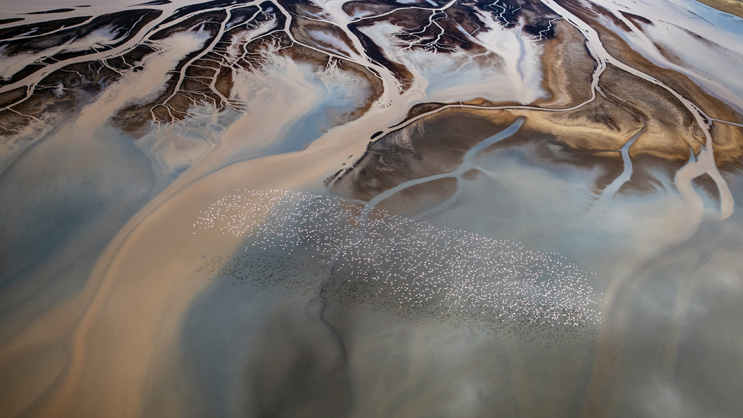
Environment subsurface
From Waste To Value: The Industrial Recover, Reuse, And Repeat Cycle
The principles of the circular economy are now being robustly applied to industrial water, turning "waste" streams into valuable resources.
- Waste Stream
- Beneficial reuse opportunity
- O&G Produced Water/Brines
- These highly saline streams are being mined for critical minerals like lithium, turning a disposal liability into a key component of the green energy supply chain.
- Reverse Osmosis (RO) Retentate
- The concentrated brine from desalination is being used to create chemicals for on-site use, such as pretreating intake water to reduce fouling and lower operational costs.
- General Industrial Effluent
- Advanced, multistage treatment processes are enabling industries to create closed-loop systems, significantly reducing their freshwater intake and discharge volumes.
Mining's Circular Water Strategy: Recover, Reuse, And Repeat
The mining sector is fundamentally redefining its relationship with water, moving from a major consumer to a practitioner of the recover, reuse, and repeat model. Driven by the Global Industry Standard on Tailings Management (GISTM), the dewatering of tailings has become the cornerstone of this circular strategy.
By using advanced technologies like high-pressure filtration and paste thickeners, operators are now mechanically squeezing water from tailings before disposal. This isn't just about creating a safer, stackable "cake" material to prevent dam failures; it's a massive water recovery operation. Beyond efficiency gains, water recovery is increasingly central to risk reduction, regulatory compliance, and maintaining community trust — particularly in regions where water scarcity and tailings safety are closely scrutinized. The captured water, which is often the single largest water loss at a mine, is a valuable asset. It can be immediately reused in the processing plant, significantly reducing the mine's reliance on freshwater sources — a critical advantage in the arid regions where many mines operate. This process can be repeated continuously, creating a resilient, closed-loop system that embodies a true circular economy in action.
A New Era Of Water Stewardship
The trends defining 2026 underscore a fundamental shift in our relationship with water. We are moving beyond mere management to active stewardship, driven by clear policy directives, technological breakthroughs, and the urgent need to balance the demands of the digital age with the finite nature of our most critical resource. The path forward, defined by the recover, reuse, and repeat cycle, smart digitalization, and radical collaboration, offers a clear direction toward a resilient and sustainable water future. In 2026, resilience will belong to those who can see the whole system — above and below ground — and make confident decisions in the face of uncertainty.
 Dr. Thomas D. Krom is the Segment Director for the Environment at Seequent. With over 30 years of experience, Thomas is dedicated to developing practical solutions for society’s pressing environmental challenges. His work focuses on protecting natural resources, mitigating pollution, and addressing climate change. Thomas holds a PhD in Civil Engineering from the Technical University of Denmark, a master’s degree in Geological Engineering from the University of Idaho, and a bachelor’s degree in Fluid & Thermal Sciences from Case Western Reserve University.