
Wastewater: The Next Great Energy Source?

By Sara Jerome,
@sarmje
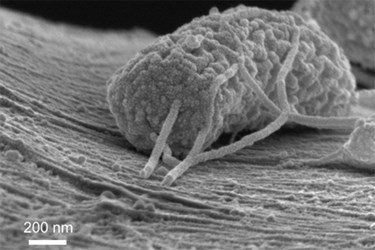
When it comes to energy, wastewater is usually associated with the huge amounts required to clean it up. But now scientists believe dirty water may be more than just a power-suck — it may actually be a source of energy.
Scientists have configured "a microbial battery for recovery of energy from reservoirs of organic matter, such as wastewater," according to a research paper published last month.
The findings are promising, and could help offset the energy spent on the costly process of wastewater treatment.
"The system is as efficient as the highest-performing solar cells and, in theory, could generate as much energy as is needed to treat wastewater with current technology, according to researchers working on the so-called microbial battery at Stanford University in California," NBCNews reported.
Here's how the process works. The prototype is "the size of a D-cell battery, consisting of two electrodes — one positive and one negative — plunged into a bottle of wastewater, filled with bacteria. As the bacteria consume the organic material, the microbes cluster around the negative electrode, throwing off electrons, which are captured in turn by the positive electrode," Agence France-Presse (AFP) reported. In the end, this process yields energy.
Research is ongoing, but the practical applications are clear: The battery could be placed in wastewater treatment facilities and could be used "to break down organic pollutants in the 'dead zones' of oceans and lakes where fertilizer runoff has depleted oxygen, suffocating marine life," the AFP said.
According to Ars Technica, "the setup is very efficient," and "nearly half of the energy involved [in the process] ended up being made available as electricity."
But it might be a mistake to celebrate too soon. "We'd end up adding a significant amount of complexity in terms of designing [a system that uses this process.] It'll take a careful design to make sure that the added complexity doesn't swamp the benefits of any improved efficiency that comes out of these microbial batteries," the outlet said.
The discovery has been a long-time in the making. "Over the past dozen years, several research groups have tried different approaches for transforming these microbes into bio-generators—but it has proven difficult to harness this energy efficiently," AFP reported.