
Wastewater Reuse Technology Market To Reach US$54.2 Billion By 2033
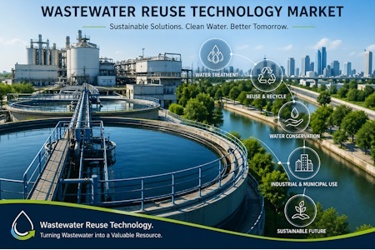
Market Summary
According to our Growth Market Report, the global wastewater reuse technology market size reached USD 19.8 billion in 2024, reflecting robust expansion driven by increasing water scarcity and stricter environmental regulations. The market is projected to grow at a CAGR of 10.7% from 2025 to 2033, reaching an estimated USD 54.2 billion by 2033. This impressive growth trajectory is primarily fueled by rising demand for sustainable water management solutions, rapid urbanization, and heightened awareness of the benefits of reclaimed
Introduction: From Waste to Worth
Water is no longer an abundant resource in many parts of the world—it is a strategic asset. As climate variability intensifies and urban populations expand, the pressure on freshwater supplies is mounting. Wastewater reuse technology has emerged not just as a solution, but as a transformative force reshaping how industries, municipalities, and communities perceive water. What was once discarded is now being re-engineered into a reliable, sustainable resource.
Understanding Wastewater Reuse Technology
Wastewater reuse technology refers to advanced processes that treat used water—originating from households, industries, and agriculture—so it can be safely reused for various applications. These applications range from irrigation and industrial cooling to potable reuse in highly advanced systems.
Modern reuse systems integrate multiple treatment layers such as:
- Physical filtration (membranes, microfiltration)
- Biological treatment (activated sludge, biofilm reactors)
- Chemical processes (disinfection, oxidation)
- Advanced purification (reverse osmosis, UV treatment)
The evolution of these technologies has made it possible to achieve water quality that meets or even exceeds drinking standards.
Market Dynamics: Forces Driving Growth
1. Escalating Water Scarcit
Regions across the globe—from arid zones to rapidly urbanizing economies—are facing severe water shortages. Wastewater reuse offers a dependable, climate-resilient alternative to traditional water sources
2. Industrial Demand for Sustainable Operations
Industries such as power generation, pharmaceuticals, textiles, and food processing are increasingly adopting water reuse systems to reduce dependency on freshwater and comply with environmental regulations.
3. Stringent Environmental Regulations
Governments worldwide are enforcing tighter discharge norms and promoting circular water usage. This regulatory push is accelerating the adoption of reuse technologies.
4. Urbanization and Smart Cities
Modern urban planning integrates decentralized wastewater treatment and reuse systems to optimize water cycles within cities, reducing strain on centralized infrastructure.
Key Technologies Shaping the Market
Membrane-Based Systems
Membrane technologies like ultrafiltration (UF) and reverse osmosis (RO) dominate the market due to their high efficiency and ability to remove contaminants at a microscopic level.
Advanced Oxidation Processes (AOPs)
AOPs use powerful oxidants to break down complex organic pollutants, making water safe for reuse in sensitive applications.
Decentralized Treatment Systems
Compact and modular systems are gaining traction, especially in remote or infrastructure-limited regions. These systems enable localized water recycling with minimal energy consumption.
Digital Water Management
Integration of IoT and AI is revolutionizing wastewater reuse by enabling real-time monitoring, predictive maintenance, and process optimization
Application Spectrum: Where Reuse Makes Impact
Agricultural Irrigation
Treated wastewater provides a reliable source for irrigation, reducing dependency on freshwater and enhancing crop resilience.
Industrial Reuse
Industries reuse treated water for cooling, processing, and cleaning, significantly lowering operational costs and environmental impact.
Municipal Use
Cities are using reclaimed water for landscaping, flushing, and even indirect potable reuse through groundwater recharge.
Direct Potable Reuse (DPR)
Although still emerging, DPR represents the future—where treated wastewater is directly introduced into drinking water systems under strict quality controls.
Challenges: Barriers to Overcome
Public Perception
The idea of reusing wastewater—especially for drinking—faces psychological resistance. Public education and transparency are critical.
High Initial Investment
Advanced treatment technologies require significant capital expenditure, which can be a barrier for developing regions.
Energy Consumption
Some processes, particularly reverse osmosis, are energy-intensive. Innovations in energy efficiency are essential for sustainable scaling.
Regulatory Complexity
Lack of standardized global regulations can slow adoption and create uncertainty for investors.
Future Outlook: A Circular Water Economy
According to our Growth Market Report, The wastewater reuse technology market is moving toward a circular water economy where water is continuously recycled, minimizing waste and maximizing efficiency. Future trends include:
- Integration with renewable energy for low-carbon operations
- Expansion of decentralized reuse systems
- AI-driven autonomous water treatment plants
- Increased adoption of potable reuse solutions
As innovation continues, wastewater will no longer be seen as a liability but as a cornerstone of sustainable development.
Report: https://growthmarketreports.com/report/wastewater-reuse-technology-market
Source: Growth Market Reports