
Wallingford Software Launches v8.5 Of Its Real-Time Flood Forecasting And Warning Software
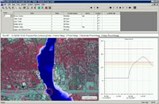
 Wallingford, UK – Wallingford Software announces today the release of FloodWorks v8.5, its real-time flood forecasting and warning software solution. A modular software package, FloodWorks is used the real-time simulation and forecasting of extreme hydrological and hydraulic conditions within river basins, drainage systems, and the coastal zone. With version 8.5, Wallingford Software has overhauled the software's user interface, improving usability and enabling more effective flood forecast management.
FloodWorks 8.5 features an improved graphical user interface for the FloodWorks Event Manager. "This will improve ease and efficiency of use, extend the ability of individual users to customise their own displays, and enhance the visibility of the forecast results," Tyrone Parkinson, product manager, said.
Improvements have been made to both the user graphs and map graphs to provide more flexibility to control the number of traces on each graph, the line color and style used by each graph, range limits, and the display of event thresholds. These improvements can be utilized both in FloodWorks Configuration Manager, when setting up default graphs for all users, or by individual users working on an operational system via FloodWorks Event Manager.
Once a particular user has configured their preferred arrangement and map styles, tables, and graphs, these can now be saved as Workspaces that can be instantly re-opened, without having to repeat the customization process.
A further development relates to "site" functionality, which has now been extended to include both polylines and polygons. In previous versions of FloodWorks, sites (and any events or alarms raised at a site) were only associated with points. This was highly appropriate for individual locations, such as defense low spots or individual gauge locations, but insufficiently accurate when used to identify critical conditions either along a reach of watercourse or within a sub-catchment or floodplain area. "The inclusion of polylines and polygons as options for defining a site now allows users to represent reaches and areas more clearly," Parkinson added. "These points, lines, and polygons can now also be colour coded according to either the current Event or Status Object condition."
SOURCE: Wallingford Software