
Using Electricity To Remove Hard-To-Treat Water Pollutants
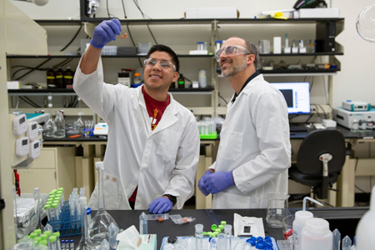
ASU researcher's processes start chemical reactions to make water cleaner
Developing ways to clean and reuse water is essential as populations grow, extreme weather increases, infrastructure ages and demand for water outpaces current resources.
But removing industrial chemicals, pharmaceuticals, pesticides and other pollutants from water can be difficult using traditional treatments.
To address this challenge, an Arizona State University researcher and his team developed treatment processes that use electricity to drive chemical reactions within the water itself, enabling more affordable cleaning, using less energy and fewer additional chemicals than conventional methods.
“At its core, my research is about making water cleaner, safer and more sustainable,” says Sergi Garcia-Segura, an assistant professor of civil, environmental and sustainable engineering in the School of Sustainable Engineering and the Built Environment, part of the Ira A. Fulton Schools of Engineering at ASU. “Electricity can be used as a clean, precise tool for treating water by breaking down contaminants into less harmful compounds.”
For advancing this work, the American Society of Civil Engineers, or ASCE, awarded Garcia-Segura the 2026 Walter L. Huber Civil Engineering Research Prize. His innovative research in electrochemical water-treatment technologies and sustainable advanced oxidation processes has led to impactful innovations in environmental remediation and practical applications in water and wastewater engineering.
The Huber Prize is one of civil engineering’s premier mid-career research awards. It recognizes recipients’ current impact and their future promise of contributions to the profession. Garcia-Segura will receive the award at ASCE’s Environmental & Water Resources Institute Leadership and Council Weekend that will be held Oct. 23–25 in Reston, Virginia.
“Receiving the Huber Prize is a tremendous honor, and I accept the award with deep gratitude and humility,” he says. “It motivates me to continue advancing innovative solutions to improve quality of life, protect public health and help communities build a more sustainable future.”
School Director Ram Pendyala says, “Sergi’s recognition by ASCE reflects the transformative impact of his research and the culture of innovation we foster at ASU. His work demonstrates how fundamental discoveries can be translated into practical solutions that address critical environmental challenges and improve quality of life for communities everywhere.”
Impact on Earth and in space
The electrochemical processes Garcia-Segura and his team developed generate highly reactive oxidants directly from the water being cleaned. That improves treatment systems’ removal of pollutants and reduces contaminants’ adverse effects on the environment.
“My goal is to translate these processes into scalable technologies to address real-world challenges in water treatment, environmental protection and sustainable infrastructure,” he says. “This will help ensure communities have access to safe, reliable and sustainable water supplies for generations to come.”
Electrochemical systems based on these processes could provide effective, decentralized water treatment in remote areas, locations with limited infrastructure systems and communities affected by disasters. Their compact size and high level of control make them well-suited for settings where conventional treatment systems are not available.
“Electrochemical technologies and advanced oxidation processes are powerful new tools that generate highly reactive treatment on demand, using only electricity, water and naturally occurring constituents,” Garcia-Segura says.
Another promising application of electrochemical technologies could destroy persistent chemicals that accumulate in water supplies and ecosystems.
“We are also exploring resource recovery, where treatment systems simultaneously remove contaminants while recovering nutrients, metals or other valuable products,” Garcia-Segura says. “This approach supports a more circular economy and helps transform wastewater from a liability into a resource.”These processes are also being investigated in projects with NASA, where highly efficient water recycling and resource recovery systems are critical for future long-duration space missions.
“Garcia-Segura is one of the world’s young leaders in environmental engineering,” says Bruce Rittmann, an ASU Regents Professor in the School of Sustainable Engineering and the Built Environment. “His research, which spans from fundamental science to applied engineering, develops novel nano-enabled electrocatalytic processes that make water treatment effective and sustainable.”
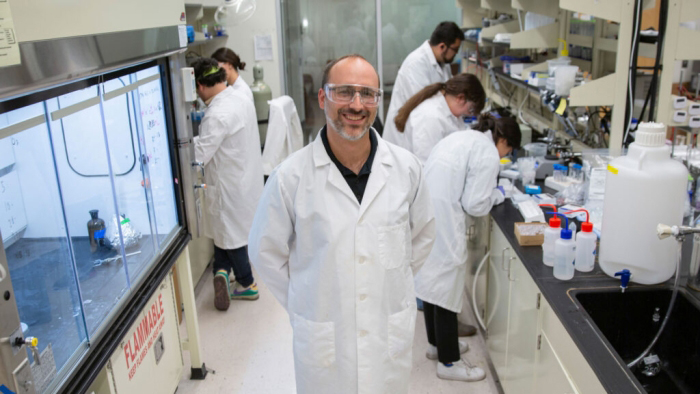 Sergi Garcia-Segura and his research team develop interdisciplinary solutions for accessible and equitable water treatment in his laboratory on the ASU Tempe campus. Photo by Erika Gronek/ASU
Foster a community of collaboration
The Huber Prize validates interdisciplinary research to address society’s challenges and reinforces the importance of collaboration.
“I’ve been fortunate to work alongside exceptional students whose creativity, curiosity and dedication drive innovation every day,” Garcia-Segura says. “Many of the discoveries recognized through this award emerged from their hard work and willingness to tackle challenging scientific questions.”
ASU Regents Professor Paul Westerhoff says he nominated Garcia-Segura for the award because “Sergi transforms bold ideas into practical water solutions while inspiring and mentoring undergraduate and graduate students to become the next generation of innovative environmental engineers.”
Garcia-Segura says he also benefited from collaborations with faculty colleagues across engineering, environmental science, chemistry and sustainability, as well as partnerships with industry, utilities and government agencies that ensure research efforts remain scientifically rigorous and address practical needs.
“Some of our most exciting advances have come from bringing together people with different perspectives and expertise,” he says. “The complexity of today’s environmental challenges demands interdisciplinary solutions, and I am deeply grateful to the many collaborators who have helped make this work possible.”
What’s next
The next phase of Garcia-Segura’s research focuses on developing integrated solutions for the food-water-energy nexus and advancing technologies that support a more sustainable and resilient future.
“Future water-treatment technologies should remove contaminants, recover resources, generate value and operate with minimal environmental impact,” he says. “They should combine electrochemical processes with renewable energy systems, recover nutrients and valuable materials from waste streams and create treatment platforms for deployment in resource-constrained environments.”
Source: Arizona State University