
Turning Industrial Wastewater Into A Sustainable Supply Chain For Green Energy
Could the clean energy revolution be powered by wastewater?
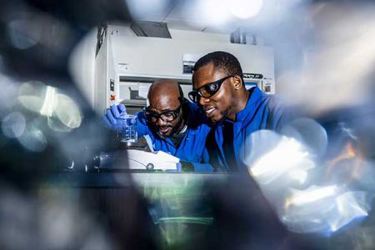
“As chemical engineers, we have to think of how to make [things] from waste,” said doctoral student Qudus Rafiu.
Rare earth elements, a group of chemical elements, and other critical minerals are generally costly and difficult to procure and dependent on complex supply chains. Yet some of these elements such as lithium are absolutely essential for technology from wind turbines to cell phones.
Northeastern University researchers are proposing a new source for some of these critical materials: wastewater. The finding is especially critical as the world transitions to clean energy, the researchers said.
“Clean energy technologies depend on critical materials, and this paper shows that we can offset some of the demands for these materials through wastewater,” said Qudus Rafiu, a doctoral student at Northeastern who conducted the research with Damilola Daramola, assistant professor of chemical engineering and chemistry and chemical biology.
The research was published online last week in Joule, a scientific journal focused on addressing the need for more sustainable energy
In November, the Department of the Interior’s U.S. Geological Survey (USGS) released its latest list of critical minerals: 60 minerals vital to the U.S. economy and national security that face potential risks from disrupted supply chains. The Department of Energy has a similar list that was last amended in May 2025.
The lists include the copper used in wiring and cables to the lithium used in batteries, as well as rare earth elements that are key components in many common electronic devices and in a variety of industrial uses, especially in areas of clean energy.
But these elements’ critical nature underscores the risks associated with obtaining these minerals.
Many critical materials are difficult, resource intensive and expensive to mine and refine. Rare earth elements are often found at low concentrations, which means additional efforts to mine the materials. Extraction can often can also pollute the environment as well.
Geopolitics also plays a role. The U.S. imported 80% of the rare earth elements it used in 2024, according to the USGS. China is the leading refiner of 19 of 20 important strategic minerals recently identified by the International Energy Agency, and U.S. and Chinese negotiations on everything from TikTok ownership to trade policy have touched on the importance of critical minerals.
Source: Northeastern University