
Transparent Exopolymer Particles (TEP): The Invisible Driver Of Biofouling In Water Systems
By Emma Flanagan
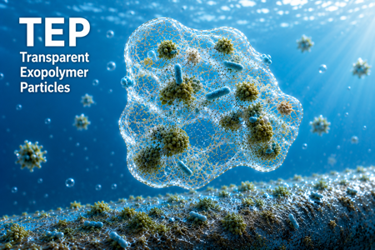
For decades, water treatment professionals have viewed biofilm formation as a relatively straightforward process: microorganisms attach to a surface, proliferate, and secrete extracellular polymeric substances (EPS) that eventually mature into a biofilm. This model has shaped how the industry approaches membrane fouling, distribution system maintenance, cooling water management, and biological contamination control.
Emerging research suggests the process often begins much earlier.
A growing body of scientific evidence points to transparent exopolymer particles (TEP) as one of the most important, but frequently overlooked, drivers of biofouling in water systems. These microscopic organic particles are increasingly recognized as the invisible conditioning layer that enables microbial colonization, accelerates membrane fouling, and promotes the formation of resilient biofilms throughout industrial and municipal water infrastructure.
Understanding TEP may provide a new perspective on why biofilms develop so rapidly, why some treatment systems foul despite acceptable microbial counts, and why conventional control strategies often struggle to deliver lasting results.
What Are Transparent Exopolymer Particles?
Transparent exopolymer particles (TEP) are microscopic, gel-like particles composed primarily of acidic polysaccharides released by phytoplankton, microalgae, bacteria, and other microorganisms. Often representing a substantial portion of dissolved organic matter, TEP possess highly reactive functional groups that make them exceptionally sticky and surface-active. This allows them to bind trace elements, organic contaminants, microorganisms, and suspended solids, facilitating particle aggregation and influencing the transport and fate of organic carbon in water. Their high bioavailability also makes them an important carbon source for heterotrophic bacteria.
Although invisible to the naked eye, TEP are ubiquitous in oceans, lakes, rivers, reservoirs, wastewater streams, and industrial water systems. Researchers typically identify them using Alcian Blue staining and microscopic analysis because of their transparent nature.
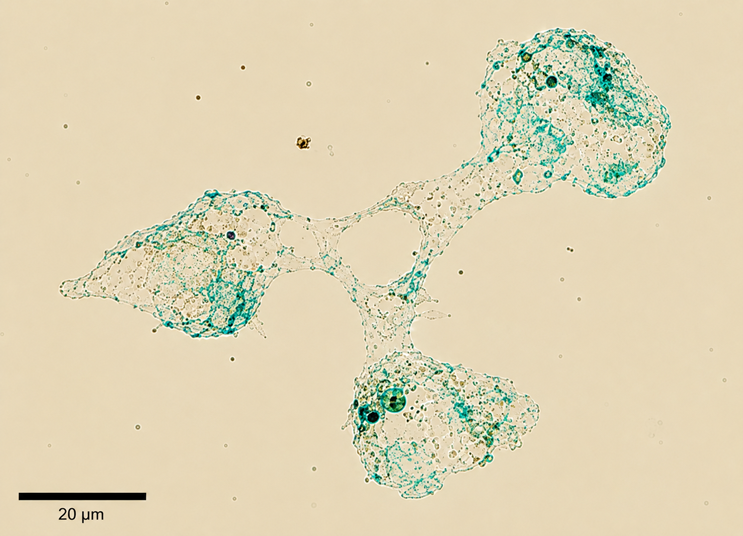
Figure 1. Transparent exopolymer particles under microscope, stained with Alcian Blue
What makes TEP particularly significant is the way they behave in aquatic environments.
These particles are highly adhesive, deformable, and negatively charged. They readily trap organic matter, inorganic particles, microorganisms, metals, and colloids, effectively acting as a natural biological glue within aquatic environments.
This adhesive behavior is precisely what makes TEP so important in water treatment. Increasingly, researchers are recognizing that these particles may represent the missing link between dissolved organic matter, microbial colonization, and the initiation of biofilms.
TEP And The New Understanding Of Biofilm Formation
Traditionally, biofilm formation was considered a process that originated on the surface itself. The prevailing theory held that dissolved organic matter first conditioned the surface, after which microorganisms attached, proliferated, and began producing extracellular polymeric substances (EPS). As the EPS matrix expanded, the microbial community matured into the complex, highly resilient structure recognized as a biofilm.
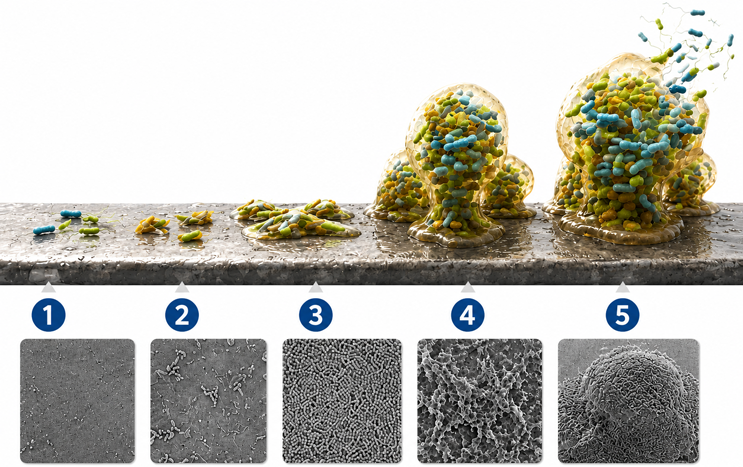
Figure 2. Stages of biofilm development. Stage 1, initial attachment; stage 2, irreversible attachment; stage 3, maturation I; stage 4, maturation II; stage 5, dispersion. Each stage of development in the diagram is paired with a respective photo imitation of a developing bacterial biofilm.
Recent research has challenged this model, suggesting that much of the biofilm-building process begins long before microorganisms ever encounter a surface.
TEP suspended in water rapidly become colonized by bacteria and other microorganisms. These TEP-microbe complexes form highly concentrated microbial microenvironments that researchers have described as "protobiofilms."
In effect, the biofilm-building process begins while the particles are still floating in the water column. When these protobiofilms encounter a pipe wall, membrane surface, heat exchanger, cooling tower fill, storage tank, or distribution line, they can immediately adhere and establish a foothold. Rather than bacteria attaching individually to a clean surface, entire microbial communities arrive preassembled within a protective organic matrix.
This shift in understanding has important implications for water treatment. It suggests that controlling microbial counts alone may not be sufficient if the system still contains high concentrations of TEP capable of transporting and protecting microorganisms.
The Persistence Of TEP In Water Treatment Systems
One of the most challenging aspects of TEP is their unique physical structure. Unlike conventional suspended solids, TEP behave more like flexible organic hydrogels than rigid particles. Their deformable nature allows them to pass through filtration processes that would normally remove larger particulate matter. Even when filtration systems successfully remove bacteria and suspended solids, substantial quantities of TEP can remain in the treated water.
Studies have shown that TEP can pass through conventional pretreatment barriers, adhere strongly to filtration membranes, accumulate within membrane pores, promote microbial attachment, accelerate biofilm development, increase hydraulic resistance, and ultimately reduce membrane productivity.
Because TEP are rich in carbohydrates, they also serve as a readily available food source for microorganisms, further supporting biological growth throughout treatment systems.
TEP And Membrane Fouling
The desalination and advanced water treatment industries have become increasingly aware of TEP due to their role in membrane fouling. Numerous studies have identified strong correlations between TEP concentrations and the rate of biofouling in reverse osmosis (RO), nanofiltration (NF), and ultrafiltration (UF) systems.
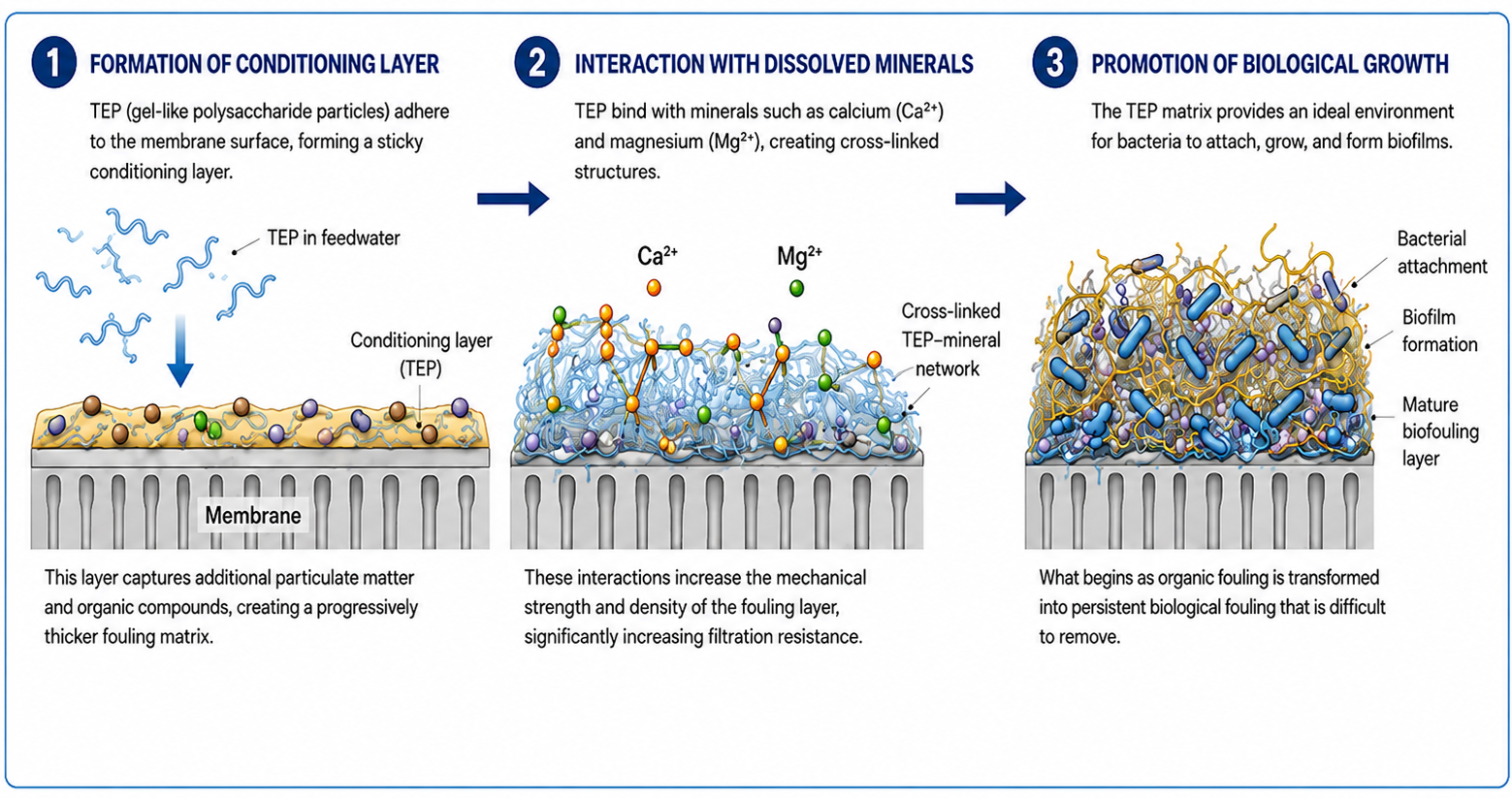
Figure 3. How TEP drive membrane fouling and performance loss
TEP contribute to membrane performance losses through multiple mechanisms.
First, they form a conditioning layer that coats membrane surfaces. This sticky layer captures additional particulate matter and organic compounds, creating a progressively thicker fouling matrix.
Second, TEP interact with dissolved minerals such as calcium and magnesium. These interactions create cross-linked structures with significantly greater mechanical strength and filtration resistance.
Third, TEP provide an ideal environment for bacterial attachment and proliferation, transforming what begins as organic fouling into persistent biological fouling.
The result is often a rapid decline in membrane permeability, increased differential pressure, higher cleaning frequency, greater energy consumption, and shortened membrane lifespan.
In many cases, TEP have been shown to initiate fouling even when traditional water quality indicators suggest relatively clean feedwater.
Industrial Effluents: A Significant Source Of TEP
Although TEP are naturally present in most aquatic environments, industrial and municipal waste streams can significantly accelerate their formation. Wastewaters rich in dissolved organic carbon, nutrients, carbohydrates, and microbial activity create ideal conditions for TEP production.
TEP formation can occur through two distinct pathways.
The first is abiotic, where dissolved organic compounds spontaneously aggregate into larger gel-like particles under favorable chemical and hydraulic conditions. The second is biotic, where bacteria, algae, and other microorganisms release extracellular polymers that subsequently coagulate into TEP. Elevated nutrient loads, calcium and magnesium concentrations, turbulence, and biological activity all contribute to increased TEP formation. As a result, industrial effluents can become continuous generators of TEP and their precursors, creating persistent fouling challenges downstream.
TEP As Mobile Contaminant Carriers
Recent research has revealed that TEP are far more than passive organic particles. Their highly adhesive structure allows them to capture and concentrate a diverse range of contaminants, including heavy metals, hydrocarbons, organic pollutants, microplastics, and pathogenic microorganisms. Acting as mobile aggregation platforms, TEP bind together both living and non-living materials, facilitating their transport throughout aquatic systems. As a result, these microscopic particles can influence not only fouling and biofilm development but also the movement, persistence, and fate of contaminants in source waters. This emerging understanding highlights the importance of TEP in environmental monitoring, pretreatment design, and the long-term performance and reliability of water treatment infrastructure.
Why Conventional Biocide Programs Often Struggle
Many facilities attempt to manage biofouling using traditional oxidizing or non-oxidizing biocide programs. While these approaches can reduce microbial populations, they often fail to address the underlying TEP matrix that initiates fouling.
Non-oxidizing biocides are highly effective at disrupting microbial metabolism and killing bacteria. However, they generally have limited ability to destroy the polysaccharide structure of TEP or the extracellular polymeric substances that form the physical framework of biofilms.
As a result, the biological community may be reduced while the sticky organic scaffold remains intact, allowing rapid recolonization.
Oxidizing biocides provide a different mode of action. Chlorine, bromine, chlorine dioxide, ozone, and hydrogen peroxide can chemically attack the polysaccharide matrix that gives TEP their adhesive properties. By degrading these structures, oxidizers can reduce biofilm formation and improve system cleanliness.
However, conventional oxidizing chemistries often present tradeoffs. Operators may encounter corrosion concerns, membrane compatibility limitations, high oxidant demand, or the formation of undesirable disinfection byproducts.
Consequently, many facilities employ a combination strategy in which oxidizers are used to disrupt TEP and EPS while non-oxidizers are used for microbial control.
Advanced Oxidation: Attacking TEP At The Source
Because TEP consist primarily of complex polysaccharides and dissolved organic matter, advanced oxidation processes (AOPs) have attracted increasing attention as a control strategy.
Unlike conventional disinfectants that primarily target microorganisms, AOPs focus on destroying the organic matrix itself.
At the heart of most advanced oxidation processes are hydroxyl radicals, among the most powerful oxidizing species used in water treatment.
These radicals react rapidly and non-selectively with organic compounds, attacking glycosidic bonds within polysaccharides and fragmenting large sticky molecules into smaller compounds that no longer exhibit the same fouling characteristics.
The same chemistry disrupts extracellular polymeric substances within mature biofilms, helping expose embedded microorganisms and improve overall treatment effectiveness.
Numerous studies have demonstrated that advanced oxidation can significantly reduce TEP concentrations, alter dissolved organic matter characteristics, and improve filtration performance.
As interest in advanced oxidation continues to grow, researchers and operators are exploring technologies capable of generating multiple reactive oxygen species to improve oxidation efficiency and broaden treatment effectiveness.
One such approach is mineral oxychloride technology, an advanced oxidation reagent designed to support the generation of reactive oxygen species involved in the degradation of organic contaminants and biofilm matrices.
This distinction is particularly relevant when addressing TEP.
Because TEP are composed primarily of acidic polysaccharides, they are highly susceptible to oxidative cleavage by hydroxyl radicals and related reactive oxygen species. As these compounds attack the TEP structure, the particles lose their adhesive properties and gradually break down into smaller, less problematic molecules.
Looking Ahead
The water industry has spent decades fighting the visible symptoms of fouling, bacteria, slime, pressure loss, declining membrane performance, increased cleaning frequency, and shortened equipment life.
Emerging research suggests that transparent exopolymer particles may be one of the most important underlying causes connecting these operational challenges.
As our understanding of TEP continues to evolve, treatment strategies are likely to shift from simply controlling microorganisms toward eliminating the organic matrices that allow them to colonize water systems in the first place.
The future of biofilm control may not begin with killing bacteria. Instead, it may begin with understanding and eliminating the transparent organic matrices that enable microorganisms to attach, proliferate, and persist.
As research continues to reveal the central role of TEP in fouling and biofilm development, these microscopic particles may become one of the most important water quality parameters that treatment professionals monitor in the years ahead.
The invisible glue that drives biofouling today may ultimately become one of the most important targets in tomorrow's water treatment strategies.
 Emma Flanagan is the CEO and CTO of Envirocleen, LLC, an Illinois-based water treatment consulting, manufacturing, and distribution company specializing in mineral oxychloride advanced oxidation technologies. Her work focuses on the homogeneous catalytic generation of reactive oxygen species using transition minerals, drawing on principles related to modified Fenton and Haber-Weiss chemistry. She oversees the implementation of Bio-hydrox®, a ready-to-use mineral oxychloride solution formulated for advanced water treatment and disinfection applications. Emma holds an M.S. degree in Sanitary Engineering from the IHE Delft Institute for Water Education in the Netherlands. Her professional activities include research, education, and consulting across a broad range of industrial, municipal, healthcare, agricultural, and aquaculture water treatment challenges. She can be reached at info@envirocleen.com.