
The Industry Has Money, Technology, And Urgency — So Why Is Nothing Moving Faster? (7 Takeaways From The Water Week 2026 Press Conference)

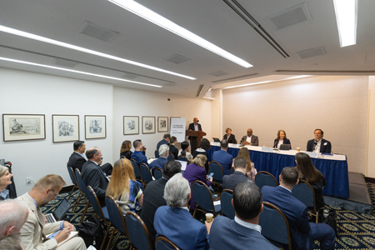
I was thrilled to be in attendance at this year’s Water Week press conference in Washington, D.C., hosted at the National Press Club by ASTERRA and expertly moderated by Paul Gagliardo, as the water industry delivered a familiar mix of optimism and frustration.
Yes, there’s funding.
Yes, there’s innovation.
Yes, there’s urgency.
And yet, progress still feels slower than it should.
That tension was reflected not just in the messaging, but in the composition of the panels themselves — a deliberate cross-section of federal policymakers, utility leaders, and private-sector solution providers, all circling the same question from different vantage points.
For the Water Online audience — utilities, solution providers, and the companies trying to reach them — the takeaway is clear: the problem isn’t a lack of resources. It’s a failure to connect them.
1. The Funding Disconnect Is Real And Getting Worse
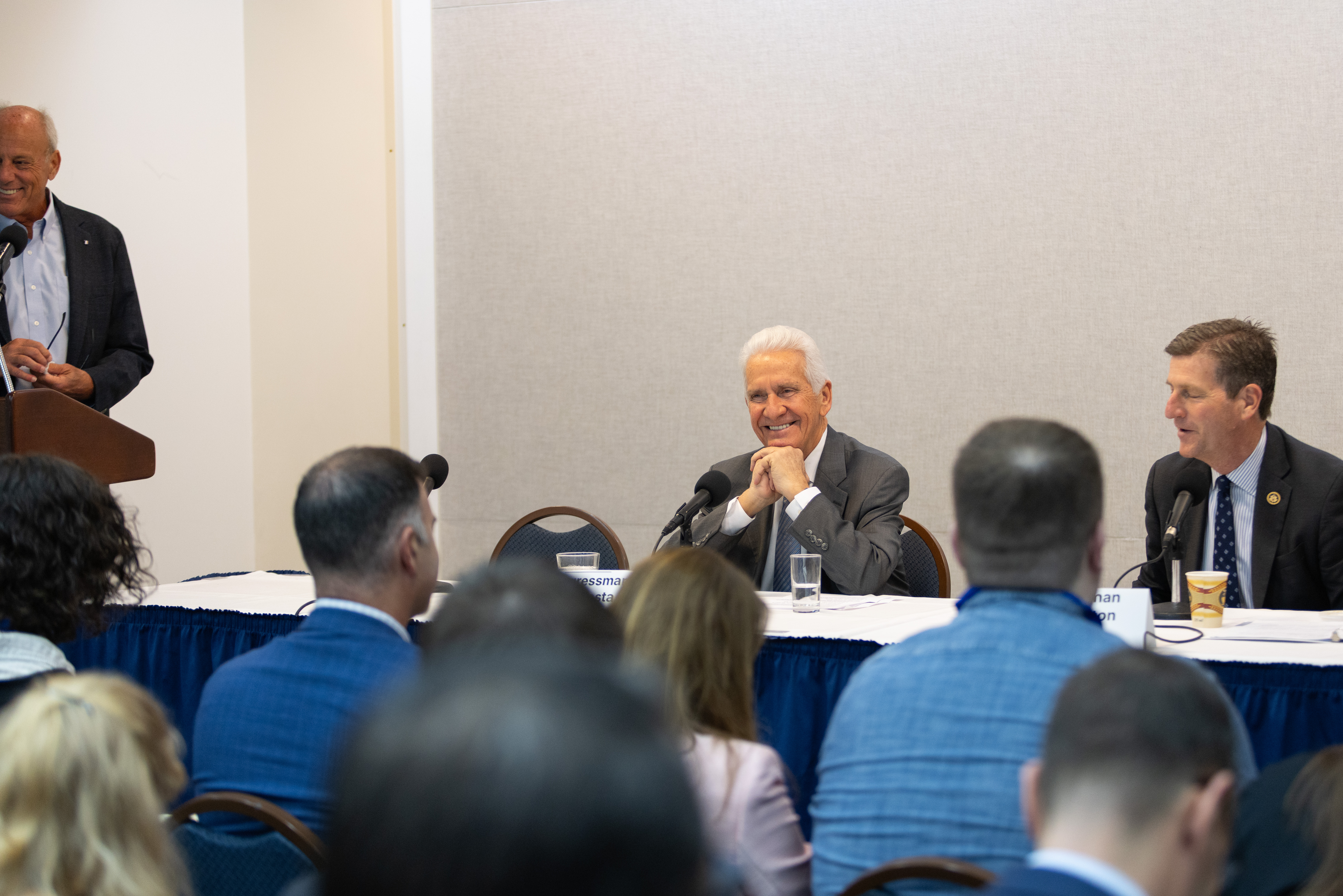
When Members of Congress like Jim Costa and Greg Stanton open the conversation, the signal is clear: Washington understands the stakes.
But understanding hasn’t translated into execution.
Roughly $100 billion in federal infrastructure funding remains available. That should be the headline. Instead, the story coming out of both policy and utility voices is friction:
- Utilities can’t easily access the money
- Projects are getting stuck in approval cycles; and
- More than $500 billion in needed projects may never get done.
Policy leaders and industry representatives, including organizations like WEF and APWA, are aligned on the urgency. But alignment at the top isn’t solving bottlenecks on the ground.
With the Infrastructure Act expiring on September 30, 2026, the clock is ticking. Some estimates suggest states could lose up to 90% of their funding pipeline without action.
2. Efficiency Gains Aren’t The Problem, BUT Visibility Is
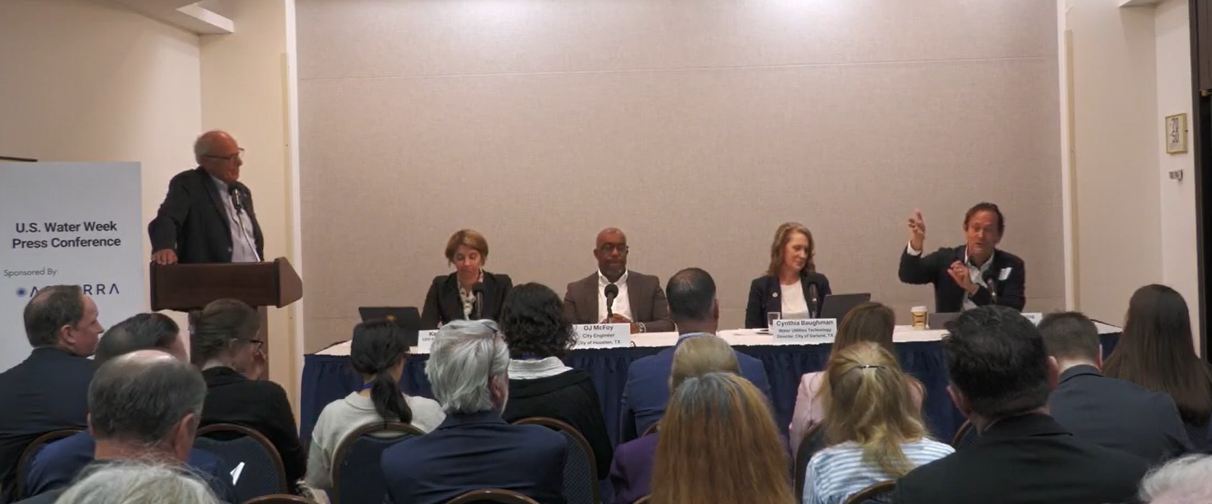
From the utility side, leaders like Kendra Morris (Veolia), Cynthia Baughman (City of Garland), OJ McFoy (City of Houston), and George Hawkins (Moonshot Missions) represent systems that are already doing more with less.
The U.S. is using less water today than it did 50 years ago — even before adjusting for population. That’s not a failure. That’s a quiet success story.
But it’s not being told.
Instead, the industry continues to operate in a reactive posture — focused on crisis rather than progress. And without that narrative shift, it becomes harder to justify investment, harder to build public trust, and harder to move projects forward.
3. “One Water” Is No Longer A Talking Point — It’s Reality
When utility leaders from Texas are sharing the stage with national policymakers and private operators like Veolia, the old regional distinctions start to break down.
Drought is no longer a “Western issue”. With 98% of Georgia experiencing drought conditions, the conversation has shifted from if to where next.
What emerges, both in the formal sessions and between them, is a recognition that water challenges are now systemic, interconnected, and national in scope.
4. The Workforce Crisis Is About To Hit All At Once
Across panels — from policy to utilities to solution providers — one issue kept resurfacing: people.
- Half of engineers are over 50
- Average retirement age: 56
- The STEM pipeline isn’t scaling
- Meanwhile, AI and digital transformation are accelerating
Executives from firms like Xylem, Burnham, and McKim & Creed aren’t just talking about technology deployment — they’re confronting a shrinking workforce tasked with implementing it.
This isn’t a future problem. It’s already here.
5. The Quiet Reality Of Rate Increases
There’s also a growing disconnect between what utilities are doing and what customers perceive.
Water bills are up 24% over the past five years — a reality well understood by both public utilities and private operators.
But unlike other sectors, higher rates don’t buy visible improvements. They buy risk reduction:
- Fewer main breaks
- More resilient systems
- Lower long-term failure risk
That’s a difficult value proposition to communicate — and right now, the industry isn’t doing it effectively.
6. Emerging Risks Are Outpacing Industry Alignment
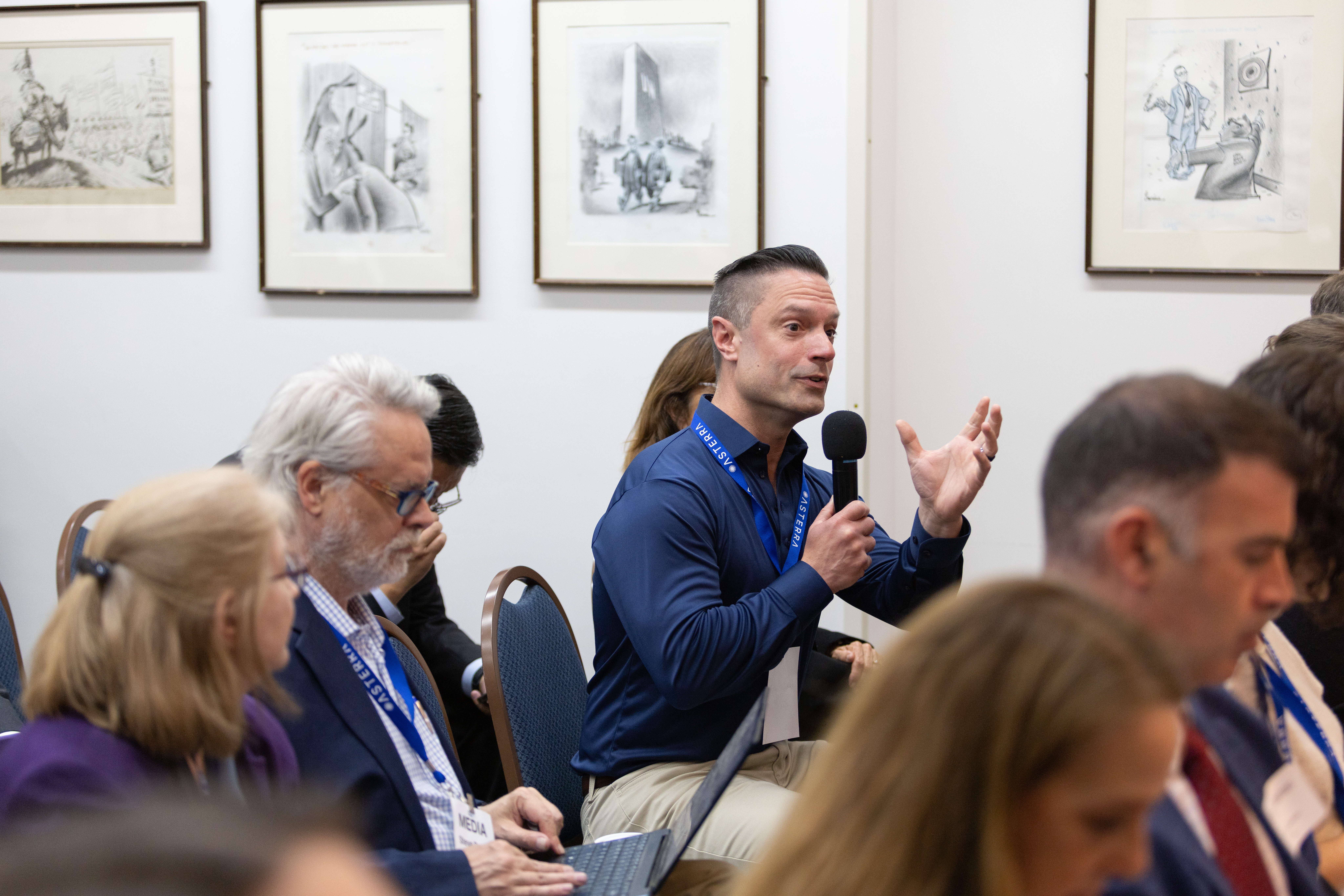
From PFAS to cybersecurity, the risks discussed at Water Week aren’t new — but they are accelerating.
- PFAS regulations remain inconsistent across states.
- Cyber threats are increasing.
- Infrastructure decisions are being made amid regulatory uncertainty.
What’s striking is that every stakeholder group — policymakers, utilities, and solution providers — sees the same risks. But they’re still responding in parallel, not in sync.
7. The Opportunity No One Fully Owns: Communication
If there was one unifying theme across both sessions outlined in the press conference — from “Policy at the Tipping Point” to “Funding, Innovation, and the Path Forward” — it’s this:
The industry is not communicating effectively.
Not with ratepayers.
Not with regulators.
And often, not even internally across stakeholder groups.
The panels brought together exactly the right voices — Congress, utilities, and solution providers — but the very need for that structure highlights the issue: these conversations aren’t happening enough outside of events like this.
Final Thoughts
This is a go-to-market problem disguised as an infrastructure problem.
The next phase of growth in this industry won’t just come from better solutions — it will come from better positioning, better messaging, and stronger connections between buyers and sellers.