
The Future Of In Situ Chemical Oxidation For Targeted Solvent Destruction
By Emily Newton
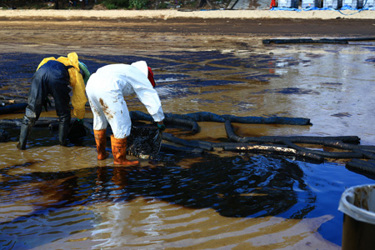
Pump-and-treat has managed dissolved contamination at chlorinated solvent sites for decades, but achieving regulatory site closure has remained out of reach. The U.S. EPA’s 2026 trichloroethylene (TCE) compliance deadlines are now forcing a concrete shift toward source-zone destruction. In situ chemical oxidation (ISCO), sequenced with enhanced bioremediation, is proving to be the most credible path to groundwater contaminant rebound mitigation.
Why Groundwater Contaminant Rebound Mitigation Keeps Failing With Traditional Methods
For remediation professionals who have managed a chlorinated solvent site through multiple treatment cycles, contaminant rebound is a familiar problem. Concentrations drop during active remediation — then, once injections stop or pumps shut off, they creep right back up. It's one of the most stubborn problems in groundwater remediation, and it has a clear explanation.
Contaminants sequestered in low-permeability zones, such as silts, clays and fine-grained lenses, slowly back-diffuse into the more permeable zones that were just treated. A study found that the rebound effect can push residual contamination from 19.1% of the original concentration back up to nearly 58%, depending on on-site conditions. That is a fundamental remediation setback that is a conceptual failure, not a technology failure.
Effective groundwater contaminant rebound mitigation requires addressing more than the dissolved-phase plume. Contaminants work their way into low-permeability silt and clay layers, where standard extraction cannot reach them. From there, they slowly diffuse back into the aquifer, sustaining concentrations long after treatment ends and pushing closure further out of reach.
Pump-and-treat systems deliver real value for plume containment, but source-zone mass stays intact. Contaminant flux from those undisturbed zones keeps aquifer concentrations elevated, and once extraction slows or stops, concentrations rebound.
How The 2026 Regulatory Deadline Is Forcing A Smarter Approach
The EPA's December 2024 rule under the Toxic Substances Control Act prohibits all uses of TCE, with phased compliance schedules extending into 2026. For legacy remediation sites operating under the Comprehensive Environmental Response, Compensation, and Liability Act of 1980 (CERCLA) agreements or the Resource Conservation and Recovery Act (RCRA) permits tied to TCE disposal, the pressure to demonstrate measurable source destruction is growing. Sites that cannot show meaningful progress toward closure are running out of time.
The old model of broad-scale pumping, wide-area amendment injection and slow monitoring cycles simply cannot deliver results on this timeline. What's replacing it is high-resolution site characterization as the starting point for every remediation decision.
Tools such as the membrane interface probe and cone penetration testing provide practitioners with near-continuous vertical profiles of contaminant distribution and lithology in real time. When membrane interface probe logs are combined with hydraulic profile tool data, the picture becomes far more actionable. It can identify where volatile organic compounds are concentrated, which geologic layers are holding sorbed-phase mass and which are actively driving back-diffusion into the aquifer.
This information enables precision-targeted oxidant injection. It also reduces oxidant volume, shortens injection programs and lowers the probability of post-treatment rebound. All of these matter enormously under tightening regulatory timelines.
Choosing The Right ISCO Chemistry For Each Site's Conditions
Modern ISCO encompasses a family of chemistries, each with distinct oxidant-demand characteristics and contaminant affinities. Selecting the wrong oxidant for a site's geochemistry reliably produces poor outcomes. Getting that selection right starts with a well-developed site conceptual model and an honest assessment of what each chemistry can realistically achieve under site-specific conditions.
Permanganate vs. Persulfate — Which Oxidant Fits The Job?
Sodium and potassium permanganate are the established workhorses of ISCO for TCE remediation. Permanganate oxidizes TCE directly to carbon dioxide and chloride, producing no toxic intermediates. Because it isn't soil oxidant demand (SOD)-limited the way hydrogen peroxide is, it can persist in the subsurface for weeks to months. That is a real advantage in low-permeability zones where extended contact time is essential for meaningful mass destruction.
The known limitation is preferential flow. In heterogeneous formations, permanganate takes the path of least resistance and can bypass the dense non-aqueous phase liquid (DNAPL) source zones that matter most. Studies show that adding a viscosity-enhancing polymer to permanganate solutions can double sweep efficiency compared to conventional delivery. This can dramatically improve oxidant contact across heterogeneous aquifers.
Catalyzed sodium persulfate generates both sulfate and hydroxyl radicals, which widens its effective contaminant range beyond chlorinated ethenes. That includes benzene, toluene, ethylbenzene, and xylene constituents and chlorinated ethanes that permanganate cannot efficiently oxidize. For sites where matrix diffusion has driven contamination deep into fine-grained layers, or where complex co-contaminant mixtures are present, activated persulfate offers longer subsurface persistence than hydrogen peroxide and lower sensitivity to natural oxidant demand.
A review found that persulfate is increasingly the preferred chemistry for ISCO for TCE remediation when organic co-contaminants are present, or when alkaline or heat activation is achievable on-site. Many complex sites call for both oxidants — permanganate for TCE hot spots and DNAPL source zones, and persulfate for the plume fringe or matrix diffusion targets. Using them in phases, or in combination, gives practitioners a more complete picture of what the site actually requires.
Getting Oxidant Into The Right Places In Complex Geology
Precision delivery remains the toughest field challenge in ISCO. Standard direct push injection performs well in permeable sandy formations, but it consistently falls short at sites with interbedded silts and clays.
Several targeted approaches change that dynamic. Hydraulic fracturing in low-permeability zones opens channels that direct injection cannot reach. High-resolution push technology targets matrix diffusion sources directly in those same lenses, without relying on slow diffusion from adjacent permeable zones.
Controlled-release polymer formulations can sustain oxidant delivery for more than a year within a treatment zone — long enough to address the slow back-diffusion rates from fine-grained media that short-persistence oxidants miss. The common thread across all of these approaches is that injection strategies designed around subsurface heterogeneity produce better results than those that ignore it.
Why ISCO Plus Bioremediation Is The Path To Full Regulatory Closure
No single technology closes a complex chlorinated solvent site on its own. ISCO alone typically reaches a performance ceiling before final cleanup standards are met, at which point bioremediation takes over. The strongest remediation programs deliberately sequence these technologies and deploy each in the phase where it performs best.
Using ISCO To Destroy Bulk Contaminant Mass In Source Zones
ISCO's role in a treatment train is to deliver maximum mass reduction fast. Source-zone concentrations of TCE and PCE in DNAPL-impacted aquifers can reach hundreds of thousands of micrograms per liter, far beyond the tolerance of anaerobic dechlorinating populations.
Bioremediation cannot gain traction at those concentrations, which is why ISCO must go first.
A well-executed ISCO campaign changes those site conditions. High-resolution characterization guides injection locations and oxidant chemistry is matched to site geochemistry. Together, they give ISCO the precision to drive meaningful dissolved-phase TCE reductions in the source zone. That mass reduction is what allows bioremediation to perform.
Chlorinated solvents migrate easily through soil and groundwater, contaminating large areas and complicating remediation efforts. Long-term exposure is linked to neurological damage and other serious health effects. Every year of deferred source-zone treatment extends that exposure window.
ISCO also conditions the subsurface for what follows. Permanganate oxidation briefly elevates dissolved oxygen, while persulfate activation can transiently shift pH before conditions stabilize. When managed correctly, those geochemical shifts improve conditions for the reductive dechlorinators that carry treatment to completion.
How Bioremediation Handles Residual Contamination After ISCO
Once ISCO brings source zone concentrations down to a range where biology can function, enhanced in situ bioremediation takes over. The primary mechanism is reductive dechlorination, driven by Dehalococcoides mccartyi, which sequentially dechlorinates TCE to dichloroethene (DCE), then to vinyl chloride and finally to ethene. Three conditions have to be in place for that pathway to work — anaerobic geochemistry, available electron donors, and a viable Dehalococcoides (DHC) population, whether indigenous or introduced through bioaugmentation.
Practitioners typically follow ISCO with slow-release electron donor injections, such as emulsified vegetable oil, lactate, or molasses, to sustain the anaerobic conditions DHC requires over the longer time frames involved in addressing residual low-concentration contamination. Research supports designing these two technologies as a coupled system from the start, since the geochemical conditions ISCO creates directly shape how well biodegradation performs downstream.
The outcome of a well-designed treatment train is genuine mass destruction, which is now the standard that regulators require to issue a site closure. Holistic site management also means controlling the pathways that introduce new contamination. Separate sewer systems, which keep stormwater and sanitary waste from mixing, remove a cross-contamination risk that can quietly undermine active remediation. Closing the source while leaving surface-level input pathways open is an oversight that extends site liability indefinitely.
Targeted Destruction Is How The Industry Finally Moves Past Perpetual Management
The shift toward precision remediation is a direct answer to the limits of indefinite contamination management. By combining high-resolution characterization with chemistry-matched ISCO and sequenced bioremediation, practitioners now have the tools to achieve permanent source elimination.
 Emily Newton is an industrial journalist. She regularly covers stories for the utilities and energy sectors. Newton is also editor-in-chief of Revolutionized (revolutionized.com).