
The Expanding Role Of High‑Sensitivity Acoustic Sensing In Reducing Non‑Revenue Water
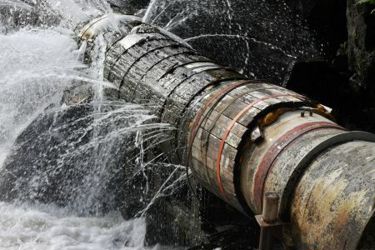
Reducing non‑revenue water (NRW) remains a top priority for water utilities, as aging infrastructure, rising operational costs, and resource constraints place unprecedented pressure on distribution networks. Globally, NRW is often reported at ~30% of system input, with annual economic losses estimated at around $39 billion, underscoring the need for robust detection and monitoring strategies.
Acoustic leak detection remains one of the most reliable, non‑invasive approaches for addressing real losses. When pressurized water escapes a pipeline, it produces characteristic sound signatures—commonly perceived as a steady “hiss” or “whoosh”—that travel along pipe walls and through surrounding soil. These signals enable utilities to detect underground leaks that may never surface, accelerating interventions and reducing water loss.
From Zone Identification to Pinpointing
Utilities increasingly rely on a blended, step-by-step approach to track down leaks efficiently:
- Identify potential problem areas by monitoring district metered area (DMA) balances, pressure and flow patterns, or digital‑twin insights to flag where water loss may be occurring.
- Narrow down the source using on-pipe sensors and data analytics that interpret acoustic signals to indicate whether a leak is likely in that zone.
- Pinpoint the exact location with high-sensitivity acoustic microphones, which allow field crews to listen for leak noise directly and distinguish true leak sounds from background noise at the surface.
This layered approach speeds up leak localization, reduces unnecessary excavations, and turns scarce field time into measurable NRW reduction.
Within this ecosystem, analog ground microphones such as the S30, manufactured by US-based Fluid Conservation Systems, bridge network-level intelligence with boots-on-the-ground confirmation. In practice, these devices are used at valves, hydrants, and along alignments to compare noise levels and isolate the loudest response—consistent with established acoustic principles for locating underground leaks.
Environmental Protection named the S30 Analog a 2025 New Product of the Year in the Data Analysis Tools & Instruments category, recognizing its support for environmental professionals.
Importantly for an industry audience, the S30’s role here is not about a single product “solution” but about how modern analog listening complements digital detection—delivering immediate auditory feedback for technicians, improving pinpoint accuracy, and informing smarter, faster repairs once an area is flagged by analytics.
As utilities face tighter regulations, constrained budgets, and intensifying climate and resource pressures, acoustic sensing remains indispensable throughout the leak-detection continuum. The most resilient NRW programs integrate network analytics and on-pipe monitoring with trusted surface acoustics to enable faster, more accurate decisions and sustained reductions in water loss.