
The Enzyme Bottleneck: Why Conventional Lake Management Is Failing — And What The Science Says About Genuine Bio-Dredging
By Dave Shackleton
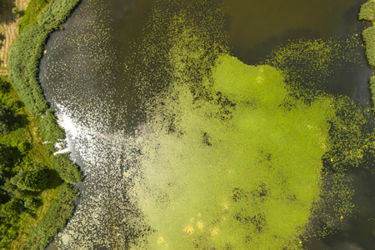
A new three-part video series from Lake Logic synthesises peer-reviewed research on sediment biology, examines a documented aeration failure, and presents five years of verified bathymetric performance data.
The Problem With Pelagic Bias
For decades, the dominant framework for assessing and managing lake health has been built around surface water measurements: chlorophyll-a, total phosphorus, water clarity, and the composite Trophic State Index derived from them. These metrics are familiar, standardised, and widely accepted. They are also, according to a growing body of peer-reviewed literature, measuring the wrong part of the lake.
A landmark 2002 study by Vadeboncoeur and colleagues published in BioScience identified what the authors termed a "pelagic bias" in limnological research — a systematic overemphasis on the open water column at the expense of the benthic zone. The study demonstrated, using isotope tracing of carbon through food webs, that the majority of fish production in many lake systems is supported by benthic-derived nutrition: organic matter processed by microbial and invertebrate communities at the sediment-water interface, transferred upward through the food web via benthic invertebrates that serve as an intermediary trophic layer.
The practical consequence of this bias is significant. Lake and reservoir management programs that focus exclusively on surface water quality metrics are, in effect, treating the symptom while the underlying pathology — the progressive accumulation of organic sediment at the benthic margin — continues to worsen. A new three-part video series from Lake Logic, titled Science Explains Bio-Dredging, addresses this gap directly, synthesising the relevant peer-reviewed literature into a coherent framework for understanding why conventional treatments fail and what conditions are necessary for genuine biological sediment reduction.
The Bioturbation Multiplier And The Enzyme Bottleneck
The first video in the series, "Stop Buying ‘Beneficial Microbes’," establishes two foundational findings from the scientific literature that are central to understanding sediment dynamics in eutrophic lakes.
The first is the bioturbation multiplier, quantified in a 2016 study by Baranov, Lewandowski, and Krause. Bioturbation — the physical disturbance of sediment by burrowing invertebrates such as chironomid larvae and oligochaete worms — was already understood to stimulate sediment decomposition. The Baranov study quantified the magnitude of this effect: bioturbation can increase the rate of sediment aerobic respiration by up to five times compared to sediment with no invertebrate activity. Critically, 80–90% of that increase is attributable not to the invertebrates' own metabolic activity, but to the stimulated aerobic microbial metabolism that bioturbation enables by exposing organic matter to oxygenated water and by the physical pumping of oxygenated water through invertebrate burrows into otherwise anoxic sediment layers.
The study also noted a finding with direct implications for system design: the bioturbation multiplier is most powerful in lakes where the overlying water column remains adequately oxygenated to sustain aerobic microbial communities. In stratified lakes where hypolimnetic hypoxia eliminates benthic invertebrate populations, bioturbation ceases entirely, and the multiplier effect is lost.
The second finding concerns the rate-limiting step in sediment decomposition. A 1998 study by Boschker and Cappenberg investigated whether organic sediment accumulates because of insufficient extracellular enzyme supply — limiting the rate at which complex organic macromolecules are hydrolysed into bioavailable substrates — or because of insufficient microbial biomass to consume the substrates that enzymes produce. The researchers measured the activity of four key extracellular hydrolytic enzymes alongside the concentrations of their hydrolysis products (dissolved sugars, amino acids, and fatty acids) in sediment pore water.
The finding was unambiguous: enzymatic hydrolysis was the rate-limiting step. Hydrolysis product concentrations remained consistently low, indicating that microbes were consuming substrates as rapidly as they were produced — meaning that enzyme supply, not microbial uptake capacity, was constraining the overall rate of sediment decomposition.
This finding has a direct and underappreciated implication for commercial lake management practice. The widespread application of microbial inoculants — marketed variously as "beneficial microbes," "muck munchers," or probiotic sediment treatments — is biologically incapable of accelerating sediment clearance if enzyme supply is the limiting factor. Adding more microbes to a system where the bottleneck is enzymatic does not address the constraint. The video series makes this point explicitly, and the underlying science is available for independent review.
The first video also identifies what it terms the Catch-22 of sediment biology: supplementing enzyme supply to accelerate decomposition triggers a rapid microbial bloom, which in turn dramatically increases oxygen demand. If that oxygen demand cannot be satisfied, the microbial population crashes, adding dead microbial biomass to the sediment and increasing the oxygen debt further. This feedback loop means that enzymatic treatment and sustained oxygenation are not independent interventions — they are co-dependent requirements.
A Documented Case Of Aeration System Failure: Lake Carmi, Vermont
The second video in the series, "The $1M Lake Blunder," examines a peer-reviewed case study that illustrates the consequences of deploying an aeration system without adequate understanding of the biological oxygen demand dynamics described above.
Between 2019 and 2024, an aeration system was installed at Lake Carmi, Vermont, with the stated objective of reducing toxic cyanobacteria harmful algal blooms (HABs). The project was monitored and documented in a study by Kirol and colleagues, published in the journal of the American Geophysical Union. After four years of operation, the system was decommissioned as a failure: HAB frequency and intensity had worsened over the monitoring period.
The video's analysis of the published data identifies several design and operational failures that are directly explicable by the biological framework established in Part 1.
The aeration system was designed to achieve a dissolved oxygen target of 2.5 mg/L — the U.S. EPA's threshold definition of hypoxia. From the outset, the project was targeting a dissolved oxygen level that the scientific literature had already established as insufficient to sustain the aerobic benthic communities required for sediment decomposition.
High-frequency in-situ sensor data from the monitoring period revealed a pattern of oxygen spiking and crashing that mean dissolved oxygen figures obscured. On occasion, the system successfully raised mean bottom-water dissolved oxygen from 0.77 mg/L to 3.96 mg/L. However, the sensor data showed that anoxic periods — dissolved oxygen below 1 mg/L — persisted for between 46 and 57 days per year during the July-to-September monitoring window, meaning the system failed to maintain even minimal oxygen levels for more than half of the critical summer period.
The mechanism of failure is consistent with the biology described in Part 1. Aeration stimulated microbial activity, increasing sediment oxygen demand from 0.37 mg/L/day before aeration to as high as 1.3 mg/L/day during aeration — a 3.5-fold increase. The system could not sustain the oxygen supply required to meet this elevated demand. The resulting anoxic periods triggered phosphorus release from the sediment, providing the nutrient loading that drove intensified cyanobacteria blooms.
The video makes a methodological observation that has broader relevance for lake management monitoring: mean dissolved oxygen measurements are an inadequate proxy for the biological conditions at the benthic margin. It is the frequency, duration, and depth of anoxic events — not the mean — that determines whether aerobic sediment decomposition can be sustained. A monitoring protocol that reports only mean values can present a misleading picture of system performance.
Verified Performance Data: Roland Lake, Virginia
The third video, "Bio-Dredging In Action - 138,000 Cubic Yards of Muck — Gone," presents five years of annual bathymetric sonar data from Roland Lake, Virginia — a 30-acre irrigation reservoir where a RADOR dissolved oxygen delivery system was combined with enzymatic bio-dredging treatment.
The dataset is notable for its methodological rigour. Annual bathymetric surveys were conducted at the same time of year, with water level data normalised against a fixed reference benchmark to correct for inter-annual variation in lake elevation, ensuring year-on-year volumetric comparisons are valid.
The 2017 baseline survey established that one half of the lake was almost entirely less than two feet in depth, with dense invasive aquatic vegetation throughout all areas shallower than ten feet. By 2022, the average depth of the lake had increased from 5.1 feet to 7.9 feet, and the maximum depth from 17 to 20.5 feet. The area of the lake with a depth of five feet or greater had doubled. Invasive weed coverage had collapsed almost entirely — not through herbicide application, but through the removal of the nutrient-rich organic sediment substrate in which the weeds were rooted.
The total volume of sediment removed over the five-year period was 138,000 cubic yards, equivalent to a 55% increase in the reservoir's water storage capacity. The dataset contains an embedded unintended experiment: in 2020, COVID-19 travel restrictions prevented enzyme dosing from being carried out. The bathymetric data for that year shows no measurable progress in sediment reduction. When enzyme dosing resumed in 2021, bio-dredging resumed with it — providing a within-dataset confirmation of the causal relationship between enzymatic treatment and measured sediment reduction.
The video closes with a point that has direct relevance for water resource managers and lake management contractors: bathymetric sonar scanning is the only measurement that directly quantifies whether sediment is being reduced or not. Chlorophyll-a, total phosphorus, and water clarity measurements provide no information about sediment volume or trajectory. Without annual bathymetric data, it is not possible to determine whether any treatment programme is producing a net reduction in organic sediment accumulation or merely managing its surface expression.
Implications For Water Resource Management Practice
The Lake Logic Bio-Dredging series does not present new science. The studies it draws upon — Vadeboncoeur (2002), Baranov et al. (2016), Boschker and Cappenberg (1998), and Kirol et al. — are published in peer-reviewed journals and available in the public domain. What the series provides is a synthesis of these findings into a coherent operational framework, and a clear articulation of why the conventional toolkit of algaecides, surface aeration, and microbial inoculants is failing to address the root cause of eutrophication in managed lakes and reservoirs.
For water resource managers, utility operators, and lake management professionals, the series raises several questions worth examining in the context of current practice:
- Whether dissolved oxygen monitoring protocols capture the frequency and duration of anoxic events at the benthic margin, rather than mean values that may obscure episodic failures.
- Whether aeration system design specifications are validated against the actual biological oxygen demand that will be generated when sediment decomposition is stimulated — not against pre-treatment baseline conditions.
- Whether lake management contracts include annual bathymetric scanning as a performance measurement requirement, enabling objective assessment of whether sediment volume is increasing, stable, or decreasing over time.
- And whether the continued application of microbial inoculants is justified in light of the enzyme bottleneck finding, which suggests that the constraint on sediment decomposition is upstream of microbial activity.
All three videos in the series are available on Lake Logic — a YouTube channel dedicated to evidence-based lake management education. All content references peer-reviewed scientific literature, linked in each video description and available in the public domain.
Watch the Bio-Dredging series:
Part 1 — Why Your Lake Muck Is Winning: [ https://youtu.be/gpo6LGm4iec ]
Part 2 — The $1M Lake Blunder: [ https://youtu.be/AatB7SXaT0Q ]
Part 3 — 138,000 Cubic Yards of Muck — Gone: [ https://youtu.be/VqiKh-Tu_rU ]
Dave Shackleton is the President of Clean-Flo International. (dave@clean-flo.com)