
Study Reveals A Comprehensive Guide To IoT Integration For Non-Revenue Water Management
By Christian Bonawandt
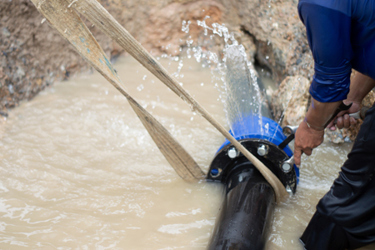
Water utilities have been navigating a triple threat of challenges that include rapid urbanization, aging infrastructure, and climate change. This combination places immense strain on systems that were often designed for a different era, leading to larger and more frequent leaks throughout the distribution network. Globally, it is estimated that more than 300 million gallons of water are lost every day through leakage. In many cities in the southern hemisphere, non-revenue water (NRW) levels can reach as high as 60%. This is a massive loss of both a precious resource and the income needed to maintain the system.
A recent study published in Digital Water argues that the traditional, manual approach to network monitoring and leak prevention is no longer sustainable. Instead, utilities must embrace the Internet of Things (IoT) to transition from reactive repairs to proactive asset management.
How IoT Can Reduce NRW
IoT solutions refer to any smart device that can communicate remotely to another system with operational or other relevant data. This capability gives utilities the opportunity to take a proactive, data-driven approach to managing NRW by enabling real-time monitoring, automated detection, and precise system control. Rather than relying on manual device reading, which is often slow and inefficient, IoT integrates various sensors and communication protocols to minimize losses from leaks, theft, and billing inaccuracies.
IoT solutions help reduce NRW through the following mechanisms:
- Advanced leak detection and localization. IoT-driven systems use a variety of integrated sensors to identify and monitor leaks continuously. This includes acoustic and vibration sensors that can detect small leaks before they become large bursts. In addition, meter data allows utilities to identify discrepancies between the water supplied and the water consumed, providing evidence of where water is being lost. This data can then be used to create digital twins of physical infrastructure, allowing operators to simulate events and optimize network performance for better leak detection.
- Improved metering and billing accuracy. Apparent losses, such as those caused by metering errors or unauthorized consumption, are a major component of NRW. Systems like advanced meter infrastructure (AMI) provide more precise billing based on real-time consumption data, which minimizes errors caused by manual reads. Similarly, tamper prevention devices offer a prompt response to illegal intrusions or unauthorized usage.
- Optimized pressure management. Lowering excessive pressure and removing sharp pressure swings can significantly reduce water loss. Pressure sensors can monitor levels across the network to identify signs of active leaks. They can also help operators maintain pressure at levels that reduce the risk of causing or increasing the size of those leaks.
- Asset protection and predictive maintenance. In many parts of the southern hemisphere, asset theft is common. Long-range wide-area network (LoRaWAN)-enabled trackers can be attached to expensive infrastructure, such as electric motors and pumps, to reduce this risk. In addition, vibration and temperature sensors coupled with AI can monitor the health of raw water pumps and motors, allowing for preventative maintenance before a failure leads to significant water loss.
- Efficient data communication protocols. In order for these solutions to work across large cities and rural areas, utilities must use IoT protocols, such as LoRaWAN, NB-IoT, and Sigfox.
Challenges To Digitization
For many water utilities, the main obstacles to adopting IoT for NRW stem from infrastructure requirements, economics, technical demands, security risks, and organizational factors. Moreover, these challenges can overlap, creating a complex environment for utilities attempting to transition from traditional operations to digital frameworks.
For example, many distribution networks are aging and deteriorating, while assets are often spread over many miles, making regular monitoring difficult without sophisticated technology. At the same time, external pressures like rapid urbanization, steady population growth, and the impacts of climate change exert immense stress on existing systems.
The high initial capital investment required for hardware like IoT sensors and smart meters, as well as necessary software and infrastructure upgrades, is another major impediment. Utilities in the southern hemisphere frequently face funding gaps and struggle to secure the financing or strategic partnerships needed to scale digital programs. Furthermore, ongoing operational expenses for maintenance, cybersecurity monitoring, and staff retraining add new long-term costs that can be difficult to bear.
Another significant technical barrier is the lack of stable internet and electricity, especially in rural or underground locations. This is compounded by a shortage of affordable, robust IoT sensors capable of functioning effectively in the harsh environments common in water networks.
Unfortunately, the integration of IoT devices and real-time monitoring systems actually increases a utility’s vulnerability to cyber-physical attacks, such as network hacking or Denial of Service (DoS) attacks. As a result, managing enormous volumes of sensitive information, including customer billing and usage patterns, necessitates stringent encryption and access controls to prevent data breaches.
The absence of consistent and well-defined protocols and integration frameworks often makes interoperability of different digital tools difficult. This can prevent various IoT devices and data analytics platforms from working together. Without standardized data acquisition and analysis processes, utilities risk being locked into proprietary systems that limit scalability.
Finally, a successful digital transformation depends heavily on the workforce and utility management. In many cases, staff may need to retrain to work with new technologies. Additionally, digitization sometimes requires water utilities to undergo a holistic reorganization in order to support decision-makers as they execute technical tasks and make data-driven strategic choices.
The Path To Scale
Scaling IoT solutions within water distribution networks requires a strategic transition from isolated pilot projects toward a fully integrated digital ecosystem. These five stages are described in the study as the Digital Water Adoption Curve (DWAC)
- Adoption. At this first stage, utilities generally lack digital strategies, rely on traditional analogue infrastructure, and are just beginning to explore the potential of digital initiatives through pilot projects.
- Basic. Utilities in this phase start to integrate digitization into their operations, digitizing essential tasks like billing and records while beginning to develop online monitoring platforms.
- Opportunistic. This is the current "mean" level for many utilities, where processes are automated, technologies for remote monitoring are deployed, and virtual intelligence is used to inform decision-making.
- Systematic. In this phase, linked processes are automated and controlled, supported by well-developed platforms and internal resources that are fully aligned with the digital infrastructure.
- Transformational. At full maturity, business and operational processes are linked and integrated with digital technology, using high-technology analytics for evidenced decision-making.
To manage the significant capital investment required, the authors also recommend utilizing pilot testing to evaluate economic benefits and justify a broader rollout.
Beyond initial adoption, a successful digital transformation depends on a multi-technology infrastructure that matches specific communication protocols, such as NB-IoT for urban density or LoRaWAN for rural areas, to the unique demands of the environment. Ultimately, overcoming high initial cost barriers may necessitate innovative funding models and strategic partnerships between technology providers, researchers, and policymakers to foster the interoperability and standardization required for a sustainable, large-scale digital future.
 Christian Bonawandt is an industrial content writer for Water Online. He has been writing about B2B technology and industrial processes for 24 years.