
Scientists Unlock Faster, Safer Way To Track Toxic PFAS In The Atmosphere
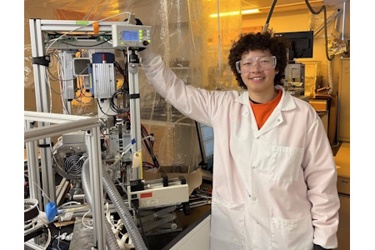
As concerns grow over the spread of toxic “forever chemicals” in the air people breathe every day, researchers at UNC-Chapel Hill have developed a faster, safer and more practical way to detect them in real time.
Using a technique called superoxide chemical ionization mass spectrometry, or O2-CIMS, the team demonstrated in a study published in the Royal Society of Chemistry journal Analyst that airborne PFAS can be identified within seconds — a breakthrough that could transform how scientists monitor these persistent pollutants in homes, workplaces and communities.
For decades, PFAS, or per- and polyfluoroalkyl substances, have been used in products designed to resist water, grease and stains. They are found in everything from nonstick cookware and waterproof clothing to firefighting foams and food packaging, and do not easily break down in nature.
Scientists have spent years trying to understand how PFAS move through the environment and affect human health. Much of that research has focused on contaminated water and soil. Measuring PFAS in the air, however, has remained more difficult.
Traditional PFAS air testing often requires scientists to collect samples for hours, days or even weeks before sending them to a laboratory for analysis. The process is labor-intensive and only provides an average picture of contamination over time.
“We want real-time measurements,” said Yufan Hu, a lead author of the study and a doctoral student in the UNC Department of Chemistry. “The traditional method can only sample for several hours or several weeks, and then they have to extract everything later. You don’t really know what is happening moment by moment.”
Hu explained that many existing real-time detection systems also rely on hazardous chemicals, such as methyl iodide or nitric acid, to generate the ions needed for measurement. Those chemicals require heavy ventilation systems and make it difficult to deploy instruments outside the laboratory.
“That’s why we wanted to explore safer alternatives,” said Hu. “We wanted a system that could still do real-time PFAS monitoring without using harmful chemicals.”
The team turned to superoxide, a safer reagent ion that could simplify field measurements while maintaining high sensitivity. Now, their instrument can detect PFAS at concentrations smaller than one part per trillion by volume — an extraordinarily tiny amount.
“To imagine that level, it’s like one droplet of water in about 20 Olympic swimming pools,” said Hu, “and sub-pptv means even lower than that.”

The research was led jointly by Hu and Joji Sherman, a doctoral student in the Department of Environmental Sciences and Engineering at the UNC Gillings School of Global Public Health. Sherman said the study focused on proving that the technology could successfully detect airborne PFAS compounds quickly and accurately in realistic environments.
One major advantage of the new system is its mobility. Scientists often place air-monitoring instruments inside vans or mobile laboratories to study pollution in communities, industrial sites or disaster areas. Existing PFAS instruments, however, can be difficult to transport because they require toxic chemicals and bulky ventilation systems.
“With the superoxide system, we don’t need those harmful chemicals,” said Sherman. “That makes the mobile deployment much more feasible.”
The researchers tested the system on several types of PFAS compounds commonly found in industrial and consumer products. The instrument worked especially well for detecting fluorotelomer alcohols, or FTOHs, a class of PFAS that can evaporate into the air.
The team also discovered that the system produced unique “fingerprint” signals for these compounds. Those fingerprints help confirm exactly which PFAS chemicals are present without requiring as much additional laboratory processing.
Normally, scientists must use complicated methods, such as gas chromatography or liquid chromatography, to separate and confirm compounds. That process can involve cutting samples into pieces, soaking them in solvents, concentrating them and running lengthy analyses.
“If we have those fingerprint peaks, we already have another layer of confirmation,” said Sherman. “That means we can save a lot of labor and cost.”
One of the study’s most striking experiments involved measuring PFAS emissions from fast-food packaging at room temperature. When the researchers placed food wrappers near the instrument, they immediately detected airborne emissions of a PFAS compound called 6:2 FTOH. When the wrappers were rubbed together, emissions increased even more.
“The thing that surprised me the most was that we could see the emissions directly at room temperature,” said Hu. “That means the compound is already off-gassing into the air.”
The results raise important questions about how everyday consumer products may contribute to indoor PFAS exposure.
“If you put food into that packaging and then heat it in a microwave, the temperature increases and potentially even more emissions could come out,” said Sherman.

“We can quickly switch between the two systems,” said Sherman. “One system can detect compounds that the other one cannot. Together, they give us more confidence and better quantification.”

“This work demonstrates the strong potential for safer, real-time airborne PFAS measurements,” said Surratt, who was joined in the interdisciplinary research effort by Barbara Turpin, PhD, also a professor in the Department of Environmental Sciences and Engineering. “The ability to rapidly identify and quantify these compounds in air could improve environmental monitoring and help support future exposure mitigation strategies.”
Source: UNC Department of Chemistry