
Rethinking Aeration: Demand-Based DO Control And Energy Optimization
By Miguel Ochoa
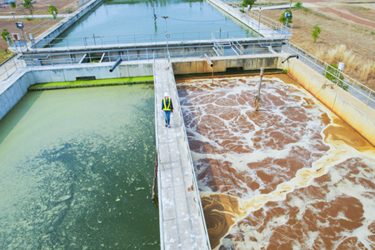
Aeration is the dominant energy consumer in most biological water and wastewater treatment processes. The U.S. EPA reports that aeration typically represents 50–60% of total electricity consumption in activated sludge wastewater treatment plants and, in some facilities, can exceed that range depending on configuration¹.
Despite this, aeration control strategies often remain conservative and static. Blowers operate continuously, oxygen levels are maintained near maximum, and airflow rates are rarely adjusted in response to real-time biological demand.
The result is widespread over-aeration — a condition that does not improve treatment performance but significantly increases operating costs.
The Hidden Cost Of “Running It Safe”
Operators have historically preferred excess oxygen to avoid treatment upsets. Oxygen limitation can compromise biological treatment, while excess oxygen appears harmless.
However, once dissolved oxygen (DO) exceeds the metabolic requirement of microorganisms, additional airflow produces no additional treatment benefit. Instead, it leads to:
- Higher electrical consumption
- Increased blower runtime
- Accelerated mechanical wear
- Elevated maintenance costs
- Increased greenhouse gas emissions
Over time, this conservative approach becomes one of the most significant avoidable cost drivers in plant operations.
Airflow Is Not Oxygen Demand
A common misconception in aeration control is equating air delivery with process need. Airflow is a mechanical input, while dissolved oxygen concentration is a biological process variable.
Without measuring DO directly in the aeration basin, operators are effectively controlling based on assumptions rather than real biological demand.
Wastewater characteristics vary continuously due to flow fluctuations, organic loading changes, industrial discharge variability, temperature shifts, and storm events. A fixed aeration rate cannot efficiently respond to these dynamic conditions.
The solution begins with continuous dissolved oxygen measurement.
From Monitoring To Demand-Based Control
Installing a DO sensor in the aeration basin provides real-time visibility into oxygen concentration in the mixed liquor. However, measurement alone does not produce savings — optimization requires integrating DO feedback into a control loop.
Typical architecture includes:
DO Sensor → Controller → VFD (small facilities)
DO Sensor → Controller → PLC → VFD (medium to large facilities)
In direct control, the controller converts DO into a 4–20 mA signal that modulates blower speed through a variable frequency drive (VFD). The blower increases output only when DO drops below the setpoint and reduces air flow once demand is satisfied.
In larger plants, routing DO through a PLC enables multiple aeration zones, cascade control loops, alarm handling, redundancy logic, SCADA integration, and performance trending.
Quantifying The Savings
Because aeration dominates plant energy use, modest improvements produce significant cost reductions. Industry studies consistently show:
- Basic DO-based control reduces blower energy consumption by 10%–25%²
- Optimized PLC-based strategies reduce blower energy use by 20%–40%³
Example
Consider an 8–10 MGD activated sludge facility operating three 150 kW blowers with an average combined demand of approximately 500 kW.
A conservative 20% reduction yields:
100 kW × 24 hr/day × 365 days ≈ 876,000 kWh/year
At $0.08 per kWh, this equals approximately $70,000 per year in energy savings.
For many utilities, payback periods for DO-based control improvements are measured in months rather than years.
Implementation Considerations For Operators
Facilities implementing demand-based aeration should begin with stable measurement and conservative control targets rather than aggressive optimization.
Typical activated sludge basins operate effectively within a DO range of approximately 1.5–2.5 mg/L, though nitrification processes may require higher minimum concentrations. Selecting a control band instead of a single fixed setpoint helps prevent excessive blower cycling and improves equipment life.
Sensor placement is also critical. Probes should be installed in representative zones of the aeration basin where mixing is adequate but not directly in front of diffusers or influent entry points. Regular cleaning intervals should be established based on fouling tendency rather than fixed calendar schedules.
Blower control tuning should start slowly. Initial implementation often uses gradual speed modulation before enabling tighter automated control. Monitoring effluent ammonia and sludge settling during early operation helps confirm that energy reductions are not achieved at the expense of treatment stability.
In practice, stable measurement, conservative setpoints, and incremental tuning consistently produce reliable energy savings without process risk.
Process Variability And Seasonal Operation
Biological oxygen demand in activated sludge systems is not constant throughout the year. Temperature has a direct impact on microbial activity, oxygen transfer efficiency, and nitrification kinetics. During warmer months, higher biological activity and increased influent loading often raise oxygen uptake rates, requiring greater airflow to maintain stable treatment. Conversely, in colder conditions microbial respiration slows while oxygen solubility increases, meaning the same airflow may produce unnecessarily high dissolved oxygen concentrations.
Fixed aeration rates or rigid setpoints therefore tend to either under-aerate in summer or over-aerate in winter. Both situations reduce process efficiency — one by risking treatment instability and the other by increasing energy consumption without improving effluent quality.
Demand-based control allows the aeration system to automatically adapt to these seasonal changes. Instead of relying on operator adjustments several times per year, the control loop continuously tracks real biological demand and adjusts blower output accordingly. Over long operating periods, this automatic adaptation often accounts for a significant portion of the realized energy savings, particularly in facilities located in regions with strong seasonal temperature variation.
Additional Operational Benefits
Energy savings are typically the primary driver, but optimized DO control also improves process stability. Maintaining DO within a controlled band rather than at maximum levels can reduce excessive mixing intensity, improve sludge settling performance, stabilize biological activity, and support nutrient removal strategies⁴.
A Shift Toward Data-Driven Operation
Utilities increasingly operate under efficiency and sustainability mandates. Rising electricity costs further emphasize the importance of operational optimization.
Demand-based aeration aligns directly with these objectives by supplying oxygen proportional to biological demand rather than equipment capacity.
Conclusion
Aeration is essential to biological treatment, but constant maximum aeration is not.
When dissolved oxygen is not dynamically controlled, plants operate with unnecessary energy overhead. Integrating DO feedback into blower control strategies enables facilities to reduce electrical consumption while maintaining or improving treatment performance.
The infrastructure required is modest.
The operational impact is measurable.
The financial return is rapid.
In facilities where aeration represents the largest electrical load, optimizing oxygen supply is not merely a process improvement — it is a strategic operational decision.
References
- U.S. Environmental Protection Agency (EPA). Energy Efficiency in Water and Wastewater Facilities (2013).
- U.S. Department of Energy (DOE). Aeration System Optimization Case Studies (2016).
- Water Environment Federation (WEF). Energy Conservation in Water and Wastewater Treatment Facilities, MOP 32 (2010).
- Water Research Foundation (WRF). Evaluation of Energy Conservation Measures (2011).
 Miguel Ochoa is a chemical engineer with 18+ years of experience in process engineering, industrial automation, and operational efficiency. His work centers on instrumentation and control integration in water and wastewater treatment, with emphasis on dissolved oxygen optimization and aeration energy performance. He is based in South Florida.