
Rapid COD Tests Can Predict Plant Upsets

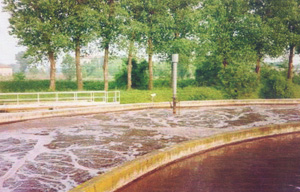 Bethlehem, PA — The traditional Chemical Oxygen Demand (COD) test is becoming the "canary on duty" for many wastewater treatment plants, predicting possible plant upsets before they occur, like the canaries once used by the miners to detect potentially toxic gas concentrations.
A standard EPA-accepted or approved COD test is required for EPA reporting, but a more rapid and mercury-free method is now available for testing influent streams when reporting is not required. When test results are needed immediately for process control decisions, quicker and easier is definitely better.
The test, from Bioscience, Inc., measures contaminants that can be readily oxidized. High COD in the influent can signal an abnormal event such as slug loading of BOD or industrial discharge. High COD in the effluent may indicate that a toxic chemical is inhibiting or killing the biomass, or that a non-biodegradable compound is passing through the plant. As a rough prediction, for domestic wastewater COD is generally about 2.5 times the five-day BOD.
A standard Bioscience micro-COD test takes two hours. A 2.5 ml sample is placed in a twist tube with pre-measured reagent, digested for 2 hours at 150°C and read in an inexpensive colorimeter. The quick variation suggested by Bioscience substitutes a mercurey-free reagenet, which allows for simpler and usually cheaper disposal, while shortening the digestion time to as little as 15 minutes. Shortened digestion time typically results in COD readings 5 to 15 percent lower than those using standard digestion. Tests with varying digestion times should be used to confirm that the results are within acceptable accuracy for a particular wastewater.
The colorimeter microprocessor selects low or standard COD range, displays the test sequence and indicates results in ppm. It displays the appropriate built-in light filter to match one of 40 programmed test parameters. It also indicates percent light transmittance and absorption so that users can develop calibration curves for proprietary analyses.
The system uses the same or twist tubes similar to as Bioscience's EPA-approved accu-TEST™ COD method which requires a spectrophotometer to conform to EPA Method 410.4. The colorimeter can also be used with a wide variety of other pre-measured reagents to measure specific toxicity or inhibitory compounds in the waste stream.
SOURCE: Bioscienc, Inc.