
Produced Water Treatment Market: The Next Big Wave In Industrial Sustainability
By Aashi Mishra
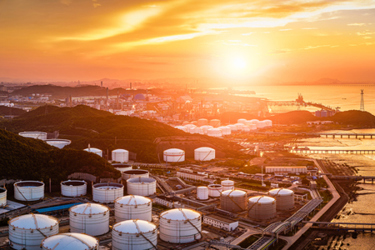
Just below the surface of the global demand for energy and industrial upgradation flows a little ocean of problems and scopes: produced water. The International Energy Agency proclaimed that more than 144,146,098 terajoules (TJ) of natural gas was supplied globally in 2023, and experienced a nearly 66% increase from 2000 to 2023. For every TJ of natural gas or every barrel of oil extracted, multiple barrels of water are brought to the surface, which are usually a mixture of hydrocarbons, salts, chemicals, and minerals.
Earlier, treating produced water was acknowledged as a complicated operation for the suppliers due to the initial cost and environmental risk factors associated with it. But, as the global population reached over 8 billion as of 2022, and issues such as water scarcity, environmental regulations, and corporate sustainability mandates came to the forefront, produced water treatment has become a strategic imperative for industries far beyond oil and gas. Companies are transforming from simply discarding the water to treating and reusing the water, creating a broader circular environment. It is one of the fastest-growing segments in the water treatment industry, which has emerged as an amalgamation of environmental stewardship, regulatory compliance, and technological innovation.
An Emerging Industry — 4 Major Trends Skyrocketing The Adoption And Environmental Urgency
The quantity of produced water is huge worldwide. Moreover, in 2025, disposal accounts for nearly 46% of produced water in the United States, followed by reinjection at around 41% and recycling at over 13%. This emphasizes the scale of the challenge and opportunity for treatment and reuse. Again, the U.S. Geological Survey (USGS) updated its National Produced Waters Geochemical Database in December 2023 with over 23 new datasets, offering a detailed assessment of the chemical composition and treatment needs of produced waters across multiple U.S. basins. This urgency and rapid focus on treating produced water is not a sudden approach, but a strategic pivot to combat the growing environmental and social challenges. Here we’ve explained the four major reasons behind the industry’s huge boom in 2026 and beyond.
1. Water Scarcity and Resource Constraints
Water scarcity and having freshwater resources are the most critical challenges in today’s world. In many areas across the world, and majorly in arid and semi-arid areas, there is an ever-increasing gap between the increasing water demand and the decreasing supply chain. Moreover, according to the Earth System Science Data, around 359.4 billion m³ of wastewater is produced each year worldwide, and only nearly 52% of that is currently treated. Produced water treatment techniques help the industries to repurpose these water sources without depending on fresh water sources. A March 2025 report by Texas Living Waters projected that over 50% to 60% of produced water is being recycled and reused for hydraulic fracturing in the Permian Basin. They have also anticipated that by 2030, more than 80% of fracking water would come from produced water sources.
2. Stringent Environmental Regulations
Governments all over the world are releasing stricter norms related to industrial wastewater discharge. According to UN-Water, only 38% of industrial wastewater reported in around 22 countries was treated at all, and almost 27% was safely treated to compliance standards. Also, the UN World Water Development Report highlights that global freshwater stress and wastewater management needs are critical sustainability priorities worldwide. Thus, countries including Europe and North America are using requirements and mandating the acceleration of reuse volumes and discharge quality.
3. Rising Operational Costs and Disposal Risks
As the world is becoming more vigilant about repurposing the produced water, the traditional disposable techniques, like deep well injection, become increasingly costly for oil and gas operators. Moreover, in remote or adverse environment the transportation and liability costs are rising. Here, the advanced produced water treatment techniques, such as membrane systems, chemical-free processes, microbubble infusion, or other separation technologies makes it cost-effective by offering onsite reuse facilities. According to the U.S. government’s 2021 report, more than 90% of produced water was injected to reuse for industrial applications, and around 25,860,854,000 billion barrels (bbl) of produced water was generated in the U.S. This demonstrates a vast opportunity for treating an accelerating volume of produced water.
4. Corporate Sustainability and ESG Commitments
Under the Environmental, Social, and Governance (ESG) criteria, the demand for the circular economy is rising. Thus, investors are increasingly searching for performances that provide resource efficiency and environmental impact reduction. In fact, the official data suggest that India’s circular economy, for example, can be valued at over USD 2 trillion and create nearly 10 million jobs by 2050, and initiatives like the road to Viksit Bharat 2047 are continuously focusing on a green, inclusive, and circular environment. This is skyrocketing the demand for produced water treatment technologies across countries.
These major trends, along with other severe challenges, such as urbanization, population growth, and industrial expansion is creating a widespread opportunity for the industry to grow.
Inculcation Of Modern Platforms In Produced Water Treatment And Their Real-World Use Cases
Technology has transformed the world and significantly revolutionized water treatment procedures. The installation of digital equipment, including AI, machine learning, IoT sensors, and automation platforms, has transformed the whole technique. It provides better predictive analysis and real-time monitoring, which enhances the operation.
A great instance is the incorporation of next-gen AI platforms with existing SCADA and sensor networks at oilfield treatment sites. This significantly enhanced efficiency and reduced energy use by providing water volume and pressure predictions. One such system is designed specifically for produced water networks in the Permian Basin, using predictive and agentic AI to increase efficiency and mitigate environmental impacts.
The producers and the operators are increasingly integrating these platforms with produced water treatment techniques and treating a large volume of produced water. Here are some real-world examples.
- Natura Resources and NGL Water Solutions Permian announced their collaboration in February 2026 to explore pairing Natura’s advanced molten salt nuclear reactors with thermal desalination systems to treat large volumes of produced water while generating clean power. These collaborations focused on producing reused water for industrial and agricultural use from oilfield wastewater at scale.
- In November 2025, Sparkle Clean Tech and Aquadei started a joint venture to deploy advanced nanobubble and hydrodynamic cavitation technologies across oil and gas operations worldwide. This will further reduce cost, optimize efficiency, and improve sustainability performance in produced water management on a global level.
- The scientists from the Central Salt and Marine Chemicals Research Institute (CSMCRI) partnered with IIT Gandhinagar, India, and co-developed ultra-selective crystalline nanopore membranes. This innovative technique was released in February 2026 and has the potential to drastically enhance industrial water reuse and energy efficiency.
- The partnership of WT Oil & Gas and EnviroKlean co-released the Zero Solids Recycle System in January 2026. It is a breakthrough produced water recycling solution that eliminates waste solids.
These inventions and many more like these are creating an extensive growth prospect for produced treatment globally.
Final Thought
Produced water treatment is the testimony of environmental urgency, technological innovation, and strategic industrial transformation. What was once a waste and usually ignored by the manufacturers is now a critical tool for sustainability and significantly addressing the water scarcity issues. For investors and key players, it is high time to invest in this blooming industry to gain more in the future.
Report: https://www.researchnester.com/reports/produced-water-treatment-market/8290
 Aashi Mishra is currently working as a content developer with the Research Nester. An electronics engineer by profession, she loves to simplify complex market aspects into comprehensive information.