
Preventing Pipeline Failures Before They Happen
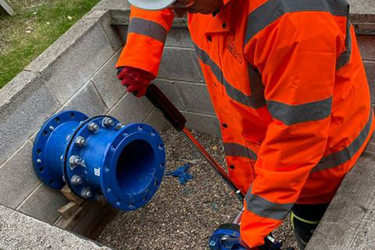
Pipeline failures do not always stem from ageing infrastructure — many begin at installation, writes Ben Crabtree, global product line director, Ovarro. Errors in jointing, manual testing and inconsistent quality assurance (QA) processes can reduce pipeline quality, leading to leaks, rework and increased costs.
Construction defects account for a significant proportion of pipeline incidents, underlining the need for greater confidence, precision and traceability in how networks are laid. Many faults only become apparent once a pipe is buried and under pressure.
At that stage, identifying and fixing issues becomes significantly more challenging, both operationally and financially. As utilities progress mains replacement programmes, the quality of pipeline installation forms a key part of the leak reduction efforts by preventing failures before they occur.
In a new report, the UK’s independent climate advisors, the Climate Change Committee, set out eight key areas for government action to address the growing impacts of climate change. Accelerated leakage reduction was identified as one way to tackle water shortages, with technology to provide up-to-date and real-time information on the system, highlighted as an enabler.
While real-time network monitoring is already well established in helping utilities pinpoint leaks, cutting edge technology is increasingly being used to prevent leaks before they occur through improved pipeline management.
Leading the way is digital quality assurance supplier ControlPoint, which integrated with technology company Ovarro five years ago. ControlPoint provides technical services to ensure correct installation of a range of pipe jointing methods, including electrofusion and flanged connections.
Completion of new water main installations is dependent on a pressure test to prove the pipe is watertight — but a significant number of new pipelines fail their first pressure test, mostly due to weeps and leaks on joints and flanges.
ControlPoint’s data-led tools remotely monitor new pipe installations to demonstrate compliance, providing a quality control check on installations to ensure pipelines are leak free from the point of installation.
Ovarro believes data-driven QA can also help change workforce behaviour. One example is TorqueAssist, a quality assurance app that demonstrates how data capture can support practical, on-the-ground tasks - in this case, flange and mechanical joint assemblies using a torque wrench.
The app captures installation data from bluetooth-enabled torques, including gasket and bolt types, along with inputs on location and weather. Using a mobile device, operatives are asked a series of questions to guide them through the tightening process, providing instant records of activity and evidence of compliance, while driving best practice. The data can also be used to monitor the future needs of the infrastructure.
A similar mobile app exists for electrofusion joint assemblies. JointAssist ensures fusion welds are completed ‘right first time’ — alerting the user to ensure critical non-conformities are not present when pipes are commissioned.
As companies move away from reactive network management, tools that improve visibility, to prevent failures at the point of installation, will play an increasingly important role in building more resilient networks.
About Ovarro
Ovarro is a global technology company that works with customers across water, energy oil & gas, broadcast and transportation, providing end-to-end solutions to help monitor, control and manage their assets.
Our connected technology is always there, always on. Secure, proven, trusted; integrating seamlessly with our clients’ assets. Collecting and communicating data from some of the most remote locations and harshest environments on the planet. Enabling businesses to work smarter and more effectively.
Source: Ovarro