
Powdered Activated Carbon: A Flexible Tool For Targeted Treatment Challenges
By Ariel Li
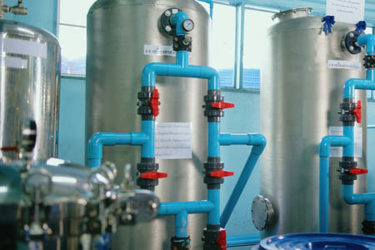
In these six scenarios, PAC is the ideal solution.
Activated carbon is a cornerstone of water treatment, valued for its ability to remove a broad range of contaminants through adsorption. Treatment plants most often deploy carbon in two forms: granular activated carbon (GAC), installed in fixed-bed contactors for continuous treatment, and powdered activated carbon (PAC), applied as a dosed dispersed particle earlier in the treatment process and removed downstream.
While GAC is widely used for steady-state, long-term contaminant control, PAC offers an alternative, versatile, rapid-response approach. It can be applied on demand, adjusted in real time, and integrated without major capital investment, making it particularly effective in dynamic or episodic treatment scenarios.
The following sections highlight six scenarios where PAC provides a clear operational advantage.
1. When Flow Rate Is Highly Variable
Both municipal and industrial settings can experience variations in flow. Wet weather events, seasonal demand swings, and production changes can all cause significant fluctuations in hydraulic loading. Fixed-bed systems such as GAC are typically designed around a relatively narrow operating window, where empty bed contact time (EBCT) and performance remain predictable. As flow increases, contact time decreases, often reducing treatment efficiency at the exact moment when contaminant loading may also be elevated.
PAC offers an adaptable approach. Because it is applied as a dose rather than confined to a fixed reactor volume, operators can adjust feed rates in real time to match changing conditions. This approach allows facilities to maintain consistent treatment performance across a wide range of flows without overdesigning infrastructure for uncommon events. For plants facing variable hydraulics, PAC provides a practical way to align treatment intensity with actual operating conditions.
2. When Contact Time Is Limited
Many treatment processes rely on sufficient hydraulic residence time to achieve effective contaminant removal. However, contact time can be constrained by system design. Legacy facilities operating beyond their original capacity, flow spikes, and industrial batch discharges can all reduce effective residence time within existing basins and contactors. Space- and budget-constrained plants may not have the option to expand or add new treatment volume.
In drinking water facilities, these challenges are often compounded by the fact that water quality issues like elevated total organic carbon or taste and odor events can coincide with peak flow conditions, when contact time is at its shortest.
PAC provides a way to decouple treatment performance from fixed hydraulics. By introducing highly contaminant-specific adsorbent directly into the process stream, PAC enables rapid, in-line adsorption even under reduced contact time conditions. In many applications, it also serves as a front-end buffer, reducing contaminant loading on downstream processes such as fixed-bed carbon systems. Together, these benefits allow facilities to maintain treatment performance during peak flow or contaminant spikes without expanding physical treatment capacity.
3. When Water Quality Challenges Are Region-Specific
Water quality challenges are often shaped by regional conditions, from climate and hydrology to land use and source water characteristics. In the Southeast and Midwest, warm temperatures and nutrient-rich surface waters frequently drive seasonal algal blooms and other organic matter and bacteria decay, leading to recurring taste and odor events and elevated total organic carbon. In the western U.S., drought and wildfire impacts can introduce sudden increases in organic loading and color following storm events. Utilities in industrial regions may contend with variable upstream inputs and legacy contaminants.
When these challenges are episodic or seasonal, it is difficult to justify permanent infrastructure upgrades designed for worst-case conditions. However, even brief surges can significantly impact finished water quality and regulatory compliance and can be addressed quickly with a flexible, responsive option such as PAC.
4. When Source Water Is Surface Water
Surface water sources present a fundamentally different treatment challenge than groundwater due to their variability and higher concentrations of dissolved organic matter. Seasonal shifts, storm events, upstream activity and biological processes can all cause rapid changes in water quality, often with little warning. Increases in natural organic matter, algal byproducts and other dissolved contaminants can impact both aesthetic quality and downstream treatment performance.
Conventional treatment processes are typically designed to handle average conditions, but surface water systems must routinely manage quality outside the averages. While fixed treatment processes like GAC can provide consistent removal under stable conditions, they could be less responsive to short-term fluctuations in contaminant loading.
PAC allows operators to adjust dosing in response to real-time source water conditions, providing an effective means maintaining consistent finished water quality in systems where source water conditions are inherently unpredictable.
5. When Taste And Odor Or TOC Control Is A Persistent — But Not Constant — Challenge
Taste and odor (T&O) events and elevated total organic carbon (TOC) are among the most common and operationally disruptive challenges in surface water treatment. Geosmin and 2-Methylisoborneol (MIB) can appear rapidly during algal blooms and bacteria activity, while TOC levels may spike due to seasonal changes or heavy rainfall.
Designing a fixed-bed system to handle worst-case T&O events or peak TOC levels would require overdesign, higher capital costs, more frequent media changeouts, and underutilized capacity during normal operation. Many utilities find that these events are too intermittent to justify that level of investment.
With PAC, operators can address episodic T&O events and TOC excursions without committing to continuous high-rate treatment. This makes it an effective tool for balancing performance, cost, and operational flexibility in systems where organic challenges are frequent but not constant.
6. When Managing PFAS Risk During Monitoring And Compliance Planning
As utilities move through required PFAS monitoring, reporting, and approaching compliance deadlines, many face uncertainty when finished water concentrations are close to regulatory limits. Early sampling results can place facilities in a “gray area,” where detected levels hover around proposed thresholds but variability in source water or treatment performance makes long-term compliance difficult to predict.
Fixed treatment solutions such as GAC or ion exchange (IX) are typically required for sustained PFAS removal and involve significant capital investment and long implementation timelines. For utilities still evaluating treatment strategies, committing to full-scale upgrades before completing required monitoring can present both financial and operational risk.
PAC can play an immediate and strategic role during this interim period. Newly developed advanced PACs have demonstrated the ability to reduce certain PFAS compounds (particularly long-chain species like PFOA and PFOS) and buffer short-term concentration spikes. This can help utilities manage variability in finished water quality while additional data is collected and long-term solutions are designed.
Although PAC is not a replacement for dedicated PFAS treatment, it can serve as a flexible, near-term tool for utilities seeking to reduce risk and maintain operational control during the transition from monitoring to compliance.
An Important PAC Consideration: Sludge Handling And Residuals Management
While PAC offers significant flexibility and rapid response capability, its use does introduce additional considerations around solids handling. Because PAC is dosed directly into the treatment process and removed downstream through clarification or filtration, it ultimately becomes part of the residuals stream. This approach can increase sludge production and may impact thickening, dewatering, and disposal operations.
For facilities already operating near solids handling capacity, using PAC can create operational constraints or increase hauling and disposal costs. In some cases, the added carbon also can affect sludge characteristics, influencing settling behavior, polymer demand, and disposal.
That said, these impacts are generally manageable within existing treatment frameworks, particularly with the utilization of new highly advanced contaminant-specific PACs that can keep the dosage at low acceptable levels. For many utilities, especially those using PAC intermittently, the tradeoff is acceptable given the ability to address short-term water quality challenges without significant capital investment or operational changes.
When Need Is High And Time Is Short, PAC Is A Valuable Tool
Powdered activated carbon remains a highly adaptable tool available to water and wastewater operators. While not a replacement for fixed, long-term treatment solutions, it delivers value in its ability to respond quickly to changing conditions driven by flow variability, limited contact time, source water fluctuations, or episodic water quality events, without major infrastructure changes.
In addition to its application flexibility, PAC offers a practical advantage in storage and readiness. When stored properly, PAC can be stockpiled for extended periods without loss of performance. This durability allows utilities and industrial facilities to keep inventory on hand for emergency response without risk of degradation.
When applied strategically and with an understanding of its operational tradeoffs, PAC can play a critical role in helping facilities navigate both routine variability and emerging challenges.
 Ariel Li is Technical Director of GAC for Arq, Inc., an environmental technology company based in Greenwood Village, CO, specializing in the manufacturing and sale of activated carbon and chemical solutions.