
Planting The Seeds Of Inspiration: Eelgrass Restoration
By JoAnne Castagna, Ed.D.
When Robert Vasiluth was a child, his Uncle Gill would always encourage him to make a difference in the world while they played checkers, swam, or hiked.
“He was always interested in the stuff I was building in first grade, always believed in me and wanted me to become an innovator. Not just any innovator but one that does something good for the world that nobody has ever done before,” said Vasiluth, a lifelong resident of Long Island, New York.
After years of Vasiluth slacking in school, a disappointed and dying Uncle Gill asked him at a family gathering, “Well?” Vasiluth swore to him that when something comes his way he will be all in.
“He had cancer and could barely walk and breathe,” said Vasiluth, who would not see his uncle again. “This strong man I had admired my whole life saw something in me and planted the seeds of inspiration.”
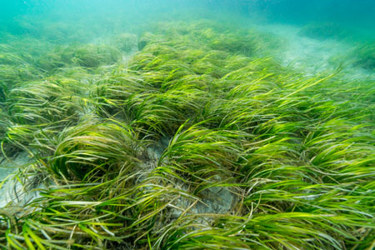
Quite literally this is what happened. In 2015, Vasiluth created an innovative and unique method for planting eelgrass seeds (Zostera marina) in Long Island, New York’s waters that’s helping to revitalize the dying eelgrass population, improve the marine ecosystem, and mitigate climate change.
Long Island is a peninsula that stretches out from New York City into the Atlantic Ocean. The waters around Long Island include the Great South Bay in the south and the Long Island Sound in the north.
In the past century, these waters have lost nearly 90% of its eelgrass beds due to wasting disease, a marine illness, as well as pollution, dredging, and warming waters. This isn’t just a local problem. It’s estimated that the world has lost approximately 7% of its eelgrass.
Restoring these eelgrass beds is critical because they provide habitat for many kinds of marine life, improve water quality by filtering out pollution, and the plant’s root system stabilizes the sediment on the seafloor, protecting shorelines from erosion.
Eelgrass beds also play a significant role in mitigating climate change. The beds have a remarkable capacity to capture and retain carbon dioxide (CO2) from the atmosphere, the greenhouse gases that are responsible for global warming, and storing it for long periods of time. In fact, its carbon-storing abilities are up to five times more than a rainforest.
Over the years, conservationist have tried to restore these forests of the sea by scattering the eelgrass seeds into the water hoping they take root and grow. This method has worked in many places, but it requires a lot of money and hard work, which is hard to keep up with the eelgrass loss rate.
Vasiluth came up with another restoration method that’s showing promise. It’s called the SEAS Method that stands for Seeds of Eelgrass Attached to Shellfish. Rather than scattering seeds into the water, they are glued to baby clams that are placed in the water where they bury themselves into the seafloor, planting the seeds.
Looking back, Vasiluth realizes that this idea may have germinated when he was a young child visiting his grandmother on Martha’s Vineyard in Massachusetts.
“The best part of my childhood was going to the beach, boating and fishing. While on Martha’s Vineyard, I remember slowly walking into the saltwater and spying on a large horseshoe crab. I followed it deep into the water. Eventually, I had to go underwater and hold my breath. When I opened my eyes to look for the horseshoe crab, I saw eelgrass for the first time. It was an amazing experience. One that I have never forgotten.”
Vasiluth became enamored with swimming underwater. The following year, during one of his dives he saw an unusual green plant amongst the eelgrass and showed it to his grandmother.
“She told me these are eelgrass seeds and that you can eat them,” said Vasiluth. “She peeled back the outside layer of what is called an eelgrass spath that holds the seeds. Kinda like peas in a pod.”
Years later, Vasiluth would be on a boat fishing with his family on the Long Island Sound. He dived underwater. “All day I looked for eelgrass and couldn’t find it. I did find some other plant and showed it to my father who told me it was Rupia, also known as Widgeon Grass, sort of like a weed. I asked him if we could bring the eelgrass from the vineyard to here and he giggled and said maybe one day it will come back.”
Vasiluth started to educate himself on ways to bring eelgrass back to Long Island’s waters by talking with various conservation organizations and when he learned about the symbiotic relationship between clams and eelgrass he came up with the SEAS Method and today he is bringing eelgrass back to his childhood waters.
The SEAS Method artificially mimics the symbiotic relationship between clams and eelgrass. Each clam is an oasis for the eelgrass. Clams are little filtering machines that filter water and bring oxygen down into the sediments, helping the eelgrass roots to do well. In turn, eelgrass catches food that comes down to the sea floor that the clam can feed on. When the clams defecate this fertilizes the eelgrass seeds. The two help each other survive, which may be very good for the clam population that has also drastically declined in Long Island’s waters.
To finance the SEAS Method, Vasiluth founded SAVE Environmental, which stands for Submerged Aquatic Vegetation Engineers, an organization created to promote nature-based solutions.
SAVE Environmental partners with other organizations that provide funding and facilities that include The Nature Conservancy, Cornell University, Save the Great South Bay, Connecticut College, SUNY Stony Brook University, Save the Sound, and 11th Hour Racing.
Vasiluth in cooperation with his partners follow the following seasonal routine for the SEAS Method.
First, he gets permits to restore eelgrass beds in certain waters. Once he has them, he gathers volunteers to join him on scuba diving or snorkeling trips to locate reproductive eelgrass shoots.
The divers place the shoots in bags that are brought to the water’s surface and placed into coolers filled with saltwater.
The coolers are shipped to several marine facilities where the shoots are moved to flowing seawater tanks.
In a few weeks the seeds fall from the shoots and are sorted, using screens. The gathered seeds are placed in fresh flowing sea water.
Next, about five to ten eelgrass seeds are glued to baby clams, using a safe, non-toxic and biodegradable adhesive called Cyanoacrylate, that is commonly used in aquarium tanks to glue corals to rocks.
Once the seeds are glued, the shellfish are placed back into the flowing saltwater tanks and stored.
Last, the clams are placed in a boat that’s equipped with a special spreader machine Vasiluth built from an old treadmill that releases the clams into the water and controls how far apart the clams are placed. “I call it my eelgrass sowing machine,” said Vasiluth, who adds that it is a prototype that he plans on fine tuning. “It’s funny, my father who is deceased was a machinist and I’ve built a most fantastic machine for growing eelgrass.”
The clams bury themselves into the seafloor planting the seeds. Seeds that grow from deep in the soil develop a strong root system and are more likely to survive then seeds being scattered on top of the seafloor. The number of seeds glued on the clams are enough to produce at least one eelgrass plant.
So far, clams have been placed in several areas around Long Island including Smithtown Bay, Great South Bay, Shinnecock Bay, Barrett Beach, Fire Island, and Sterling Harbor.
Vasiluth often gets volunteers to glue the seeds, and this includes school children.
One of these schools was Sayville High School in Sayville, Long Island, New York. James Bertsch, a trustee for Sayville’s Board of Education explains how the experience is beneficial for students, “Taking action to affect change is a powerful learning tool. Our students learned that the Great South Bay needs to be saved, and they learned we can all do something to help.”
“Lecturing students about losing 95% of our clams and eelgrass due to poor water quality isn’t a great way to make the learning stick. Sticking eelgrass seeds to clams makes the point stick so much better.” Bertsch, who also is a director for Save the Great South Bay, believes so much in Vasiluth’s method that he recently put a wetsuit and mask on to help Vasiluth collect eelgrass seeds.
Bertsch praises the success of the SEAS Method, “Two years ago, Vasiluth planted eelgrass seeds at Barrett Beach, Fire Island and the seeds took and it’s thriving today.”
Vasiluth has a lot planned for the SEAS Method. Presently, numerous trials of his method are being tested in waters around the country that are showing promise.
He believes his Uncle Gill would be pleased with what he is doing. Ironically, his uncle was a frogman in World War II. He would wear a scuba suit and go underwater to pull mines out of the English Channel to protect citizens. Today his nephew is doing the same to save Long Island’s water and the planet.
“I’m quite sure my Uncle Gill, father, and grandmother who’s also passed are all still with me every step of the way. Their teaching has navigated me till this day, but I have more to do. I’m determined to succeed in saving not only eelgrass, but most importantly, all the priceless creatures that exist within and beyond the disappearing meadows of life.”
To learn more, contact Dr. JoAnne Castagna, Founder of 2 Bourkes PR, a public relations service that specializes in the writing and marketing of environmental articles. She can be reached at Joanne@2bourkespr.com or www.2bourkespr.com.
 Dr. JoAnne Castagna is an experienced writer, specializing in environmental and sustainable infrastructure subject matter.