
PFAS Removal Technologies: Challenges And Innovations In Water Treatment
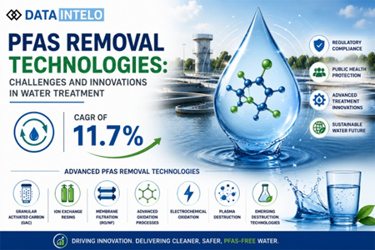
It's hard to find a more technically challenging contaminant within the global water industry today than per- and polyfluoroalkyl substances (PFAS). As compared to traditional organic pollutants, PFAS are incredibly persistent because of their extreme stability — largely attributable to their carbon-fluorine bond — which resists biotic degradation, oxidation, hydrolysis, and thermal decomposition under most environmental conditions. Increasingly strict regulations and a greater reach for water system monitoring efforts have pushed the industry away from simply trying to extract these chemicals and towards developing comprehensive solutions that incorporate both destruction and residual waste disposal.
To make matter even more complex, this paradigm shift for water providers goes beyond identifying one solution; engineers need to develop optimized treatment trains that integrate technology based on water chemistry, PFAS characteristics, economics, space limitations, concentrate disposal, and future regulatory scenarios. The urgency of this transition is already driving a wave of new developments across a variety of adsorption technologies, membrane systems, electrochemical techniques, plasma applications, advanced oxidation, and the integration of artificial intelligence.
The Engineering Complexity Of PFAS Treatment
The hundreds and thousands of different PFAS compounds, with different weights, chain lengths, and functional groups, also cause challenges. Long-chain compounds, like PFOA and PFOS, have better adsorption, whereas short-chain compounds have not only much less capacity on common adsorbents, but also more mobility.
The impact of the constituents found in water — dissolved organic carbon (DOC), sulfate, bicarbonate, pH, ion strength, temperature, other organics — is also an important engineering factor, as they can compete for adsorbent capacity and interfere with membranes, diminishing the overall treatment effectiveness.
Breakthrough of these compounds can also pose another engineering challenge, as PFAS do not follow traditional break through trends in similar fashion as other contaminants based on size and structure. Short-chain materials can break through orders of magnitude earlier than their long-chain counterparts and may challenge any system schedule and maintenance planning.
As per DataIntelo’s analysis, the PFAS treatment market continues to boom, projected to rise from USD 2.8 billion in 2025 to USD 7.6 billion by 2034 with a compounded annual growth rate (CAGR) of 11.7% during 2026-2034, thanks to growing regulatory enforcement, greater understanding of health impacts from PFAS exposure and faster acceptance of new treatment technologies among municipalities and industrial customers globally.
This also comes at a time when investment is transitioning toward highly-efficient solutions which not only remove PFAS, but also minimize lifecycle cost, ensure ease of operation, and contribute to a cleaner future by facilitating sustainable destruction of contaminants.
Optimizing Granular Activated Carbon Systems
Granular activated carbon (GAC) continues to be the most popular choice among PFAS treatment technologies for municipal drinking water applications. Proper design and implementation, however, is much more complex than the installation of carbon vessels. Media adsorption performance is greatly influenced by the carbon source, pore-size distribution, particle size, empty bed contact time (EBCT), hydraulic loading, and influent water chemistry.
The coconut shell variety, in particular, is recognized to possess a higher concentration of micropores and is therefore highly effective for the removal of long-chain PFAS molecules. Today’s design engineers frequently employ breakthrough modelling to determine when a batch of media will have reached exhaustion, rather than simply adhering to a set replacement schedule. Pilot testing has become an indispensable element of designing the correct EBCT for individual project site.
Operational optimization now includes:
- Dynamic EBCT adjustment
- Parallel vessel configuration
- Lead-lag carbon systems
- Predictive media replacement models
- Online pressure loss monitoring
Despite its maturity, GAC presents limitations for short-chain PFAS removal, prompting utilities to investigate complementary technologies.
Advances In Ion Exchange Resin Technology
IX systems have proven effective at adsorbing short-chain PFAS. Advanced synthetic anion exchange resins provide greater capacity and higher adsorption kinetics at smaller size than those of conventional granular activated carbon.
Recent resin innovations include:
- Macroporous polymer matrices
- Enhanced quaternary ammonium functional groups
- Selective fluorinated polymer coatings
- Hybrid adsorption-ion exchange materials
These developments increase the selectivity of ion-exchange resins and minimize fouling with natural organic matter. Unfortunately, resin regeneration remains a substantial operational issue. Most utilities would choose to throw the ion-exchange resin out rather than regenerate it since the regeneration produces a concentrated waste stream that needs special disposal and/or destruction methods for the PFAS compounds.
Current research and development include the use of resins that can be regenerated and reuse many times without a major loss in adsorption capacity.
Membrane Technologies Deliver High Removal Efficiency
The highest PFAS rejection rates are obtained consistently through the reverse osmosis (RO) and nanofiltration (NF) processes. The reverse osmosis process eliminates long and short-chain PFAS compounds by physical barrier and molecular exclusion mechanism, along with an electrostatic repulsion, while nanofiltration process is a lower-energy process with efficient separation of the larger PFAS molecules.
Modern membrane engineering has improved:
- Membrane surface hydrophilicity
- Fouling resistance
- Flux recovery
- Chemical stability
- Operating pressure optimization
However, membranes move the PFAS in water from clean permeate to the more concentrated waste or reject water, not remove them. The engineering of managing these concentrated brine flows is a major challenge in treating PFAS with membranes.
Hybrid Treatment Systems Improve Process Performance
Instead of a single technology, the utilities are moving towards hybrid treatment trains to achieve removal efficiencies and minimize costs.
Examples include:
- GAC followed by ion exchange polishing
- Nanofiltration integrated with electrochemical oxidation
- Reverse osmosis coupled with plasma destruction
- Foam fractionation followed by advanced oxidation
These systems offer several barriers to treatment while allowing each technology to operate at optimal performance. Hybrid systems digital process modelling is gaining traction for predicting which configurations of hybrid treatment technology are most cost effective based on the characteristics of the wastewater and the goals of the treatment.
Moving Beyond Separation To PFAS Destruction
Most conventional treatment techniques merely remove PFAS from water rather than destroy the contamination. For that reason, effort has been expended on what are called destructive treatment methods to sever those carbon-fluorine bonds.
Electrochemical Oxidation
Oxidizing species, which are strongly oxidative, can directly degrade PFAS. This method offers these benefits:
- Minimal chemical addition
- Modular design
- High destruction efficiency
- Potential for onsite treatment
Current research focuses on improving electrode materials using boron-doped diamond and mixed metal oxide technologies.
Non-thermal Plasma
These systems use active electrons and radicals with a lot of energy to break up PFAS in many different ways. Early studies have shown very effective destruction in recent tests, and less energy consumption than hot plasma.
Supercritical Water Oxidation (SCWO)
SCWO: Above the critical temperature and pressure of water, it oxidizes all organic contaminants.
For PFAS destruction, SCWO offers:
- Near-complete mineralization
- Minimal secondary waste generation
- High destruction efficiencies
Engineering issues include corrosion resistance, reactor materials, and pressure control.
Photocatalytic and Catalytic Oxidation
Other potential materials such as photocatalysts composed of nanomaterials, for instance, titanium dioxide, graphene composite, and other novel semiconductors, offer a growing number of ways to leverage visible light and UV light for destroying PFAS.While still evolving towards market feasibility, catalytic destruction is expected to offer lower energy demands than existing PFAS destruction technologies.
AI Is Transforming PFAS Treatment Operations
Artificial intelligence is becoming an increasingly valuable tool in treatment plant optimization.
Machine learning algorithms analyze operational data to predict:
- Carbon breakthrough
- Resin exhaustion
- Membrane fouling
- Energy consumption
- Chemical dosing requirements
Digital twins also allow utilities to model treatment scenarios prior to changing plant operations thereby minimizing operational risk and minimizing optimization duration.
An application of using predictive analytics is on predicting optimal time of doing preventive maintenance and having less disturbed treatments.
Emerging Adsorbent Materials
Scientists keep improving new generations of adsorbents that offer higher efficiency compared to the standard activated carbon.
Promising materials include:
- Graphene oxide composites
- Carbon nanotube adsorbents
- Metal-organic frameworks (MOFs)
- Functionalized biochar
- Molecularly imprinted polymers
- Cyclodextrin-based sorbents
More surface area and increased selectivity with higher adsorption kinetics for short-chain PFAS compounds in the new materials.
Pilot-scale demonstrations show the materials potentially can reduce treatment footprinms and lengthen media lifespan.
Addressing PFAS Residuals
Successful PFAS treatment extends beyond contaminant removal. Concentrated residuals generated during treatment require responsible management to prevent environmental reintroduction.
Utilities are evaluating:
- Thermal destruction
- Electrochemical concentrate treatment
- Plasma reactors
- Foam fractionation
- Zero-liquid-discharge systems
- High-temperature mineralization
Lifecycle management of treatment residuals is rapidly becoming a defining factor in technology selection.
Future Directions In PFAS Water Treatment
The future of PFAS treatment systems will merge the best of high-performance separation technologies with destructive technologies that can completely destroy the contaminant rather than move it to a different waste stream. A range of material, electrochemical, and artificial intelligence and digital monitoring advancements is paving the way for a treatment paradigm that will be more responsive, resilient, and robust. Driven by stringent regulations and the expanding analytical arsenal to characterize contaminants, water utilities are more than ever looking for integrated treatment platforms that offer optimal trade-offs between removal effectiveness, system uptime, energy consumption, and management of waste streams.
Rather than a silver-bullet technology, the future of PFAS treatment involves intelligent multi-barrier systems that strategically layer and link high-performance adsorption and membrane separation processes, contaminant destructive treatment methods, and real-time data management for safe and sustainable drinking water treatment for decades to come.
Reference: https://dataintelo.com/report/pfas-treatment-market
Source: Data Intelo