
Ozone Contactors: The Engineering Variable That Determines Oxidation Success
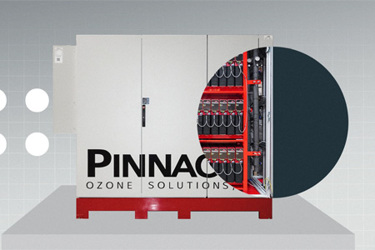
In ozone water treatment, generator specifications—pounds per day, concentration, and power—often dominate discussions. Yet field performance is dictated by the contactor, not the generator. At Pinnacle Ozone Solutions, we emphasize that oxidation efficiency depends on mass transfer, hydraulic integrity, and reaction kinetics rather than nameplate output.
Ozone chemistry is fast, reacting rapidly with metals, hydrogen sulfide, organics, and pathogens. However, these reactions occur only after ozone dissolves into water. Mass transfer efficiency (MTE) measures the fraction of produced ozone actually dissolved, and it is the true performance metric. Poorly designed atmospheric bubble systems may achieve <70% MTE, requiring oversized generators and increasing energy, cooling, and maintenance costs. Properly engineered pressurized systems routinely exceed 95% MTE, maximizing oxidation per kilowatt-hour.
Three key engineering pillars govern reactor performance: gas injection and dissolution dynamics, hydraulic integrity, and solubility control. Pressurized sidestream injection improves ozone dissolution by maintaining partial pressure, while structured baffling and velocity equalization ensure predictable contact time and eliminate short-circuiting. Temperature and pressure effects further influence solubility and must be accounted for in system design.
By designing systems around required CT values and mass transfer, rather than generator output, Pinnacle ensures stable dissolved ozone, consistent compliance, and lower lifecycle costs. Oversized generators and inefficient reactors are avoided, and energy use is minimized. In short, chemistry without effective mass transfer is wasted oxygen—reinforcing the principle that reactor design, not generator size, defines system performance.
Get unlimited access to:




Enter your credentials below to log in. Not yet a member of Water Online? Subscribe today.