
Novel Cyclodextrin Polymer Adsorbents For PFAS Removal
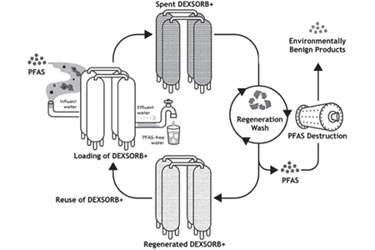
Managing the persistent threat of per- and polyfluoroalkyl substances (PFAS) requires advanced filtration strategies capable of addressing a diverse class of over 4,000 compounds. Traditional methods often struggle with the complex structures and varying chain lengths of these "forever chemicals," but innovations in molecular design are offering more precise solutions. By utilizing polymerized macrocycles, a dual-action adsorption mechanism can be achieved, combining hydrophobic cavities for long-chain capture with cationic sites for electrostatic interaction with shorter, more hydrophilic chains.
This approach provides significant resistance to fouling from natural organic matter, maintaining high treatment capacity even in complex matrices like landfill leachate or wastewater. Beyond initial removal, the stability of these mesoporous materials allows for efficient regeneration at ambient temperatures, drastically reducing the volume of waste compared to conventional resins. Transitioning to these high-affinity adsorbents enables shorter contact times and smaller equipment footprints, optimizing both municipal and industrial water treatment cycles for long-term sustainability. Explore the full technical breakdown to see how these specialized polymers are redefining remediation efficiency.
Get unlimited access to:




Enter your credentials below to log in. Not yet a member of Water Online? Subscribe today.