
North America's Industrial Strainer Challenge: Unpredictable Solids Loading
By Robert Presser
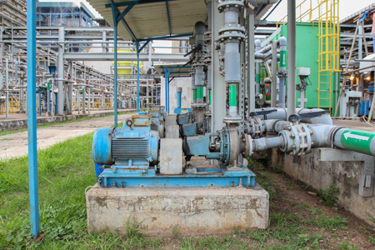
Industrial strainers are used throughout North America to address a relatively straightforward problem that can become surprisingly complicated in an operating plant: solids and debris entering a process stream can foul, plug, damage, or interfere with pumps, heat exchangers, nozzles, valves, meters, and other downstream equipment.
However, the more important issue for North American facilities is not simply whether solids are present. It is what type of solids are present, their quantity, how frequently the loading changes, where the water or process fluid originates, and what happens to the plant when the strainer becomes loaded.
These factors can vary dramatically between a refinery on the Gulf Coast, a power facility drawing surface water from the Great Lakes, an irrigation system in the Southwest, a pulp and paper mill in Canada, or an industrial facility increasingly relying on reclaimed water.
This is where the type of strainer selected becomes increasingly significant, particularly when choosing between conventional basket strainers and automatic designs such as scraper strainers.
Basket strainers remain entirely appropriate for many applications, particularly when solids loading is relatively light and predictable. However, as the quantity and type of debris become more variable, the selection becomes less straightforward. A relatively inexpensive piece of protective equipment can quickly become a maintenance issue if cleaning is required more frequently than anticipated.
Under these conditions, automatic strainers become increasingly attractive, particularly when solids loading can change with little warning, manual cleaning will be frequent, equipment is difficult to access, personnel are unavailable to continually service the strainer, or significant downstream damage could occur if cleaning is delayed.
Cooling Water
One of the most widespread industrial applications is cooling water. This includes open cooling towers, once-through cooling systems, closed-loop systems supplied by makeup water, heat exchanger circuits, and process cooling systems.
Open cooling towers can present a difficult straining environment because the water is continuously exposed to outside air while also circulating through piping and equipment. Outside debris can enter the system, while rust, scale, and biological material can also develop internally.
The strainer may have to deal with several different types of solids at the same time. Some are coming from outside the system. Others are being generated within it. The strainer must remove this suspended material before it can contribute to plugging, fouling, and wear, or interfere with downstream equipment.
More importantly, the loading is not necessarily constant.
A storm, seasonal pollen, maintenance activity, a change in makeup-water source, or biological event can significantly increase the solids load over a relatively short period.
That variability matters when selecting a strainer because equipment sized around normal conditions may behave very differently during the worst several hours or days of the year.
Surface Water Creates A Different Set Of Problems
For facilities pulling cooling or process water from a river, lake, or reservoir, the problem starts before the water ever enters the plant.
Heavy rain can increase sediment. Seasonal growth can bring algae and vegetation. Other debris may appear intermittently and in quantities that are difficult to predict. The strainer, therefore, is not necessarily dealing with one type of solid or even a relatively consistent solids load.
This has particular importance in North America. Many power plants and large industrial facilities were built where large quantities of river, lake, or reservoir water were readily available. That water remains an important part of the process, but whatever is happening in the river, lake, or reservoir can quickly become an operating issue inside the plant.
For process cooling water drawn from these sources, the challenge is that the strainer may have to contend with a very broad range of solids, from relatively fine suspended material to much larger debris.
Most available strainers do not necessarily handle debris at both extremes efficiently, and using multiple strainers in sequence to remove a range of debris sizes requires additional capital, equipment, space, and labor.
One advantage of the company’s automatic scraper strainer is the ability to handle both ends of this range, removing large debris as well as much smaller suspended solids in a single, motorized unit.
The Great Lakes Have A Very Specific Problem: Invasive Mussels
In some freshwater systems, the debris problem is biological and much more persistent. Zebra and quagga mussels can build up around intakes and inside piping, then create additional debris as shells and dead material break loose and move through the system.
For facilities drawing large volumes of water from affected lakes and rivers, this can turn into a recurring straining problem rather than an occasional maintenance issue.
The problem is not simply that live mussels attach to surfaces. Shells and dead mussels can also move through water systems as debris, creating a substantial intermittent solids load.
This creates an interesting strainer-selection problem. A finer screen selected to protect downstream equipment can load much more quickly. If large quantities of shells or biological solids are present, reducing the screen size may improve the level of protection while at the same time making the maintenance problem considerably worse.
Algae And Biological Solids Can Be More Difficult Than Sand
Another increasingly relevant North American issue is algae, including harmful algal blooms in lakes and reservoirs.
From the standpoint of straining, algae is troublesome because it does not necessarily behave like a hard, discrete particle. Biological material can be soft, sticky, stringy, or compressible. Instead of collecting neatly as individual particles, it can mat together or coat an opening.
This type of biological material can also be particularly difficult for conventional cleaning mechanisms. Algae can adhere to a screen and create a “cake” that becomes increasingly difficult to remove.
Automatic scraper strainers such as those from the company do not rely on a pressurized backwash to remove solids from the screen. Instead, the blade and brushes scrape the screen clean, while small brush filaments get into the wedge-wire slots and dislodge resistant particulates and solids of this type. This approach can be particularly effective against organic matter and biofouling.
Wildfires Can Suddenly Change Source-Water Quality
Wildfire can create a very different source-water problem, particularly in the western United States.
Once rain moves across burned areas, ash, sediment, and other material can be carried into rivers and reservoirs, sometimes in much greater quantities than the system normally sees. That can change source-water conditions quickly, and the effects may continue long after the fire itself has been extinguished.
A strainer may operate for months under relatively predictable conditions and then experience a very different solids load after a fire followed by a major rain event.
Water Scarcity And Reuse
Water availability is increasingly changing industrial water management in the western and southwestern United States. Facilities are being pushed toward greater water reuse, higher cycles of concentration in cooling systems, and greater use of alternative water sources.
Reclaimed water can be an excellent industrial resource, but from the standpoint of strainer selection, it can be very different from the relatively clean potable water a facility may have used in the past. The water has already passed through an upstream treatment process, and what remains in it can include suspended solids and biological material that varies depending on the treatment plant, the season, and even changes in the influent entering the plant.
This becomes important when a facility converts from potable makeup water to reclaimed water. Even if the flow rate remains exactly the same, the strainer may now be seeing a very different type and quantity of solids. More importantly, that loading may also be much less predictable, so an existing strainer that operated for years without much attention may suddenly require considerably more cleaning or may no longer be appropriate for the application.
Solids Loading Is As Important As Particle Size
All of these examples point to a larger issue in strainer selection. Particle size is important, but it does not by itself indicate how difficult the application will be. The quantity of solids, how quickly they accumulate, and how dramatically that loading can change are equally significant, particularly when considering whether manual cleaning will remain practical.
Basket strainers are widely used because they are relatively simple. Solids collect in a removable basket that is periodically taken out and cleaned. In continuous-flow processes that cannot be shut down for cleaning, duplex basket strainers are often used instead. Flow can be diverted from one chamber to the other while the loaded basket is removed and cleaned.
For many applications, this is entirely reasonable. If the basket can operate for days or weeks between servicing, manual cleaning may not be much of an issue.
However, solids loading changes that calculation quickly. This is where basket strainers can become labor-intensive.
Even with a duplex unit, someone still has to divert the flow, isolate the loaded chamber, open the strainer, remove and clean the basket, reinstall it, and return the chamber to service. If that happens occasionally, it may not matter very much. If operators are performing these tasks repeatedly during a shift, it matters.
The problem can become more significant when personnel are already limited. Cleaning can be delayed simply because the operator has other responsibilities. If that continues, both baskets can eventually become loaded, creating the possibility of reduced flow, process challenges, or unexpected downtime.
Automatic scraper strainers approach the problem differently. Instead of waiting for accumulated solids to be removed manually, the screen is cleaned through direct mechanical contact using blades and brushes.
Cleaning is accomplished by a spring-loaded blade and brush system, managed by a fully automatic control system. Four scraper brushes rotate at 8 RPM, resulting in a cleaning rate of 32 strokes per minute. The scraper brushes get into wedge-wire slots and dislodge resistant particulates and solids. This approach enables the scraper strainers to resist clogging and fouling when faced with large solids and high solids concentration.
What Ultimately Drives The Choice
Ultimately, the right strainer depends on more than particle size and flow rate. Solids loading, how much it can change, and what happens when cleaning is delayed can be just as important.
For predictable applications, basket strainers remain an entirely reasonable choice. However, as solids loading becomes heavier and less predictable, automatic scraper strainers may be the better choice.
That is really the North American issue. The strainers themselves have not suddenly become more complicated. The water and process streams moving through them have become less predictable, and in many applications, much less forgiving.
Robert Presser is President of Acme Engineering Prod., Inc. (acmeprod.com), a North American manufacturer of industrial self-cleaning strainers.